
Search “best project management software” on Perplexity right now. You’ll get a list of recommendations, a short explanation of each, and a confident tone that suggests the question is settled. Your brand may or may not appear. Either way, your GA4 dashboard won’t register a thing.
That’s the core problem with AI recommendation tracking in 2026. The discovery is happening, the brand decisions are being made, but traditional analytics can’t see any of it. The tools that help you fix that are what this article covers.
Why Your Analytics Stack Has a Blind Spot for AI Recommendations
Traditional web analytics were built for a specific model: user searches, sees a link, clicks it, lands on your site. Every step leaves a data trail.
AI search breaks that model at step two. When ChatGPT or Perplexity answers a query, users often don’t click anywhere. They read the answer and move on. The industry has started calling this “Zero-Click Visibility” because brand discovery happens inside the AI’s output, not on a results page.
The consequence is a systematic blind spot. Your brand might be recommended 200 times a day across AI platforms, or it might not be mentioned at all, and your current analytics setup will report the same number either way: zero.
There’s also a subtler risk. Researchers have identified a phenomenon called Prompt Drift, where model updates or shifts in training data quietly change how an AI describes or ranks your brand. A competitor gets a new round of press coverage, their domain authority climbs, and six weeks later ChatGPT starts listing them first in your category. Without an AI recommendation tracker, you won’t notice until the pipeline starts thinning.
The Metrics That Actually Matter in AI Recommendation Tracking
Before evaluating any AI recommendation tracking software, it helps to know what you’re measuring. The industry has started to converge on five core KPIs, though platforms differ significantly in how they define and calculate each one.
Mention Rate is the percentage of relevant prompts where your brand is explicitly named. If you’re tracking 100 prompts about project management tools and your brand appears in 34 of the responses, your mention rate is 34%. Simple, but foundational.
Citation Rate goes deeper: how often does the AI link to a specific URL on your domain as a source? Citation rate matters because it’s a signal that AI systems treat your content as authoritative, not just your brand name as a data point.
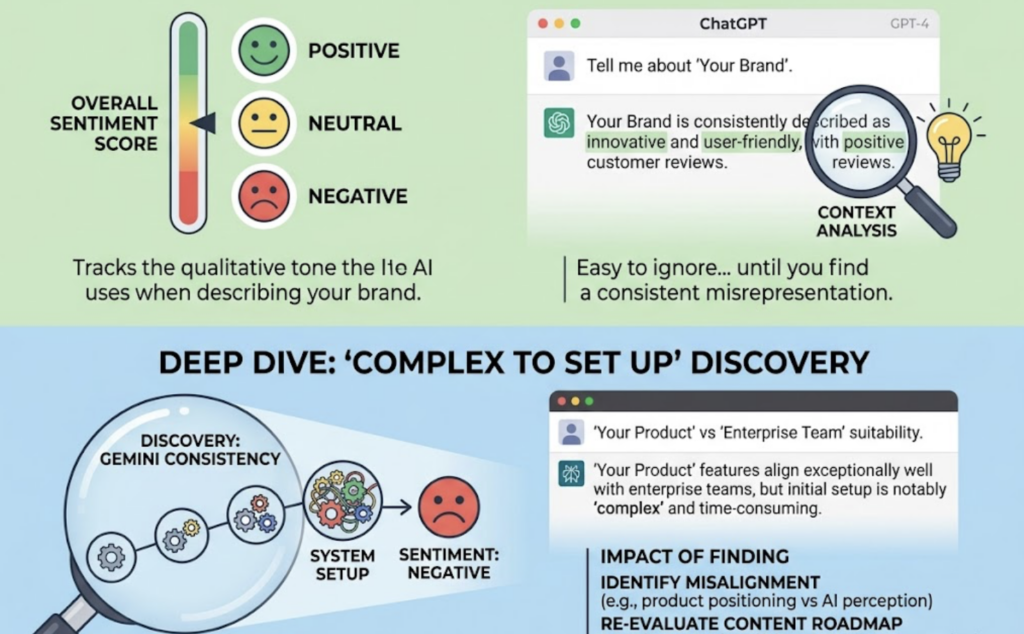
Sentiment Score tracks the qualitative tone the AI uses when describing your brand. Positive, neutral, or negative. This one is easy to ignore until you discover that Gemini consistently describes your product as “complex to set up” or “better suited for enterprise teams.”
Position tells you where your brand ranks within the AI’s recommendations. Being mentioned fifth out of five is very different from being mentioned first.
CVR (Conversion Visibility Rate) is the newest metric on this list, and arguably the most commercially relevant. It estimates how likely an AI recommendation is to translate into actual user behavior, factoring in position, sentiment, and prompt intent. It’s the bridge between AI visibility data and revenue attribution.
5 Things That Separate a Real AI Recommendation Tracker from a Basic Monitor
Not all AI recommendation tracking tools are built the same. Here’s what to look for before committing to a platform.
1. Cross-platform coverage that actually includes the platforms your audience uses. Some tools only track ChatGPT. Others add Perplexity. But if your audience skews toward Gemini, or toward regional models like DeepSeek, a tool with narrow coverage gives you an incomplete picture. Look for platforms that measure visibility across ChatGPT, Perplexity, Gemini, and ideally others.
2. Prompt-level tracking, not brand-level tracking. Searching your brand name directly in ChatGPT tells you almost nothing. Real tracking means defining a prompt taxonomy, a structured set of user intent queries like “best CRM for remote sales teams” or “alternatives to Salesforce for startups,” and then monitoring how your brand performs across all of them. This approach captures how buyers actually search, not how your marketing team thinks they search.
3. Competitor benchmarking built in. Knowing your own mention rate is useful. Knowing your mention rate is 28% while your closest competitor runs 61% is actionable. A solid AI recommendation tracking platform should automatically surface competitor data alongside your own, not require you to set up separate projects for each.
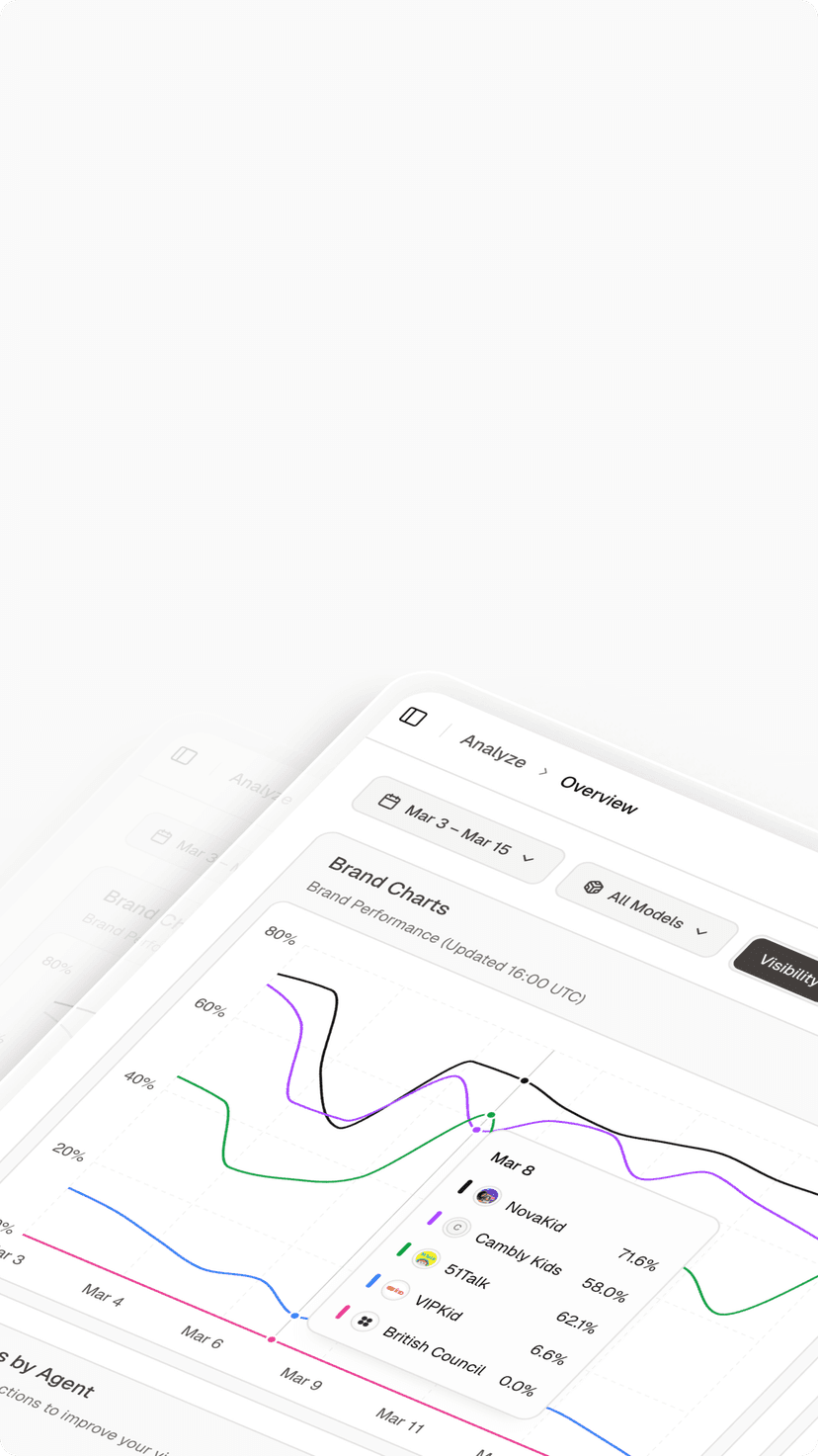
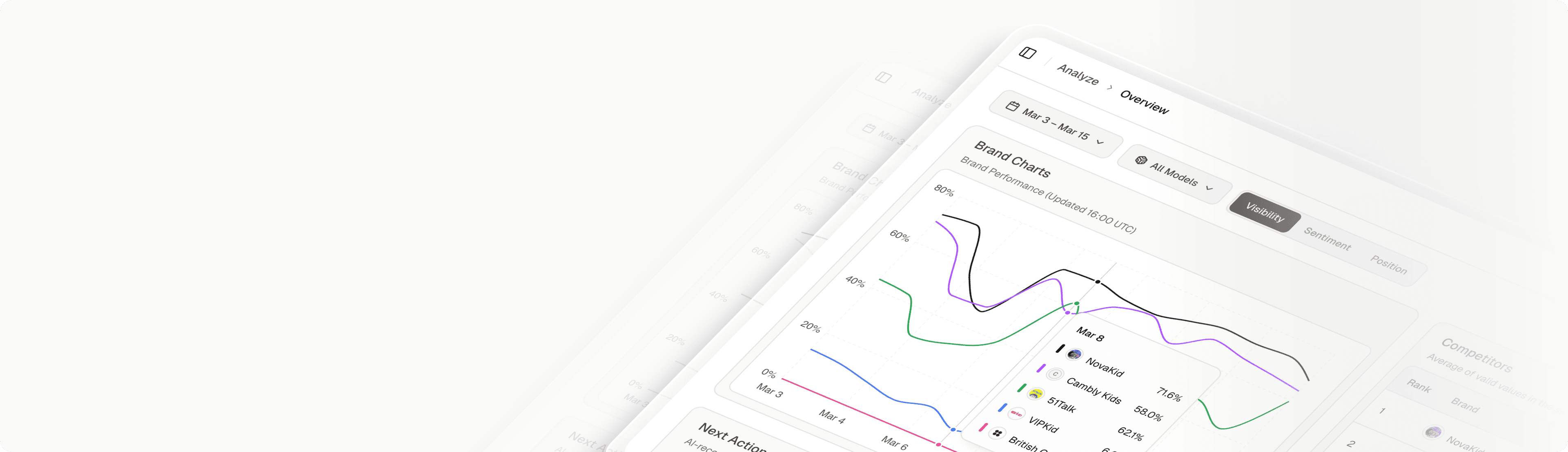
4. Historical trends and delta alerts. Point-in-time snapshots are useful for baselines. What you really need is the ability to spot changes over time and get flagged when something shifts significantly. A drop in Citation Rate after a model update, or a sudden jump in a competitor’s Position, are the signals that drive strategy.
5. Optimization guidance, not just data. The gap between a monitoring tool and a tracking platform is what happens after you see the numbers. Does the AI recommendation tracking system tell you which source domains the AI is currently citing in your category? Does it show you where your content coverage is thin compared to competitors? Data without a path to action is just a prettier dashboard.
AI Recommendation Tracking Tools Compared
Here’s how the main platforms stack up across the dimensions that matter most for practical use:
| Tool | Platform Coverage | Metric Depth | Competitor Monitoring | Optimization Execution | Starting Price |
|---|---|---|---|---|---|
| Topify | ChatGPT, Perplexity, Gemini, DeepSeek, and more | 7 metrics incl. CVR | Yes, automated | Yes, one-click agent | $99/mo |
| Keyword.com | Perplexity-focused | Brand mentions | Limited | No | Varies |
| Profound | ChatGPT, Perplexity, others | Prompt volumes, SOC2 | Yes | No | Enterprise |
| Rankscale | ChatGPT, Perplexity, AI Overviews | High-accuracy polling | Partial | No | Varies |
| Ahrefs / Semrush | AI-adjacent (mostly traditional) | SEO + basic AI trends | Traditional only | Traditional SEO | From $99/mo |
A few things worth noting about this table. Keyword.com’s strength is depth on Perplexity specifically, which makes it a decent fit for brands whose audience skews heavily toward that platform. Profound targets enterprise security and compliance requirements, including SOC2 reporting, which matters for regulated industries. Rankscale handles high-volume prompt polling well for large-scale operations.
Topify covers the widest range of AI platforms and is the only option on this list that combines tracking with one-click optimization execution. Rather than just showing you that your Citation Rate dropped, it surfaces which source domains are being cited in your category and lets you deploy a content strategy against those gaps directly from the dashboard. For teams that need to go from insight to action without adding headcount, that distinction matters.
How to Start Tracking AI Recommendations in 3 Steps
You don’t need a six-month setup to start getting useful data. Here’s a practical starting point.
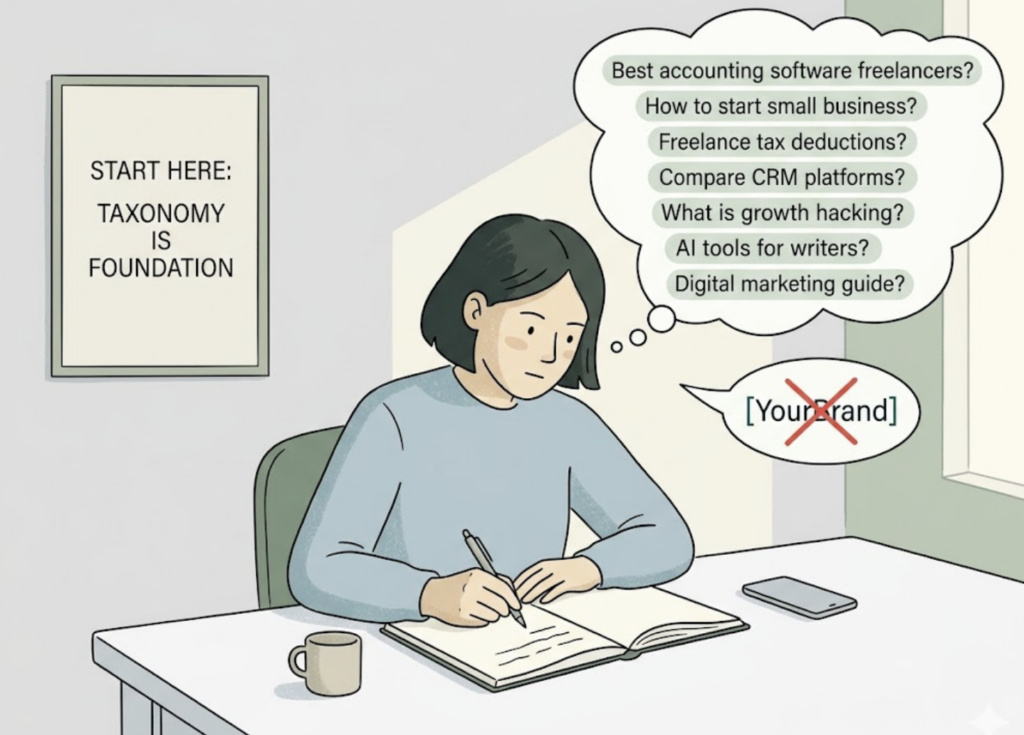
Step 1: Define your prompt taxonomy before you touch any tool. Don’t start by tracking your brand name. Start by listing 20 to 30 user intent queries in your category, the kinds of questions your ideal customers are actually asking AI systems. “What’s the best accounting software for freelancers?” is a prompt. “[YourBrand]” is not. The taxonomy is the foundation everything else runs on.
Step 2: Establish your baseline. Run your prompt set across ChatGPT, Perplexity, and Gemini and capture your current Mention Rate, Sentiment Score, and Position for each. This snapshot becomes the reference point for every future measurement. Without it, you can’t tell whether your optimization efforts are working.
Step 3: Connect the data to your reporting workflow. AI recommendation tracking dashboards work best when the data flows into existing team processes, whether that’s a monthly marketing report, a quarterly C-Suite deck, or a weekly SEO standup. Visibility data that sits in a separate tool no one checks isn’t visibility data, it’s noise.
For teams using Topify’s AI recommendation tracking solution, these three steps happen inside a single platform. The prompt taxonomy feeds the tracking engine, the baseline is captured automatically on day one, and the Source Analysisfeature shows which domains are being cited so you know exactly where to publish next.
Conclusion
The brands that win in AI search aren’t the ones with the highest domain authority. They’re the ones that know what AI is saying about them, why, and what to do about it.
AI recommendation tracking closes the feedback loop that traditional analytics can’t. Start with a clear prompt taxonomy, establish a baseline across the platforms your audience actually uses, and pick an AI recommendation tracking tool that goes beyond monitoring to tell you what to fix. The data is there. The question is whether you’re set up to read it.
Get started with Topify to see where your brand stands in AI recommendations today.
FAQ
Q: Is AI recommendation tracking the same as social listening?
A: No. Social listening monitors what people say about your brand on platforms like X, Reddit, and LinkedIn. AI recommendation tracking monitors what AI systems say about your brand when users ask for product recommendations or category guidance. The two are complementary but measure completely different channels.
Q: How often should I pull AI recommendation tracking reports?
A: Weekly tracking is practical for most teams. That said, any major content push, PR announcement, or competitor product launch is worth a manual check, since AI citation patterns can shift within days of a significant publication event.
Q: Can I track competitors’ AI recommendations too?
A: Yes, and you should. Knowing your own Mention Rate in isolation is only half the picture. Competitor benchmarking shows you whether your category is dominated by one or two brands in AI responses, which tells you both where the opportunity is and how much ground you need to cover. Most AI recommendation tracking platforms support competitor monitoring as a core feature.
Q: What’s the difference between AI recommendation tracking and traditional rank tracking?
A: Traditional rank tracking shows your position on a Google SERP for a given keyword, a fixed list format with numbered positions. AI recommendation tracking measures presence, sentiment, source citation, and position within conversational AI outputs, across multiple platforms simultaneously. The underlying data structure and the actions you take based on it are fundamentally different.