A brand tests a conversational ad, sees users ask detailed product questions, and later notices more brand mentions in ChatGPT. The campaign report claims the paid experience improved organic visibility. That may be a useful hypothesis, but the evidence is incomplete. The sponsored conversation and the organic answer are deliberately separated systems, while brand demand, PR, content changes, and seasonality can move at the same time.
Sponsored Agents create a new paid interaction inside ChatGPT Ads. They need metrics for entry, conversation quality, and business outcomes. Organic AI visibility still needs independent prompts, citations, positions, and sentiment. A dual measurement system lets teams evaluate each channel without implying that ad spend buys influence over ChatGPT's answers.
Sponsored Agents are a limited-alpha ad format
OpenAI describes Sponsored Agents as an advertising format that lets a person start a conversation with an AI representative of a business after engaging with an ad. The current Sponsored Agents help page says the format is available only to selected advertisers in a limited alpha and that general early-access requests are not currently open.
The format extends a labeled ad into a business-sponsored conversation. It can help a prospective customer ask follow-up questions about products or services without leaving ChatGPT immediately. The agent remains an advertising experience, not an organic response from ChatGPT.
Availability can change, so teams should verify eligibility and product terms before building a launch plan. A public announcement or observed Sponsored Agent does not mean the format is available in every account, market, vertical, or objective.
The right early question is not “How much organic ranking will this buy?” It is “Can this paid conversation answer user questions accurately and move qualified people toward a useful outcome?”
The paid conversation begins after a clearly labeled ad
OpenAI's September 16, 2026 announcement says users can choose to start a clearly labeled conversation with a business-sponsored agent after seeing a relevant ad. The announcement presents the experience as a new ad format, alongside creative tools and advertising integrations.
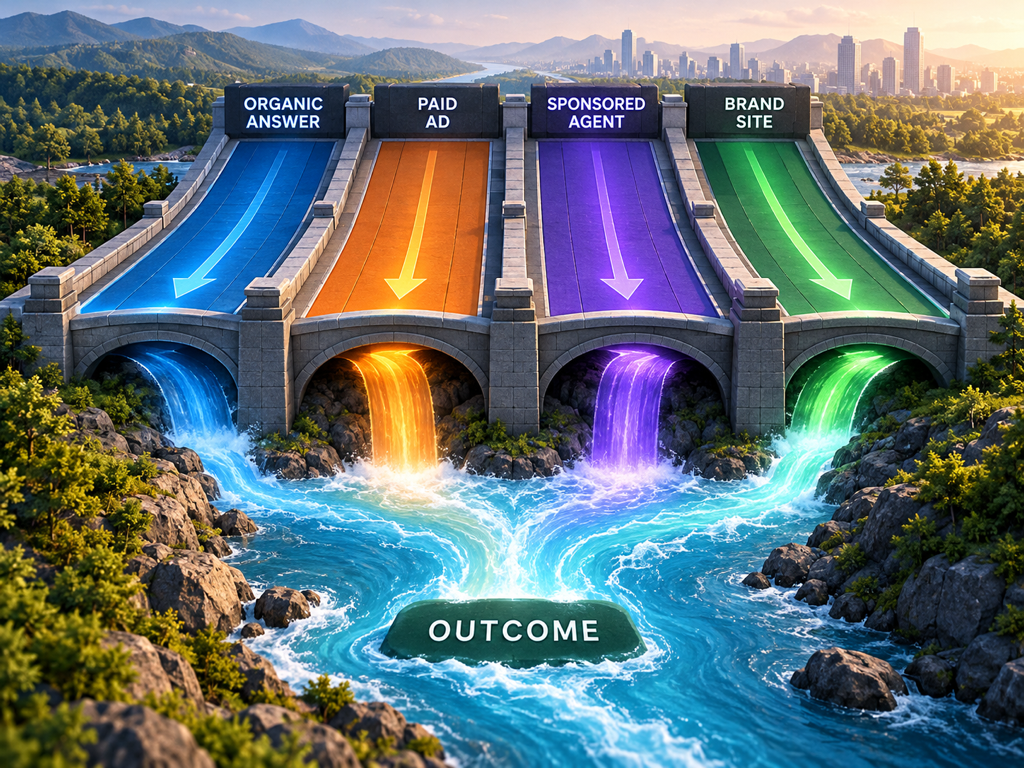
OpenAI's general ads guidance says ads are separate from ChatGPT's answers and do not influence the answers the model gives. That boundary should appear in the measurement architecture and in internal language. A sponsored interaction can create awareness or demand, but teams should not describe the organic answer as a paid placement.
| Experience | Who controls the content system | Primary metric family | Attribution boundary |
|---|---|---|---|
| Organic ChatGPT answer | OpenAI answer system | Mentions, citations, position, sentiment | Not purchased by advertiser |
| Labeled ChatGPT ad | Ads delivery system | Impressions, clicks, spend, conversions | Paid placement separate from answer |
| Sponsored Agent conversation | Business-sponsored ad experience | Starts, depth, qualified actions, safety | Begins from the paid experience |
| Brand website | Advertiser-owned destination | Sessions, leads, purchases, support outcomes | Requires consent-aware analytics |
The same user can move across these experiences, but the systems should remain labeled in reporting.
Define paid acquisition and conversation-quality metrics
Start with the paid funnel: eligible impression, ad engagement, Sponsored Agent start, meaningful exchange, destination action, and business outcome. OpenAI's ads tools and the advertiser's own analytics may expose different parts of that path.
Conversation quality requires more than message count. Define whether the agent answered the user's intent, stayed within approved product facts, handled uncertainty, disclosed sponsorship, offered an appropriate next step, and avoided unsupported claims. A ten-turn conversation that confuses the customer is not better than a three-turn conversation that resolves the question.
Useful quality measures include:
- qualified conversation-start rate;
- intent-resolution rate from reviewed samples;
- factual-error and escalation rate;
- average turns to a useful outcome;
- destination-action or lead rate;
- complaint, block, or negative-feedback rate;
- policy and brand-safety exceptions.
Review samples with a documented rubric. Automated scoring can prioritize cases, but high-stakes product, safety, and compliance claims need human oversight.
Establish the organic baseline before launch
Organic visibility measurement should begin before the campaign. Build a fixed set of category, problem, comparison, and brand prompts. Capture whether the brand appears, where it appears, how it is described, and which sources support the answer.
Run repeated observations because answer outputs vary. Keep platform, region, language, and prompt wording stable. Record concurrent content releases, PR, promotions, and major market events that could change brand demand.
The baseline protects both sides of the analysis. Paid teams can show performance without claiming organic influence, while SEO and GEO teams can identify genuine citation movement without dismissing all demand effects from advertising.
Use control prompts that are unlikely to be affected by the campaign. Broad visibility movement across control and campaign topics may indicate a platform or market change rather than a campaign-specific effect.
Design a clean incrementality and holdout plan
Direct user-level attribution across a private conversational product may be limited and should respect consent and platform rules. Use aggregate experiment design rather than attempting to reconstruct private conversations.
Where the ads platform supports it, use geographic, audience, timing, or campaign holdouts. Predeclare the launch date, observation window, primary paid outcome, organic visibility measures, and guardrails. Keep major site and content changes documented.
For organic visibility, compare the change in campaign-relevant prompts with the change in control prompts. This difference-in-differences style view is still observational when assignment is imperfect, but it is stronger than comparing a single before-and-after number.
Do not attribute an organic citation to a person seeing an ad unless the platform provides valid evidence for that link. Advertising can plausibly increase branded interest and later web discussion, but that is a pathway to investigate, not an automatic credit rule.
Report paid and organic outcomes side by side
A dual scorecard prevents one channel from absorbing the other's success.
Paid columns should include spend, impressions, ad engagements, Sponsored Agent starts, qualified conversation rate, destination actions, conversions, and safety exceptions. Organic columns should include prompt coverage, brand mention rate, recommendation position, sentiment, citation share, cited domains, and source churn.
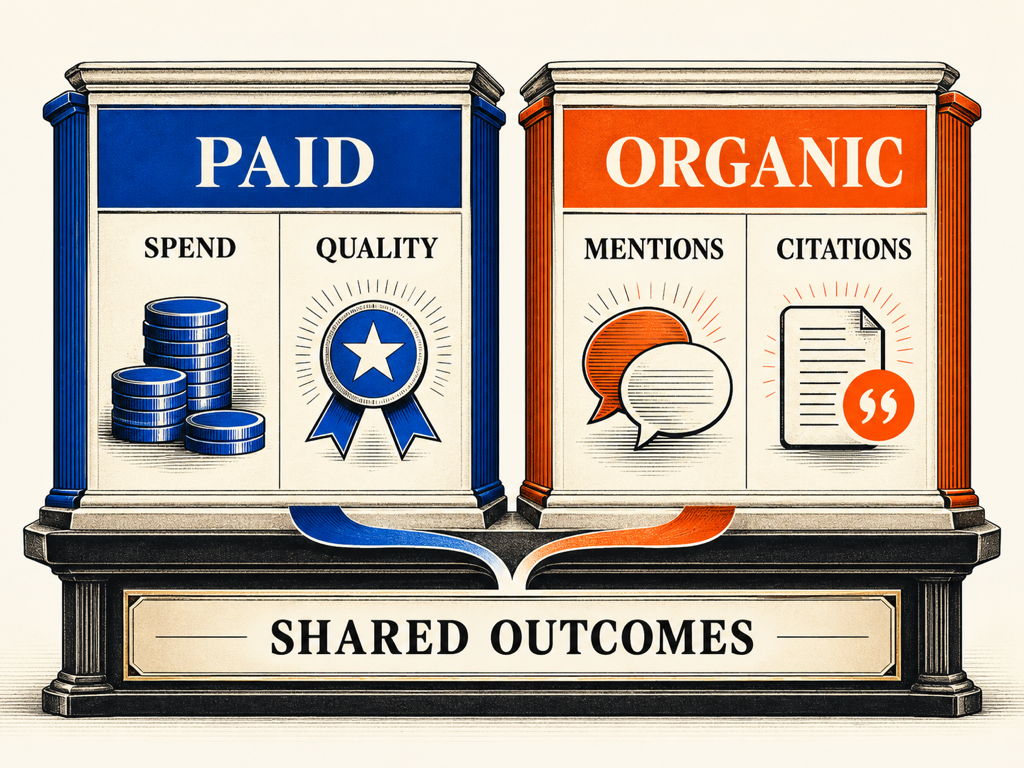
Add a shared-outcomes section for branded search, direct traffic, product-page engagement, assisted conversions, and customer questions. Label these outcomes as influenced or correlated when causality is not established.
Use consistent date ranges but do not force identical refresh cadences. Ad delivery metrics may update frequently, while meaningful organic visibility trends need repeated prompt observations over a longer window.
Use Topify to preserve the independent organic view
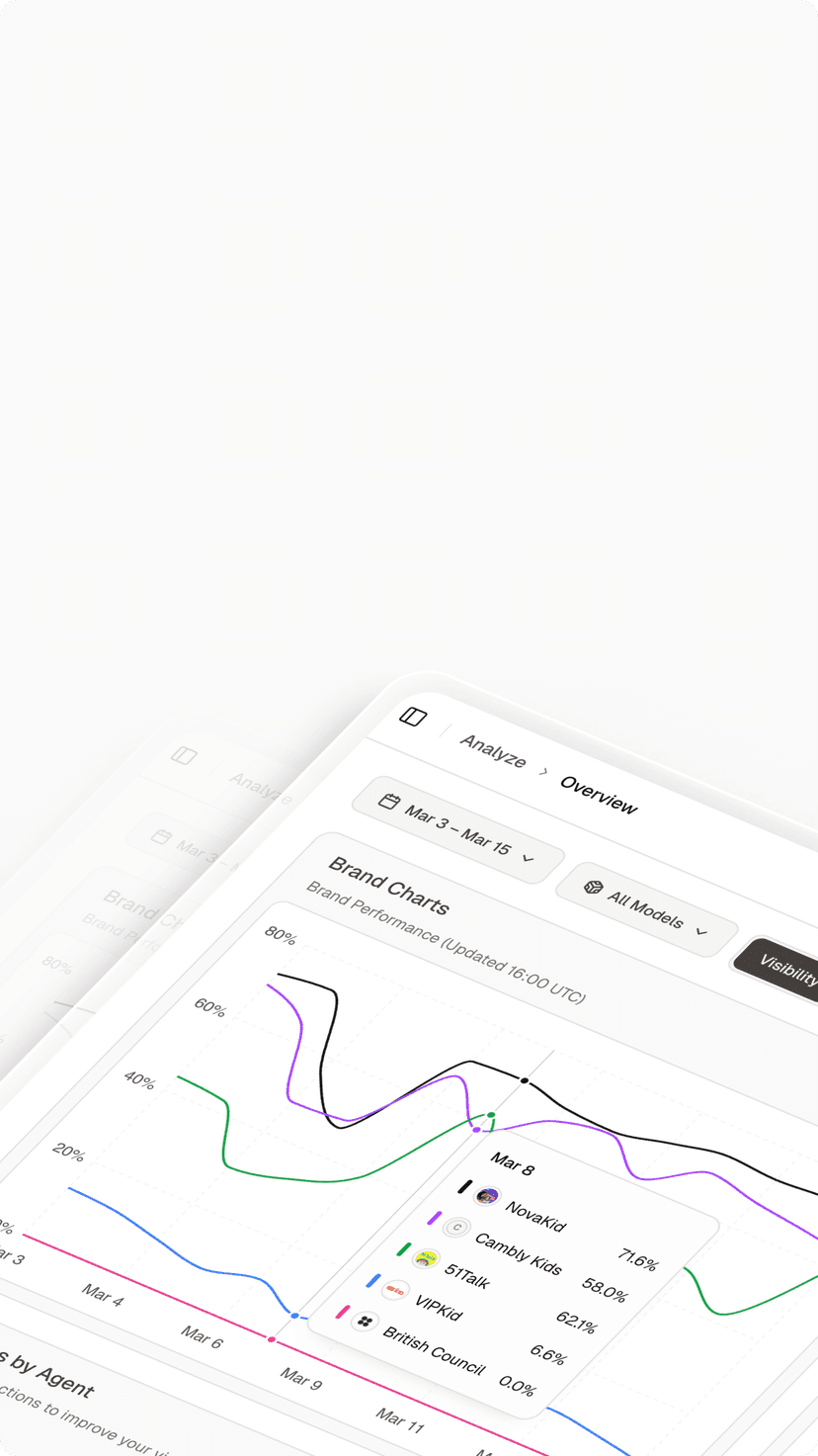
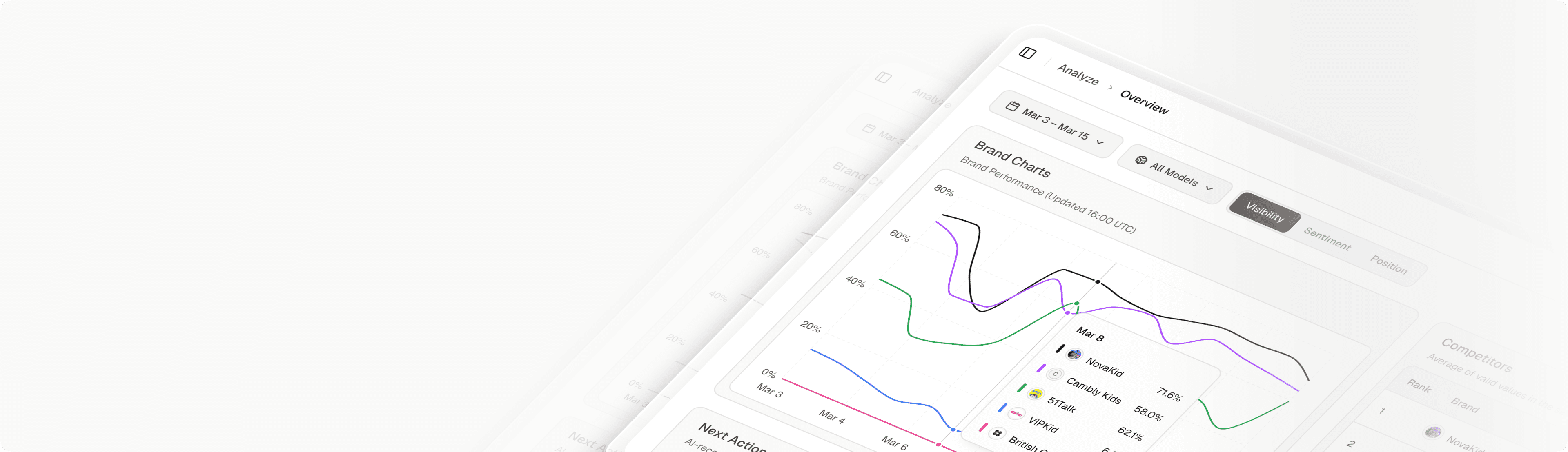
Topify can supply the organic side of the dual scorecard. Before the Sponsored Agents test begins, create prompt groups for the promoted category, competitive alternatives, and unaffected controls. Track visibility, position, sentiment, and cited sources across supported AI platforms on a consistent cadence.
Topify's public overview analytics documentation describes brand metrics, competitor rankings, topic breakdowns, provider filters, and time-series data. Pair those outputs with the ads platform's spend and conversation measures, but do not merge them into one attribution field. Topify does not observe private Sponsored Agent conversations or prove that an ad caused an organic mention. The article ChatGPT Ads Attribution: Why Old Tools Can’t Measure This Channel explains why a baseline and multiple evidence layers are needed when clicks capture only part of the path.
The limitation is useful. It forces the report to distinguish paid performance, organic visibility, and shared business outcomes.
Conclusion
Sponsored Agents should be evaluated as a paid conversational format with its own entry, quality, safety, and conversion metrics. Organic ChatGPT answers remain separate and require an independent baseline of prompts, mentions, positions, sentiment, and citations. Advertising can create demand, but spend should never be reported as purchasing influence over the answer.
Define both scorecards before launch, preserve control prompts or markets, and label shared outcomes according to the strength of the evidence. Topify AI visibility monitoring can maintain the independent organic view while the ads platform measures the sponsored experience. The result is a report that can support budget decisions without weakening trust in either dataset.
FAQ
What is a Sponsored Agent?
It is a ChatGPT Ads format that lets a user start a clearly labeled conversation with an AI representative of a business after engaging with an ad.
Are Sponsored Agents available to every advertiser?
No. OpenAI currently describes them as a limited-alpha format available to selected advertisers, with availability subject to change.
Can buying a Sponsored Agent improve organic ChatGPT answers?
OpenAI says ads are separate from answers and do not influence what ChatGPT says. Any correlated organic movement requires separate measurement and should not be assumed causal.
Which metrics belong in a Sponsored Agent report?
Track paid reach and spend, qualified conversation starts, intent resolution, factual and safety exceptions, destination actions, conversions, plus a separate organic visibility scorecard.