
You ran your brand through 30 high-intent prompts on ChatGPT, Perplexity, and Gemini last week. Prompts like “best [your category] tool for mid-market teams” and “which platforms do [your use case] well.” Your competitors showed up in 22 of them. Your brand appeared in three. Your domain authority is solid. Your Google rankings haven’t slipped. But none of that explains why AI keeps recommending someone else.
That gap between search performance and AI citation performance is where most marketing teams get stuck. And it’s widening.
What AI Brand Citations Actually Measure, and Why Rankings Don’t Tell You
An AI brand citation happens when a generative engine names your brand, links to your domain, or pulls from your content while building its answer. It might be a footnoted link in Perplexity, a named recommendation inside ChatGPT, or a source card under a Google AI Overview.
This isn’t the same as a traditional search ranking. Ahrefs’ analysis of 75,000 brands found that branded web mentions correlate 0.664 with AI Overview visibility, while backlinks correlate just 0.218. That’s a 3x gap. The top three correlating factors were all off-site signals: brand mentions, branded anchors, and brand search volume. None of them are the metrics most SEO dashboards track by default.
The disconnect goes deeper. Only 38% of pages cited in AI Overviews also rank in Google’s top 10 for the same query, down from 76% in mid-2025. For ChatGPT specifically, roughly 80% of cited URLs don’t rank in Google’s top 100 at all.
Ranking well on Google doesn’t mean AI will cite you. And not ranking well doesn’t mean it won’t.
Why Most Brands Have a 0% AI Citation Rate Without Knowing It
Three structural problems explain why brands with strong search presence still get zero AI citations.
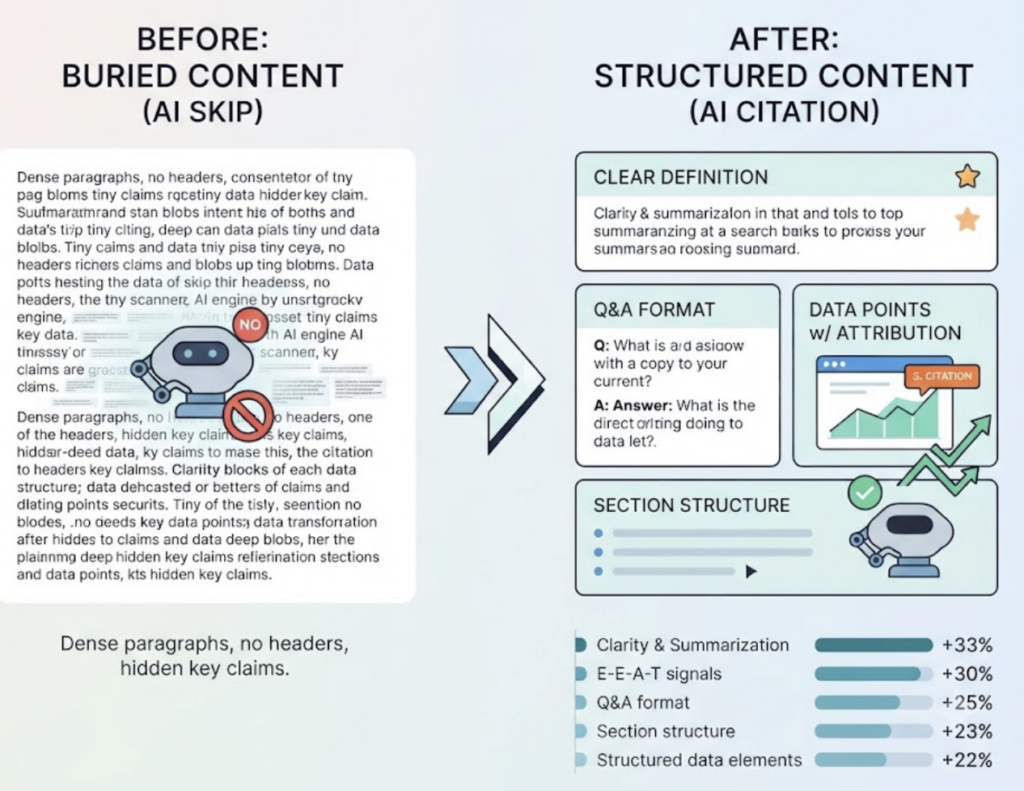
The first is content structure. AI engines use retrieval-augmented generation to decide what to cite. They don’t read your page the way a human does. They scan for extractable passages: clear definitions, direct answers, data points with attribution. If your content buries key claims inside long paragraphs without headers, Q&A formatting, or structured data, the retrieval system often skips it entirely. Semrush’s study of over 300,000 cited URLs found that five content qualities correlate with higher AI citation rates: clarity and summarization (+33%), E-E-A-T signals (+30%), Q&A format (+25%), section structure (+23%), and structured data elements (+22%).
The second is authority signals that AI actually weighs. The Princeton GEO study tested nine content optimization strategies across 10,000 queries and found that adding statistics improved visibility by 41%, citing authoritative sources produced consistent gains, and quotation addition boosted visibility by 28%. Keyword stuffing, by contrast, was among the weakest approaches.
The third is brand consensus. AI platforms scan for agreement across multiple independent sources before citing a brand. If your brand only exists on your own website with minimal external validation, AI systems treat your claims with skepticism. Research shows that brands in the top 25% for web mentions earn up to 10x more AI mentions than the next closest quartile.
The hard part isn’t creating content. It’s creating content that AI treats as citable.
Step 1: Audit Your Current AI Brand Citation Baseline
Before you optimize anything, you need to know where you stand. That means testing your brand across the AI platforms your buyers actually use.
Start by building a list of 20 to 30 prompts that match real buying intent in your category. Don’t just test your brand name. Test category queries (“best project management tools for remote teams”), comparison queries (“alternatives to [competitor]”), and problem queries (“how to solve [pain point your product addresses]”). Run each prompt on ChatGPT, Perplexity, Gemini, and Google AI Overviews.
For each prompt, record three things: whether your brand was mentioned, what position it appeared in relative to competitors, and which sources the AI cited. This gives you your baseline citation rate: the percentage of relevant prompts where your brand shows up.
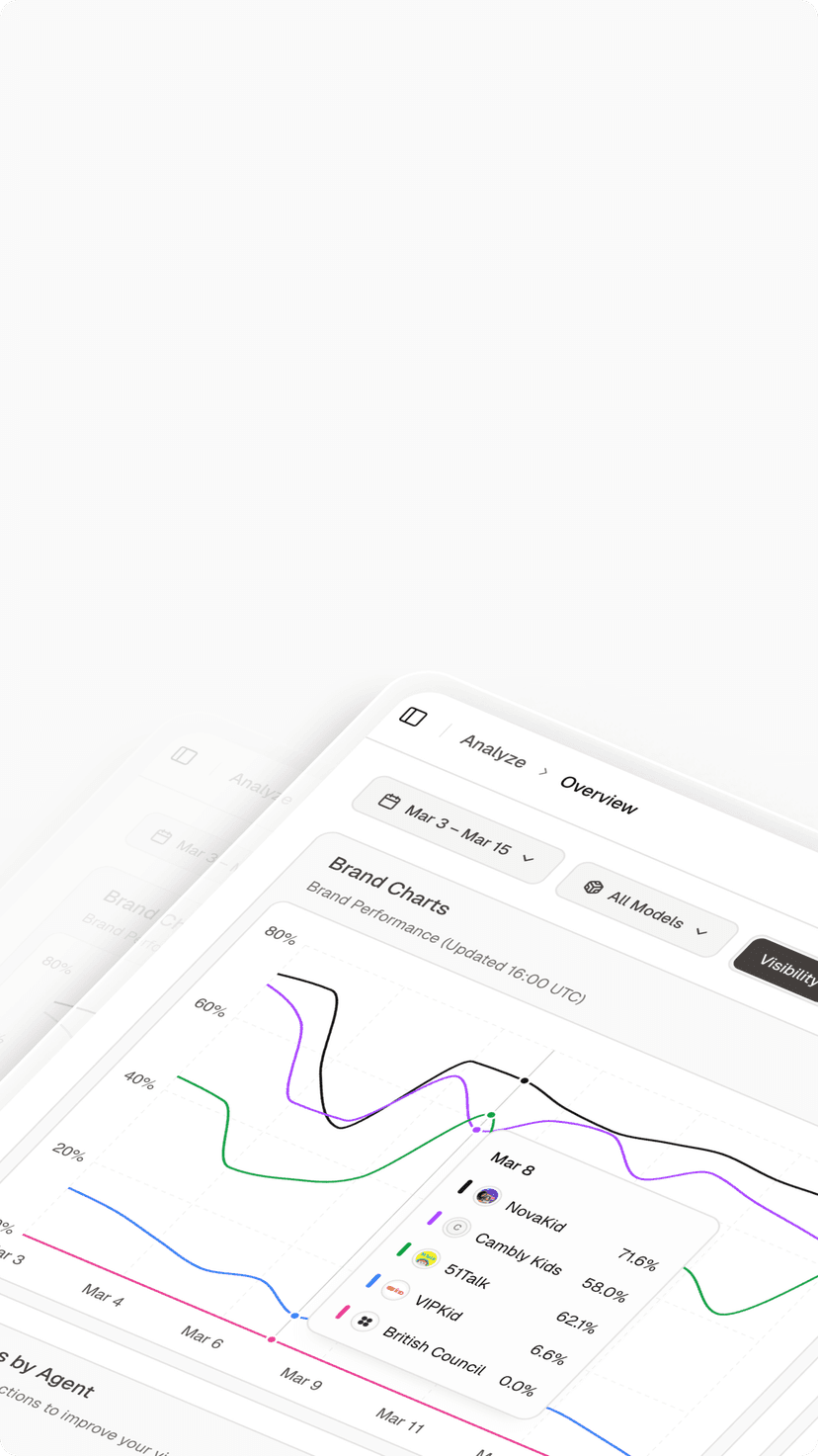
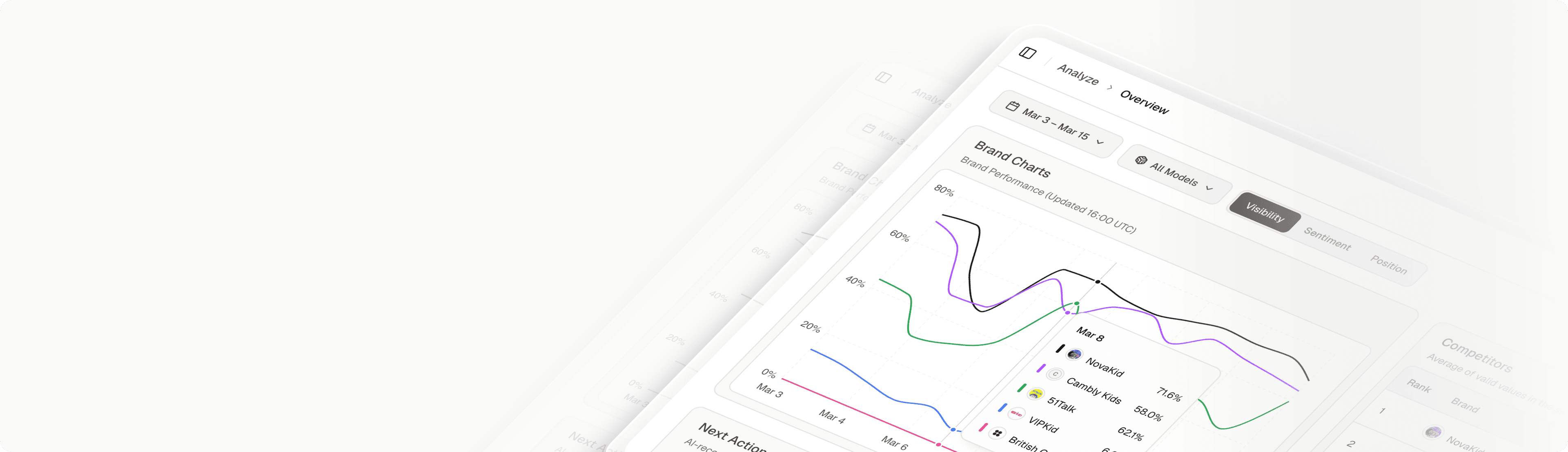
Manual auditing works for an initial snapshot, but it doesn’t scale. AI engines update their citations frequently, and your visibility can shift within weeks. Topify automates this process by tracking brand visibility across ChatGPT, Gemini, Perplexity, and other AI platforms at the prompt level. Its High-Value Prompt Discovery feature surfaces the specific queries driving recommendations in your category, so you’re not guessing which prompts matter. You get citation rate, position data, and sentiment scores in a single dashboard.
If you want a quick technical check before committing to any platform, Topify’s free GEO Score Checker evaluates any URL across four dimensions: AI bot access, structured data, content signals, and overall visibility readiness. It takes under 60 seconds and requires no signup.
Step 2: Reverse-Engineer What AI Engines Cite Instead of You
Once you know where your brand is absent, the next question is: who’s filling that space, and why?
AI citation patterns are not random. Each platform has preferences. Perplexity favors fresh content, with a roughly 40% citation drop for content older than 30 days. ChatGPT draws 49% of citations from listing pages versus brand websites. Google AI Overviews weight semantic completeness heavily.
What you’re looking for are the source domains AI trusts in your category. If Perplexity consistently cites G2 reviews, industry publications, and Reddit threads when recommending your competitors, those are the surfaces where you need to build presence. If ChatGPT pulls from a competitor’s comparison page that you don’t have an equivalent for, that’s a content gap with direct citation impact.
Topify’s Source Analysis feature tracks the exact domains and URLs that AI platforms cite for your tracked prompts. You can see whether your content or your competitor’s dominates those source lists, and identify which third-party surfaces carry the most citation weight in your category. Its Competitor Monitoring automatically detects new competitors entering AI recommendations and shows you their citation sources in real time.
This isn’t about copying competitors. It’s about understanding the citation ecosystem AI uses to build answers, then making sure your brand has presence where it counts.
Step 3: Build Citation-Ready Content That AI Wants to Reference
With your audit data and competitor intelligence in hand, you can now create content specifically designed to earn AI citations. Five strategies consistently move the needle.
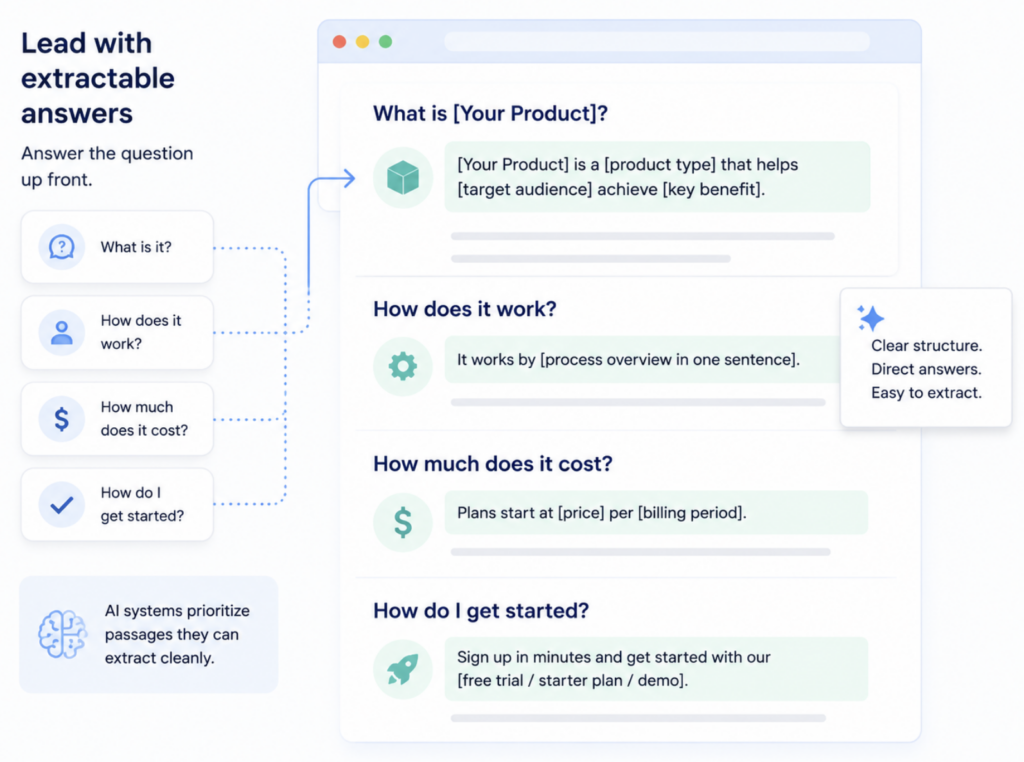
Lead with extractable answers. Structure every key page so the core claim or definition appears in the first two sentences of a section, not buried in paragraph four. AI retrieval systems prioritize passages they can extract cleanly. Use headers that match the actual questions buyers ask.
Add statistics and original data to every substantive claim. The Princeton GEO study found that embedding quantitative data into content produced the single largest visibility gain at 41%. If you have proprietary data, customer benchmarks, or survey results, publish them. Original research functions as both a citable source and a trust signal.
Build entity consistency across every surface. Your brand name, product descriptions, and category positioning need to match across your website, review platforms, social profiles, and earned media. AI engines assess authority holistically. Inconsistent naming or positioning confuses the retrieval system and reduces citation confidence.
Implement schema markup on priority pages. Article, FAQPage, HowTo, and Organization schema help AI systems understand your content’s context. While LLMs don’t read schema directly, structured data feeds into the search indexes that AI platforms query during retrieval.
Earn mentions on surfaces AI already trusts. Data from six independent studies shows that 82% to 95% of AI citations come from third-party earned sources. Your own website contributes only 5% to 10%. Prioritize guest contributions to industry publications, active participation on Reddit and community forums, and building your presence on review platforms like G2 and Capterra. YouTube mentions correlate at 0.737 with AI visibility, the highest of any signal measured.
Content freshness matters too. AI-cited content averages 25.7% newer than what traditional search results surface. A quarterly refresh cycle with a visible “last updated” date is now a baseline requirement.
Step 4: Track, Measure, and Iterate on Your AI Brand Citation Rate
AI citation optimization isn’t a one-time project. Citation patterns shift 40% to 60% month over month, according to tracking data across major AI platforms. What earned you a citation in May might not hold in August.
Set up a measurement framework with three core metrics. Citation frequency is the percentage of your tracked prompts where your brand appears. Citation position is where your brand ranks relative to competitors within AI answers. Citation sentiment is how AI describes your brand when it does mention you.
Topify’s Comprehensive GEO Analytics dashboard consolidates all three into a single view, tracking seven dimensions: visibility, sentiment, position, volume, mentions, intent, and CVR. You can spot a drop in ChatGPT mentions and trace it back to a specific source that stopped citing your brand, all within the same interface.
Build a 30-60-90 day rhythm. In the first 30 days, complete your audit, fix technical blockers (robots.txt blocking AI crawlers, missing schema), and publish your first batch of citation-optimized content. By day 60, launch an earned media push targeting the top five publications AI cites in your category. By day 90, measure your citation rate change and adjust. A realistic expectation for measurable improvement is 60 to 90 days from a structured optimization program.
The stakes keep growing. AI-referred visitors now convert 42% better than non-AI traffic, according to Adobe Digital Insights’ Q1 2026 data. And Yext’s Q1 2026 analysis of 770 brands found citation volume grew 2.77x in a single quarter. The brands building citation infrastructure now will compound that advantage for years.
Conclusion
The gap between search rankings and AI citations isn’t closing on its own. Brands that treat AI citation rate as a measurable, improvable metric, not a black box, are already pulling ahead.
The playbook is straightforward: audit your current citation baseline, reverse-engineer what AI engines cite instead of you, build content optimized for extraction and authority, then track and iterate on a monthly rhythm. Every step benefits from data, not guesswork.
If you haven’t checked where your brand stands in AI search, start with a free GEO score check and see what AI engines can actually see. The window to build citation momentum before your competitors lock in their positions is still open. It won’t stay that way.
FAQ
Q: What is an AI brand citation?
A: An AI brand citation is when a generative engine like ChatGPT, Perplexity, or Google AI Overviews names your brand, links to your domain, or pulls from your content while building its answer. It’s different from a traditional search ranking because AI systems select sources based on entity authority, content extractability, and cross-platform consensus rather than backlink profiles alone.
Q: How do I check if my brand is cited by ChatGPT?
A: The quickest manual method is to run 20 to 30 high-intent prompts related to your category on ChatGPT (with web search enabled) and record whether your brand appears. For scalable, ongoing tracking, AI visibility platforms like Topify monitor citation rates across ChatGPT, Perplexity, Gemini, and Google AI Overviews automatically at the prompt level.
Q: How long does it take to improve AI citation rates?
A: Most brands see measurable changes within 60 to 90 days from a structured optimization program. Quick wins like unblocking AI crawlers in robots.txt and adding FAQ schema can improve technical readiness within days. Earned media and content authority signals take longer to compound but produce the most durable citation gains.
Q: What’s the difference between an AI brand citation and an AI brand mention?
A: A citation includes a source link or direct attribution. AI platforms like Perplexity display inline numbered citations that users can click. A mention is when AI names your brand in its response without linking to a specific source. Both contribute to visibility, but citations carry more weight because they drive referral traffic and signal that AI treats your content as a trusted source.