

GPT-6 Astra rolled out to ChatGPT Plus, Pro, Business, and Enterprise plans this month, and your team probably ran the test everyone runs on a new model: ask it who leads your category. It named three competitors and skipped you. Someone then asked Claude the identical question and got a completely different list. That’s not a fluke, and it won’t get fixed by the next model update either. The gap comes from how each system decides what counts as a trustworthy answer, and that logic barely moved between GPT-5.6 and GPT-6 Astra.
GPT-6 Doesn’t Reset the Brand Mention Problem
A new flagship model tends to reset expectations. People assume smarter reasoning means fairer, more consistent answers about who deserves a mention.
That assumption doesn’t hold. GPT-6 Astra launched in phases starting September 3, 2026, first to OpenAI’s cybersecurity-focused Daybreak program, then to paid ChatGPT tiers and the API. The rollout improved reasoning and agentic task performance. It did not touch the underlying question of which sources OpenAI’s model trusts enough to cite.
Brand recognition in AI answers isn’t a capability problem. It’s a plumbing problem, and plumbing doesn’t upgrade itself just because the engine got faster.
Why the Same Question Gets Three Different Answers
Each AI platform treats citations as a different kind of decision. Muck Rack’s Generative Pulse research, based on more than 25 million cited links across ChatGPT, Claude, and Gemini, found that citation behavior varies meaningfully by platform even though all three lean on earned media for the bulk of what they cite.
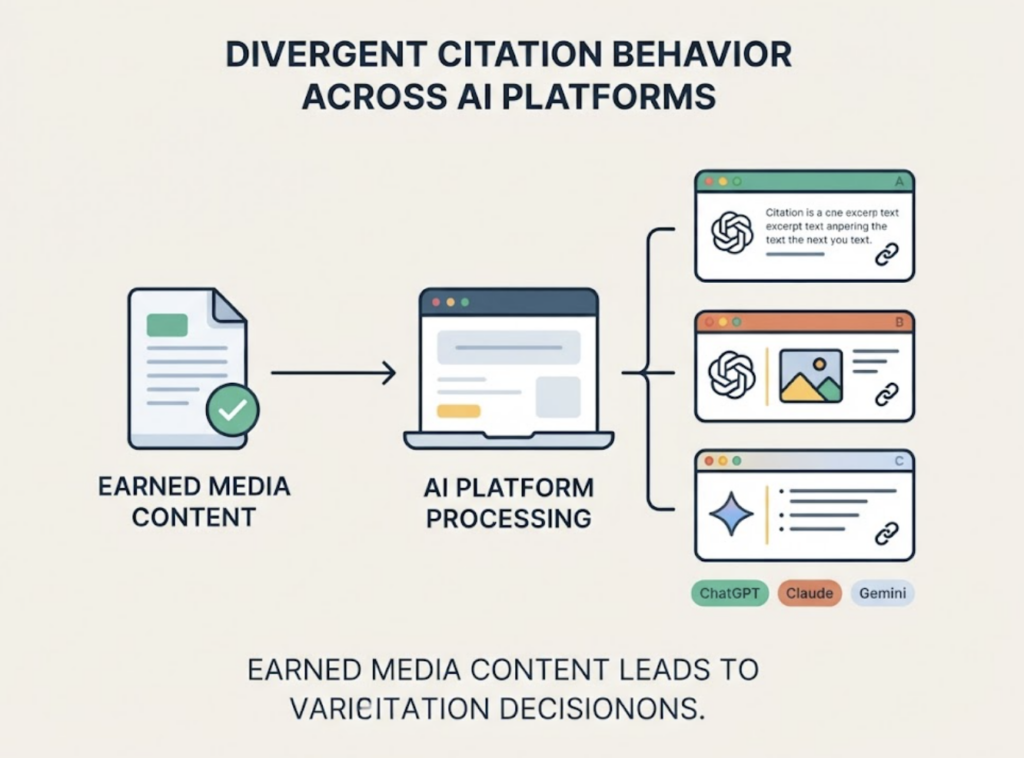
The frequency gap is the clearest signal. ChatGPT includes a citation in 96% of its responses but averages only around five sources per answer, which makes it a near-universal citer that doesn’t dig deep on any single answer. Claude is the opposite. It cites in roughly 55% of responses, but when it does, it pulls in an average of 13 sources, suggesting a higher bar for confidence before it names anything at all. Gemini lands in between, citing in about 82% of responses at an average of eight sources.
That’s the mechanism behind the frustration. Your brand isn’t being judged by three versions of the same test. It’s being judged by three different tests with three different pass thresholds.
| Platform | Share of responses with a citation | Average sources per cited answer |
|---|---|---|
| ChatGPT | 96% | ~5 |
| Gemini | 82% | ~8 |
| Claude | 55% | ~13 |
Read that table as a filter, not a scoreboard. A high citation rate doesn’t mean a platform is more generous toward your brand specifically. It means the platform is more willing to cite something, and whether that something is you still depends on the sources it trusts.
The Data Sources Behind Each Model’s Answers
Citation frequency is only half the story. Where each model actually looks matters just as much, and the three systems don’t pull from the same information ecosystem. Gemini leans heavily on Google’s own search index and Knowledge Graph, so a brand that’s a well-verified entity in Google tends to get mentioned with more confidence. ChatGPT’s live retrieval runs through Bing, which means strong Google visibility doesn’t automatically carry over. Claude relies more on what it absorbed during training plus Brave Search for anything real-time, and it tends to favor academic, technical, and niche editorial sources over major wire coverage.
One widely cited example makes this concrete. When three models were asked who makes the best pickup truck, ChatGPT recommended the Ram 1500 and named Cars.com as its source, while Claude picked the Ford F-150 without citing anything at all. Same category, same question, two different winners, two different evidentiary standards.
| Platform | Primary retrieval source | What tends to earn a mention |
|---|---|---|
| Gemini | Google Search index, Knowledge Graph | Verified entity status, strong Google Business Profile, schema markup |
| ChatGPT | Bing-based live search | Review-site coverage, consumer comparison content |
| Claude | Training data plus Brave Search | Academic, technical, and niche editorial sources over major wire coverage |
Notice that none of these levers overlap much. Optimizing for one platform’s information diet doesn’t automatically move the needle on the other two, and a content strategy built only around Google SEO will quietly under-serve Claude no matter how strong your rankings get.
What Changed (and What Didn’t) When GPT-6 Astra Launched
GPT-6 Astra’s early access went first to enterprise security customers, then expanded to consumer and business plans over the following days. The model brought real gains in agentic reasoning and computer-use tasks. None of that changes the retrieval pipeline that decides whether your brand shows up in a recommendation.
Here’s the part that trips people up: model version numbers move fast, but citation architecture moves slowly. Expecting GPT-7 or the next Gemini refresh to quietly fix an uneven brand footprint is a bet against how these systems have actually evolved so far.
Look at the release cadence itself. OpenAI shipped GPT-5.4, GPT-5.5, and GPT-6 Astra inside a single year, and in each case the headline improvements were reasoning, coding, and agentic task scores rather than a rebuilt citation or sourcing layer. Anthropic and Google have followed a similar pattern with their own releases. Capability and citation behavior are simply two different roadmaps, and only one of them shows up in a launch announcement.
Why Watching One Platform Distorts the Picture
Say your team only tracks ChatGPT because it has the largest user base. You’d see near-universal citation behavior and conclude that showing up there means you’re covered everywhere.
That conclusion would be wrong. A brand can rank first in Gemini because it’s a strong entity in Google’s Knowledge Graph, then disappear entirely from Claude because it lacks the third-party editorial depth Claude’s higher citation bar demands. Single-platform monitoring doesn’t just miss data. It actively produces a false sense of security, and that’s a worse position than knowing nothing at all.
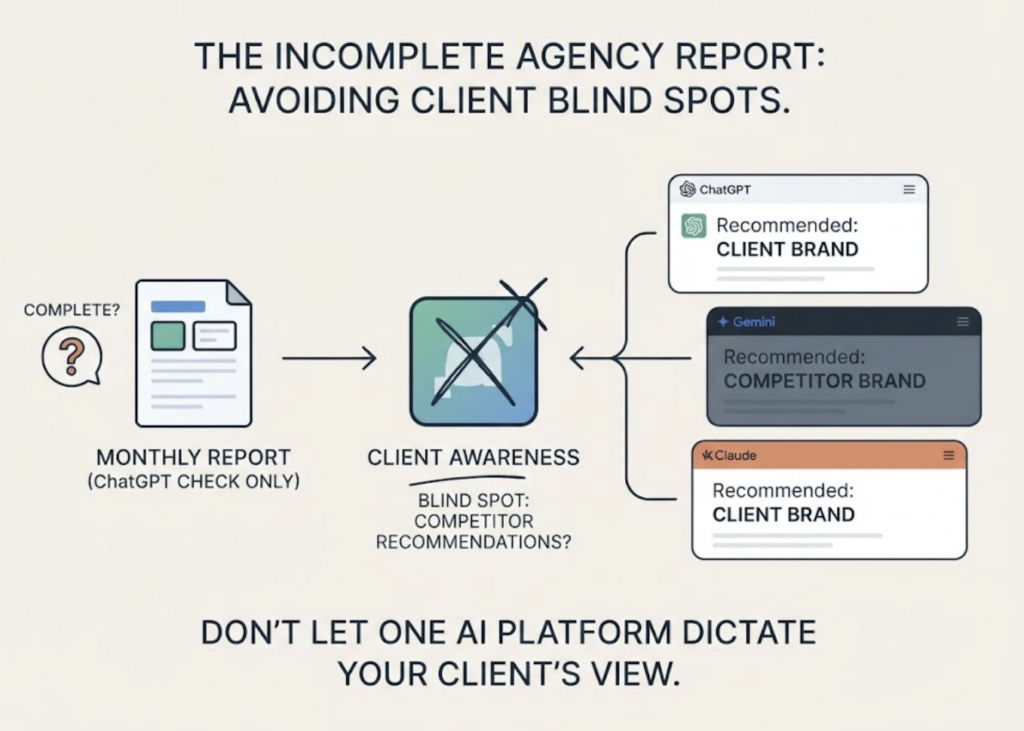
The same logic runs in reverse for agencies managing several client brands. A monthly report built only from ChatGPT checks looks complete because ChatGPT answers almost every prompt with something. It says nothing about whether Gemini is quietly recommending a competitor to the exact same searchers, and a client who finds that gap on their own tends to ask why it wasn’t in the report.
How to See Brand Recognition Across GPT-6, Claude, and Gemini
Getting a real picture of GPT-6 vs Claude vs Gemini brand recognition means measuring the same prompts across all three at once, not sampling one and assuming it represents the rest.
This is the specific gap Topify‘s Comprehensive GEO Analytics is built to close. It tracks visibility, sentiment, and position across GPT-6, Claude, Gemini, and other major AI platforms from a single dashboard, so a drop in one engine shows up next to what’s holding steady in another. In practice, that means catching a scenario where your brand is well-positioned in Gemini results but has quietly gone missing from Claude’s answers, then tracing that gap back to a specific source category Claude’s citation logic tends to favor.
The trade-off is that no single-platform tool gives you this. Point solutions built around one model will always miss the two-thirds of the picture happening somewhere else. If you’re ready to see where your brand actually stands, you can get started with Topify and run the comparison across models directly.
Conclusion
GPT-6 Astra changed what these models can do, not how they decide who to mention. That distinction matters because it means the uneven brand recognition your team is seeing today isn’t a temporary bug waiting on the next release. It’s a structural feature of how ChatGPT, Claude, and Gemini each evaluate trust, and it calls for ongoing, cross-platform measurement rather than a one-time check after a launch headline.
FAQ
Q: Does GPT-6 Astra cite sources differently than GPT-5.6 did?
A: The rollout focused on reasoning, coding, and computer-use gains rather than a rebuilt citation system, so the underlying retrieval and sourcing behavior that shaped brand mentions in GPT-5.6 largely carries over into GPT-6 Astra.
Q: Why does my brand show up in Gemini but not in Claude?
A: Gemini draws heavily on Google’s Knowledge Graph, so a well-verified Google entity often gets mentioned with confidence. Claude sets a higher bar for third-party evidence before it names a brand, so thinner editorial coverage can leave you out of its answers entirely.
Q: Is it possible to rank well in ChatGPT and still lose customers to a competitor named by Claude?
A: Yes. Because each platform pulls from different sources and applies different citation thresholds, strong visibility in one model says very little about your standing in another, which is why single-platform tracking regularly misses real gaps.
Q: How often should brands re-check AI visibility after a major model launch like GPT-6 Astra?
A: Treat model launches as a trigger to re-baseline, not a one-time check. Citation behavior can shift gradually as a new model’s retrieval sources mature, so ongoing tracking catches drift that a single post-launch snapshot won’t.

