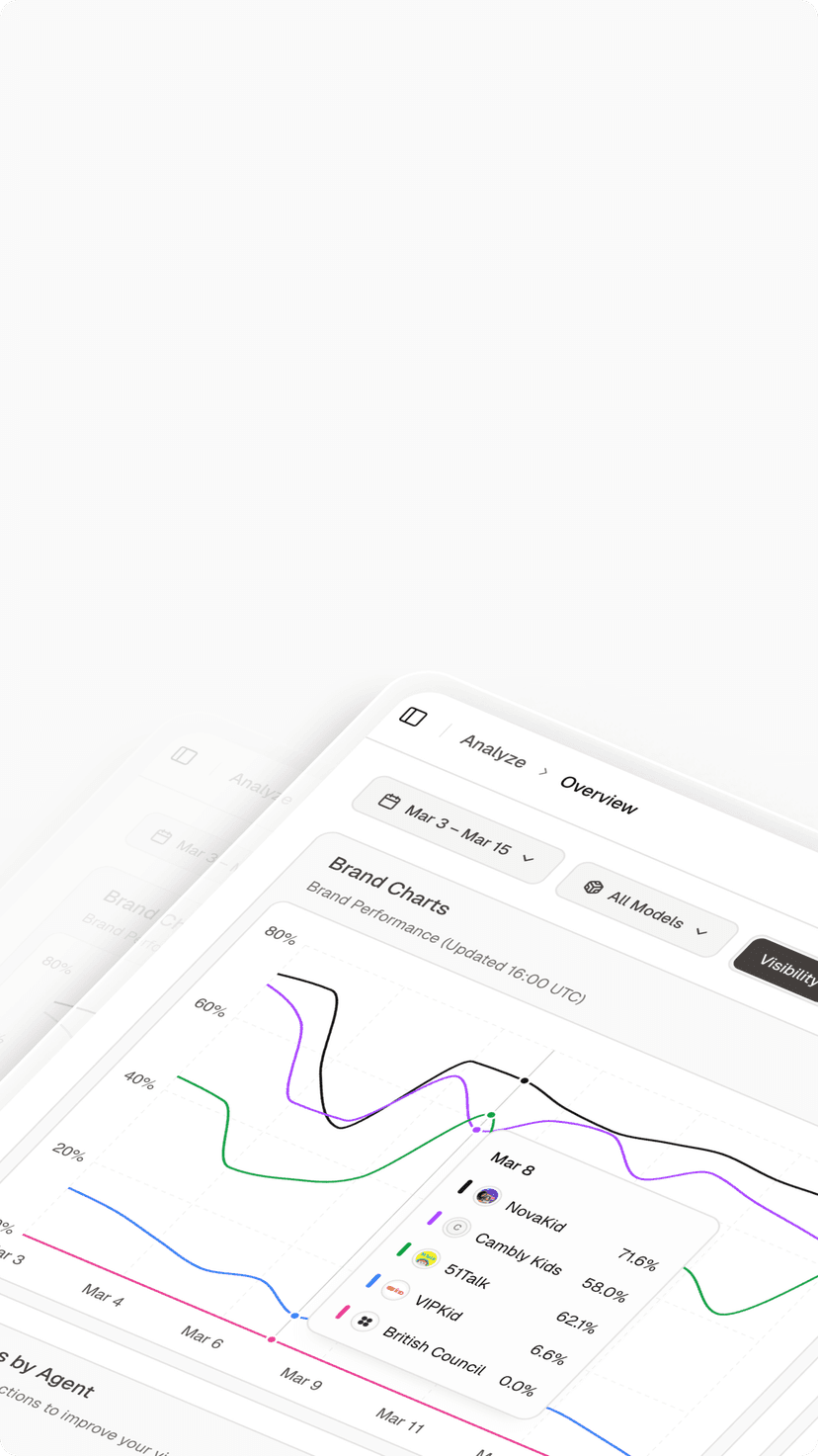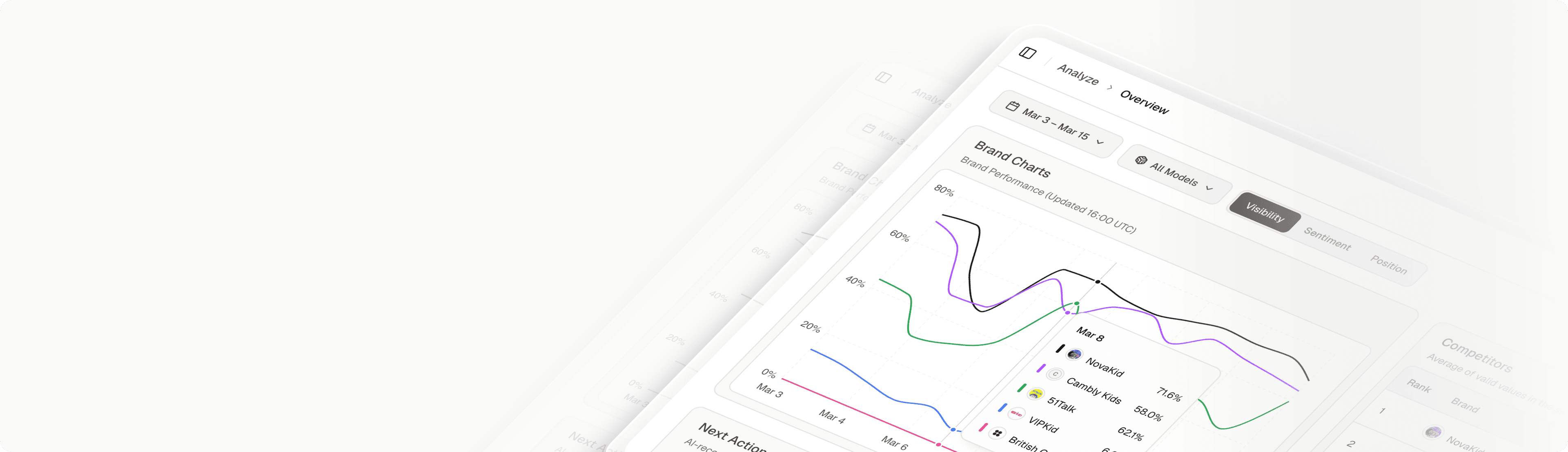

You run your domain through a free GEO checker. Sixty seconds later you’ve got a score, a color, and a list of fixes. It feels like an answer.
It’s a snapshot, not a strategy. A GEO checker tells you whether AI crawlers can reach your pages and whether your markup is readable. It doesn’t tell you what ChatGPT actually says about your brand next week, or whether a competitor just took the spot you were sitting in yesterday.
That gap between “diagnosed” and “understood” is where most GEO efforts stall. Here’s what a checker like Topify’s GEO Score Checker can genuinely tell you, what it can’t, and why the difference matters more than the score itself.
GEO Score Checker
What a GEO Score Actually Measures
Run a URL through a GEO checker and you typically get a 0-100 composite score built from four underlying signals.
| Score Dimension | What It Measures | What a Low Score Usually Means |
|---|---|---|
| Bot Access | Whether GPTBot, ClaudeBot, PerplexityBot, and Google-Extended can crawl your pages | Robots.txt rules, JavaScript rendering, or CDN configs are quietly blocking AI crawlers |
| Structured Data | Whether schema markup and JSON-LD exist and parse correctly | AI models can’t confidently extract facts about your product, pricing, or entity |
| Content Signals | How authoritative and semantically clear your content reads to a language model | Thin pages, vague claims, or missing depth on the topics you want to be cited for |
| Visibility Score | How often your brand actually surfaces across AI platforms | You’re technically crawlable but not showing up in the answers that matter |
That table is the honest, useful part of any checker. It’s specific, it’s actionable, and it typically takes under a minute to generate. Check your GEO score for a domain and you’ll usually know within seconds whether the problem is technical access, content depth, or something else entirely.
That’s the “can” list. It’s shorter than most vendors imply, and shorter than the “can’t” list below.
Three Things a One-Time Score Genuinely Tells You
It tells you if you’re invisible for a fixable reason. Plenty of sites with strong content still score under 40 because a robots.txt rule written years ago for a different bot policy is silently blocking GPTBot. That’s a five-minute fix once you know it’s there.
It tells you if your structured data is doing its job. Missing or malformed schema doesn’t just hurt traditional search. It makes it harder for a language model to extract a clean fact about who you are, what you sell, or what you’re known for.
It tells you where you stand relative to a benchmark, right now. A score of 65 on Content Signals means something specific: your pages are semantically legible but probably light on the depth or specificity that gets cited over a competitor’s.
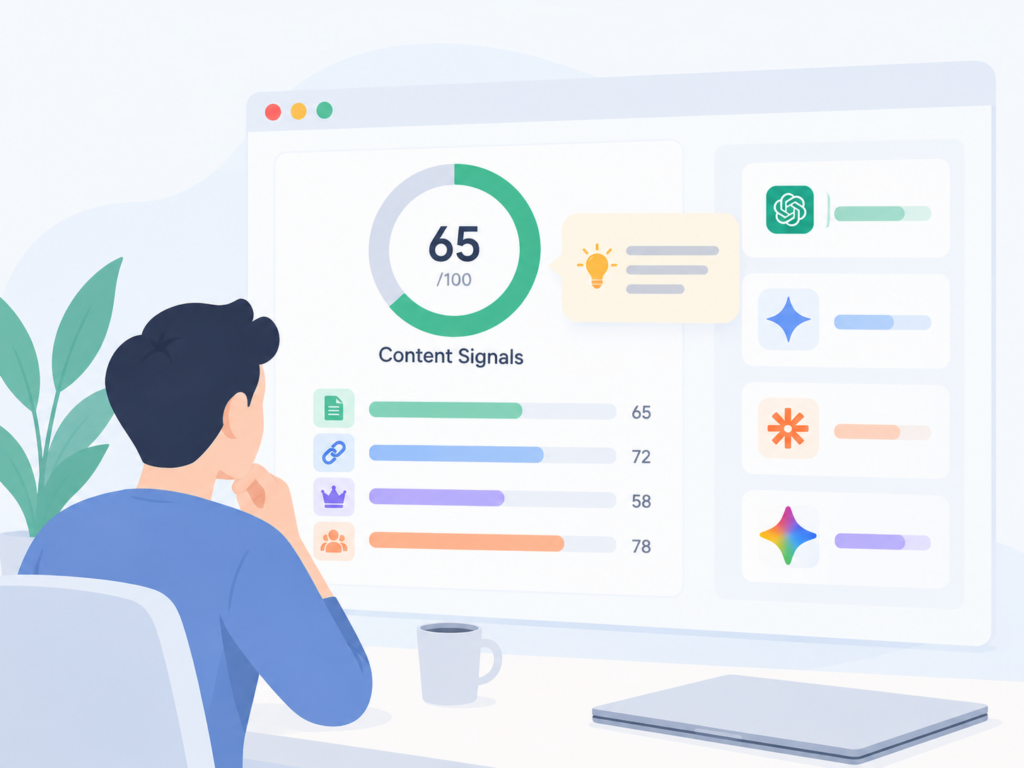
Those are real, verifiable diagnostics. They’re also, by definition, a photograph of a single moment.
Four Things No Single Checker Can Tell You
It can’t tell you what changed since last week. AI models retrain, re-crawl, and re-weight sources constantly. A score from Tuesday says nothing about Thursday. One recent audit of free AI visibility tools noted that most free checkers return sampled data with rate limits on free tiers, which is another way of saying: useful for a spot check, not for tracking.
It can’t tell you why a competitor is winning the answer you wanted. A composite score doesn’t show which domains ChatGPT or Perplexity actually cited, or which competitor’s case study got pulled into the answer instead of yours. That requires watching the citations themselves, not just your own crawlability.
It can’t tell you how sentiment shifts. Being mentioned isn’t the same as being recommended. A brand can appear in an AI answer framed neutrally, favorably, or with a caveat that quietly kills the deal. A point-in-time score has no concept of tone.
It can’t tell you the platform-by-platform picture. One analysis of AI visibility tooling pointed out that different checkers cover different engines, and that a brand strong on one platform may be invisible on another. A single blended score can hide a brand that’s solid on ChatGPT and completely absent from Perplexity, which matters if your buyers lean on one platform over the other.
Why the Same Site Can Score Differently Two Weeks Apart
Here’s the part that surprises most people the first time they run a repeat check: the number moves, and not always because you changed anything.
Language models update their retrieval and ranking behavior on their own schedule. Structured data that parsed cleanly last month can start failing silently after a platform changes how it reads JSON-LD. A page that was cited last week can drop out of an answer this week because a competitor published something more specific.
None of that shows up in a single audit. It only shows up if you’re checking again, and again, on a schedule you control.
| AI Prompt Example | Platform | What a One-Time Score Misses |
|---|---|---|
| “best [category] tools 2026” | ChatGPT | Whether you were cited last month and dropped this month |
| “is [brand] worth it” | Perplexity | The exact sentiment of how you’re described, not just that you appear |
| “[brand] vs [competitor]” | Gemini | Which domain the model actually cited to make the comparison |
| “alternatives to [brand]” | ChatGPT | Whether a competitor’s new content is now outranking yours in the answer |
| “[category] pricing comparison” | Perplexity | Whether your pricing page is even in the citation pool anymore |
Research on AI search adoption backs up why this matters at scale. AI search now touches close to 1 billion users, with more than a quarter of consumers using AI for a meaningful share of their internet searches, and a large share of sites remain invisible to AI crawlers without knowing it because of outdated robots.txt rules or missing structured data.
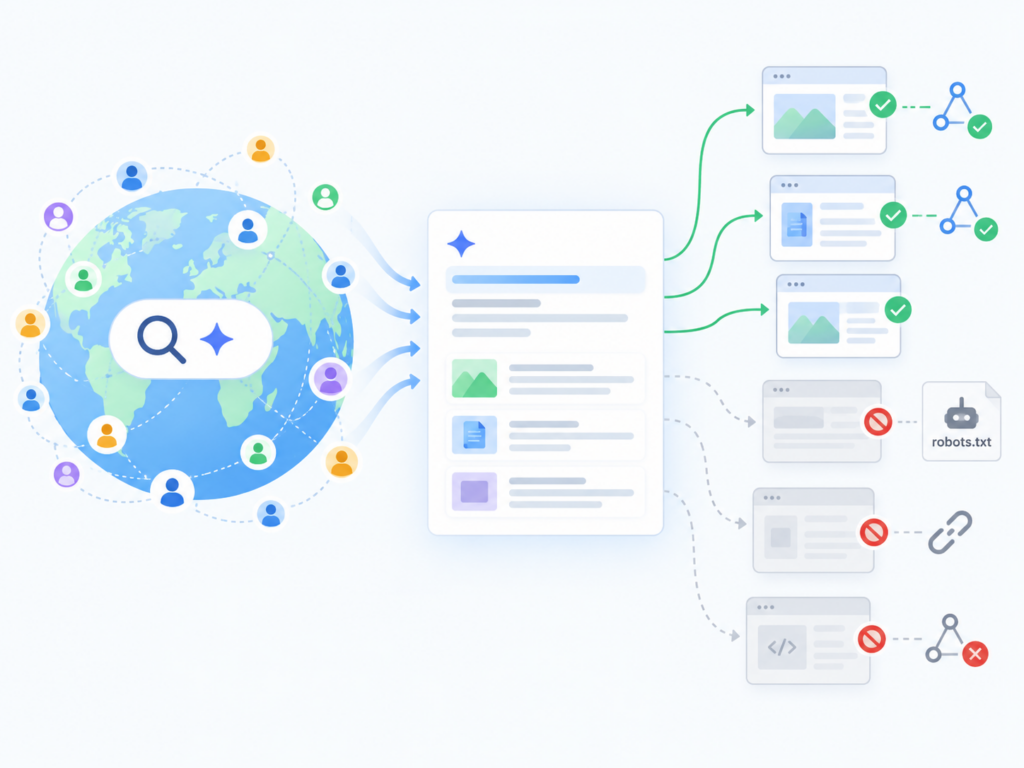
Free Snapshot vs. Continuous Monitoring
A checker answers “where do I stand right now.” Continuous monitoring answers “where am I heading, and who’s catching up.” Both have a place. The mistake is treating the first as a substitute for the second.
| Capability | Free GEO Score Checker | Topify Platform |
|---|---|---|
| Check frequency | One-time snapshot | Continuous monitoring |
| Dimensions tracked | 4 GEO scores | Full GEO analytics plus sentiment and citation tracking |
| Historical trends | None | Full trend history with alerts |
| Competitor benchmarking | Not included | Real-time competitor tracking |
| Platform breakdown | Aggregated | Per-platform view across ChatGPT, Perplexity, Gemini, and AI Overviews |
| Optimization actions | Directional guidance | Specific, prioritized execution steps |
The checker gives you a snapshot. Topify’s platform tracks the trajectory. A single score tells you where you stand. Continuous monitoring tells you which direction you’re moving, and how fast a competitor is closing the gap.
If the diagnostic side of this resonates, start a free trial and see the same four dimensions tracked over time instead of once. Full plan details, including the Standard tier most teams start with, are worth a look before you commit either way.
Conclusion
A GEO checker is the right first move, not the last one. It’s fast, it’s free, and it will genuinely tell you if AI crawlers can reach your site and if your structured data is doing its job. What it can’t do is tell you what’s happening next Tuesday, or which competitor just took the citation you were counting on.
Run your GEO score to get the baseline. Once you know where the gaps are, tools like the AI Robots Checker and Brand Authority Checker can help you dig into specific issues before you decide whether ongoing tracking is worth the investment.
Frequently Asked Questions
Is a GEO score the same as a Google ranking?
No. A GEO score measures how well AI crawlers can access and interpret your site, and how often you surface in AI-generated answers. It’s a separate signal from traditional search rank, though the two often correlate.
Why did my GEO score change without me editing anything?
AI platforms regularly adjust how they crawl, parse, and cite content. A shift in Bot Access or Content Signals can happen even with no changes on your end, which is why a single check only reflects that moment.
What’s the most common reason for a low Bot Access score?
Outdated robots.txt rules are the usual culprit. Many sites unintentionally block GPTBot, ClaudeBot, or PerplexityBot while leaving traditional search crawlers untouched, which keeps them ranking on Google while staying invisible to AI answers.
Do I need continuous monitoring if I already ran a free check?
It depends on how much AI-driven traffic matters to your business. A free check is enough for a one-time audit. If competitors, content, or platform behavior are moving fast, a single snapshot goes stale quickly, and that’s the gap continuous tracking is built to close.