

Your team checks a handful of ChatGPT prompts every week to see if your brand shows up in the answer. That’s felt like enough for the past year, because ChatGPT was the AI surface buyers actually used.
That assumption got harder to defend in September. On September 3, OpenAI shipped GPT-6 Astra, and within days the same model was generally available on Amazon Bedrock and running in private preview on Snowflake Cortex AI. The model your customers might ask about your product in chat is now the same model running inside a cloud data warehouse or an internal procurement agent, somewhere your weekly ChatGPT check will never reach. That’s the actual shift behind chatgpt enterprise search this quarter, and it’s less about a smarter model and more about where that model now lives.
What Just Happened to ChatGPT Enterprise Search
Three announcements landed inside two weeks, and together they redraw where AI-driven brand decisions actually happen.
First, GPT-6 Astra rolled into ChatGPT Work, Codex, and the API, OpenAI’s framing for how enterprise teams use the model beyond the consumer chat window. Alongside it, OpenAI introduced new enterprise plugins for ChatGPT Workcovering Oracle Analytics, Power BI, Workday, Navan, and Avalara. That means employees can now pull the model into business intelligence dashboards, expense systems, and HR data without leaving ChatGPT.
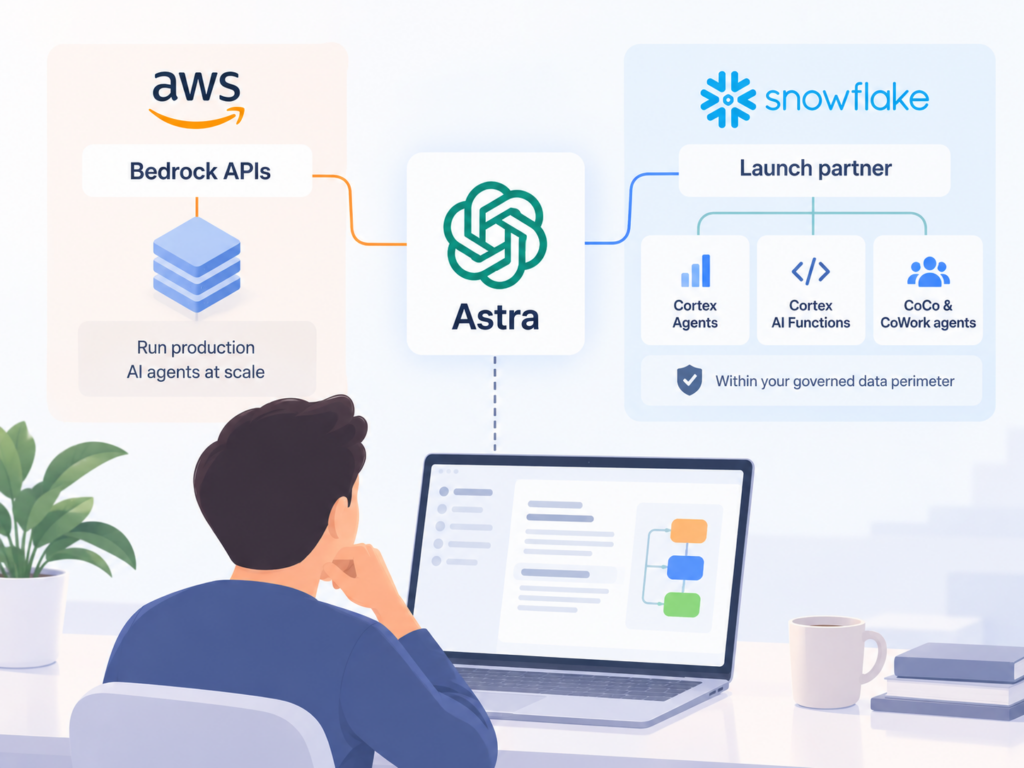
Second, AWS made Astra callable directly through Bedrock APIs, the infrastructure layer companies already use to run production AI agents at scale. Third, Snowflake positioned itself as a launch partner, putting Astra to work inside Cortex Agents, Cortex AI Functions, and Snowflake’s own CoCo and CoWork agents, all within a customer’s governed data perimeter.
None of that requires a single person to open chat.openai.com.
What ChatGPT Enterprise Search Covers Once the Model Leaves the Chat Window
Chatgpt enterprise search used to mean one thing: whether your brand got mentioned when someone typed a question into ChatGPT. That definition doesn’t hold anymore.
The same model now answers questions from at least three different surfaces. A consumer or a researcher still types into ChatGPT directly. An employee triggers it through a Power BI or Oracle Analytics plugin without realizing which model is doing the reasoning. And an autonomous agent inside Bedrock or Snowflake calls it programmatically, with no human reading the raw prompt or response at all.
Each surface can produce a brand recommendation, a vendor comparison, or a sourcing decision. Only the first one shows up in a typical AI visibility dashboard.
Why an Agent That Buys and Reports Changes Your Visibility Math
This wouldn’t matter much if enterprise agents were still a side project. They aren’t. Gartner expects 40% of enterprise applications to embed a task-specific AI agent by the end of 2026, up from under 5% in 2025. That’s not a slow ramp. That’s most of the software your buyers already use quietly gaining an agent layer this year.
The purchasing side moves even faster. Analysts project that by 2028, AI agents will mediate roughly 90% of B2B buying, representing more than $15 trillion in spend. Some of those agents will run on GPT-6 Astra, inside Bedrock pipelines or Snowflake workflows, recommending vendors the same way a person might ask ChatGPT for one.
That’s the part most brand tracking still can’t see.
Where the Blind Spot Actually Sits
Picture a finance team using the new Avalara plugin inside ChatGPT Work to reconcile vendor invoices. Or a data team running a Cortex Agent in Snowflake that recommends a tool for a workflow gap it just detected. In both cases, GPT-6 Astra is generating a brand-relevant answer, and in both cases, it’s happening inside a company’s private environment, not a public search box anyone can screenshot.
Your product might get mentioned favorably in that answer, or skipped in favor of a competitor, and there’s no external dashboard that captures either outcome directly. What you can measure is the layer the model draws its reasoning and citation habits from, the public AI answers on ChatGPT, Perplexity, and Gemini that shape how models describe your category before they’re ever deployed inside someone’s data stack.
How to Track Chatgpt Enterprise Search Across Every Surface That Matters
You can’t instrument a customer’s private Snowflake instance, and no vendor honestly claims otherwise. What you can do is treat the public AI answer layer as the leading indicator for how the same underlying models will talk about you once they’re embedded in enterprise workflows.
That’s the layer Topify tracks. It monitors how your brand shows up across ChatGPT, Gemini, Perplexity, and other major AI platforms, using seven metrics: visibility, sentiment, position, volume, mentions, intent, and CVR. In practice, that means you can see whether your brand’s visibility on ChatGPT dropped in the same week a competitor’s citations picked up, and trace it to the specific source domain that stopped mentioning you.
Two features matter most for this particular shift. Dynamic Competitor Benchmarking shows who AI engines recommend in your category right now, before that pattern gets baked into an enterprise agent’s default behavior. Source Analysis reverse-engineers which domains and pages the models actually cite, so you can tell whether your own content is even in the pool a Bedrock or Cortex agent would draw from.
Teams typically start with a 30-day trial through Topify’s Basic plan, tracking around 100 prompts across ChatGPT, Perplexity, and AI Overviews, before expanding prompt coverage as they map out procurement-style queries. It’s a narrower job than monitoring every enterprise deployment of a model, but it’s the part of the visibility problem that’s actually measurable today.
What to Do Before This Becomes Standard Procurement Behavior
Start by widening the prompts you track, not just the platforms. If your current list is “best [category] tool” and a handful of comparisons, add the phrasing a procurement agent would actually generate, things like “vendor for [use case] with SOC 2 compliance” or “alternative to [competitor] for enterprise teams.”
Next, check who’s getting cited. If a competitor’s documentation or comparison page shows up repeatedly in AI answers about your category, that page is training the model’s default recommendation, and it’ll keep doing so whether a human or an agent asks the question.
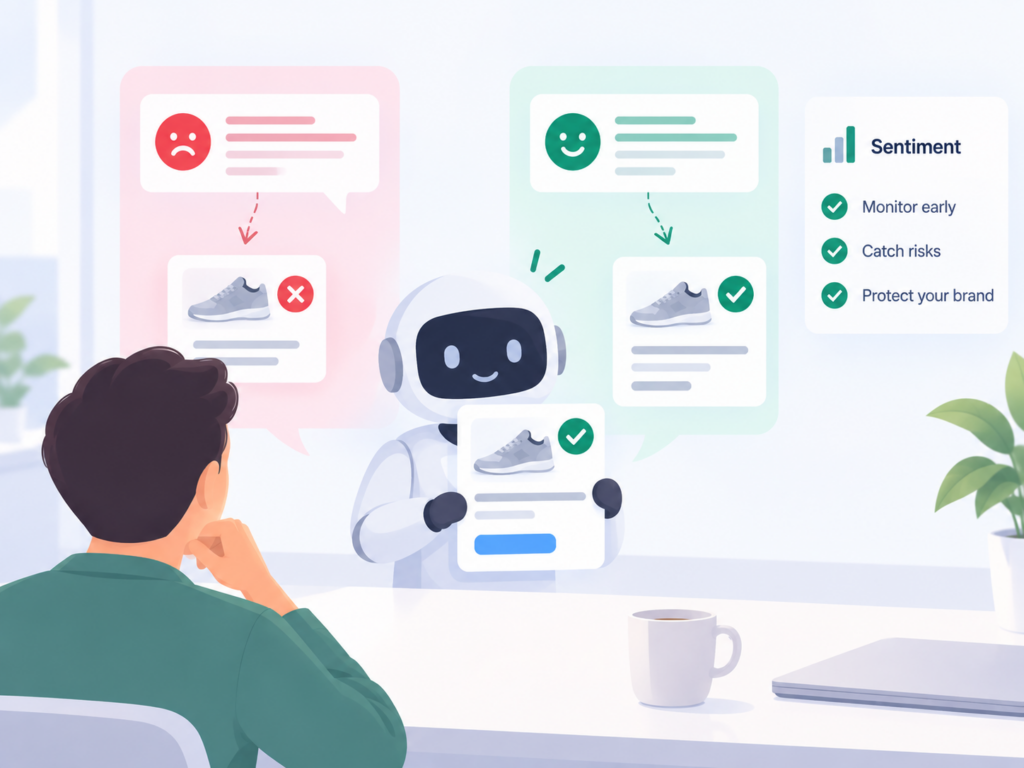
Finally, treat sentiment as a leading risk, not a vanity metric. An agent making a purchasing recommendation on your behalf inherits whatever tone the model already has toward your brand. If that tone skews negative or inaccurate today, it doesn’t improve on its own once the model gets deployed somewhere you can’t see.
Conclusion
GPT-6 Astra landing on Bedrock and Snowflake in the same week it hit ChatGPT Work is a signal, not an isolated product update. The model your customers chat with is now the same model quietly running procurement, analytics, and recommendation workflows behind the scenes at companies you’re trying to reach. You can’t monitor those private deployments directly, but you can make sure the public AI answer layer, the one that trains how these models talk about your category, works in your favor before it gets baked into someone else’s agent.
FAQ
Q: What does “chatgpt enterprise search” actually mean now?
A: It used to describe brand visibility inside the ChatGPT chat window alone. With GPT-6 Astra running through ChatGPT Work plugins, Amazon Bedrock, and Snowflake Cortex AI, the same term now covers any surface where that model answers a work-related question, including ones a marketing team never sees directly.
Q: Is GPT-6 Astra available to everyone yet?
A: Rollout has been staged. It launched to a limited set of organizations first, then to ChatGPT Plus, Pro, Business, and Enterprise plans, with enterprise access on Bedrock and API access off by default until an admin turns it on.
Q: Can an AI visibility tool track what happens inside a company’s private Snowflake or Bedrock deployment?
A: No, and any tool claiming that should be treated skeptically. What tools like Topify track is the public AI answer layer, which shapes how the underlying model describes your brand across every deployment, private or otherwise.
Q: How is this different from just watching ChatGPT mentions?
A: ChatGPT mentions tell you how the model performs in a single, visible setting. Tracking visibility, sentiment, and source citations across multiple public AI platforms gives you a broader read on how the model’s default reasoning treats your brand, which carries over wherever that model gets deployed next.

