

Your brand finally started showing up in a handful of AI Mode citations. Mention rate holding steady, sentiment neutral to positive, nothing alarming on the dashboard. Then Google confirms it: Shopping ads are moving into AI Mode, sitting in the same conversational thread as the answer your content earned. That’s not a ranking problem you fix with a content refresh. It’s a real estate problem, and the real estate you were already competing for just got a lot more expensive.
Google Just Put Shopping Ads Inside the AI Mode Answer Box
Google made the change official at Google Marketing Live, announcing AI-powered Shopping ads that let Gemini pull up relevant products and write a custom explainer on why a specific product fits the shopper’s query, all inside the AI Mode conversation itself.
The format looks different from a standard product listing ad. According to reporting on the rollout, sponsored product cards now appear below the AI-generated answer, carrying a “Sponsored” label, images, pricing, and purchase options woven directly into multi-turn shopping conversations.
This isn’t an isolated ad experiment either. Google introduced the Universal Commerce Protocol months earlier, partnering with Shopify, Etsy, Wayfair, Target, and Walmart to let AI agents discover products and complete checkout without leaving the AI Mode interface. Ads are the monetization layer on top of an already-built commerce pipeline.
Why AI Mode Ads Change the Math for Organic Brands
AI Mode already replaces organic results with a conversation instead of showing them alongside one. That’s what makes this different from an ordinary AI Overviews update. Research cited by Omnibound’s 2026 analysis puts the zero-click rate inside AI Mode at 93 percent, meaning organic SEO effectively has no reach unless a brand earns a citation in the response itself.
Ads now compete for a piece of an answer space that was already shrinking for organic content. Ahrefs’ most recent study found that by December 2025, the presence of an AI Overview correlated with a 58 percent lower click-through rate for the top-ranking organic page, up from 34.5 percent the previous spring.
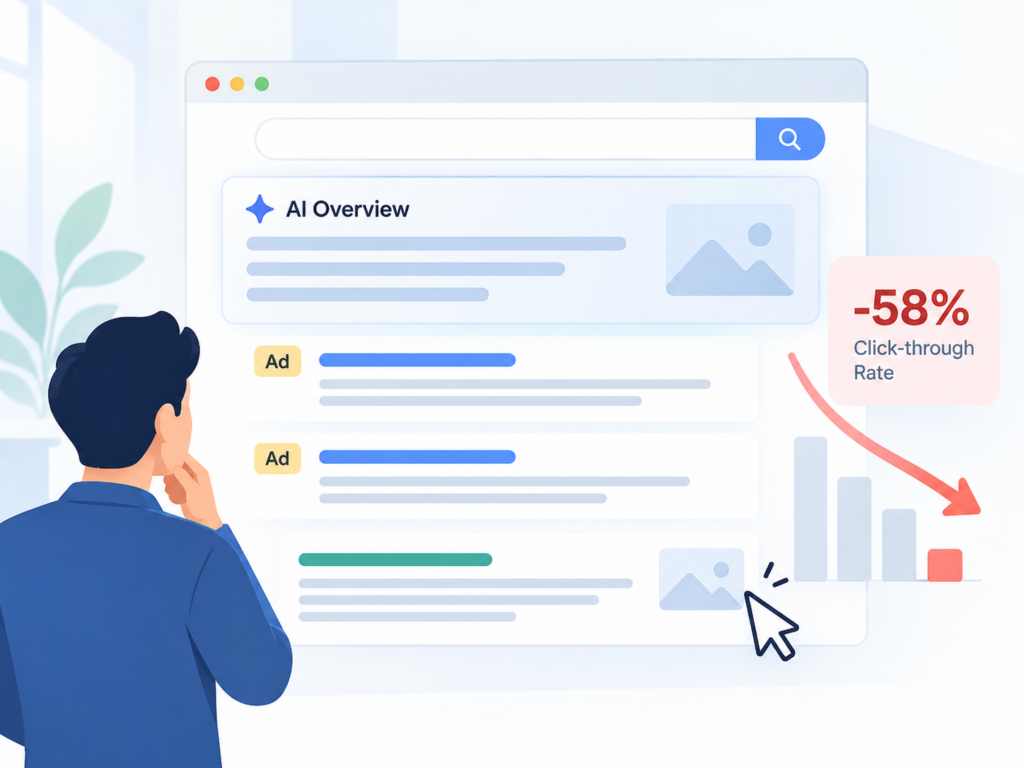
The click that used to go to your site now has to compete with a sponsored product card before it even gets a chance to compete with your organic result.
What’s Actually at Risk: Mentions, Not Just Rankings
Position on a traditional SERP used to be the whole game. Inside AI Mode, it’s a much smaller part of it. A behavioral study from Pew Research, referenced in Omnibound’s AI Overviews breakdown, found users click a traditional result only 8 percent of the time when an AI-generated answer is present, compared to 15 percent without one.
What still moves the needle is whether the AI chooses to name your brand at all. The same research shows brands cited inside AI-generated answers earn roughly 35 percent more organic clicks and 91 percent more paid clicks than brands the AI leaves out entirely, a gap that widens further once ads occupy part of that same answer.
Ranking first doesn’t help much if the AI never says your name.
How to Tell If Your Brand Is Already Losing Ground to AI Mode Ads
The uncomfortable part is that Google Search Console has no visibility into this. AI Mode sessions don’t register as organic sessions, so a brand can be losing ground inside the answer box for weeks before anyone on the marketing team notices the drop in referral traffic.
The signals worth watching sit one layer deeper than clicks: how often your brand is mentioned across AI Mode conversations for your category, whether the sources AI cites are shifting away from your domain, and whether your relative position inside a multi-brand answer is sliding as sponsored cards take up more of the response.
This is where a dedicated monitoring layer matters more than another SEO audit. Topify tracks how brands appear across ChatGPT, Gemini, Perplexity, and Google’s AI surfaces, which makes it possible to isolate whether a visibility drop traces back to a genuine mention decline or simply to more ad real estate competing for the same screen. Pairing that with source-level tracking shows which domains AI Mode is citing instead of yours, so the fix targets the actual gap instead of a guess.
What Brands Can Still Control
Ad placement inside AI Mode is Google’s decision. What gets cited inside the answer next to those ads is still earnable, and it responds to specific, identifiable actions.
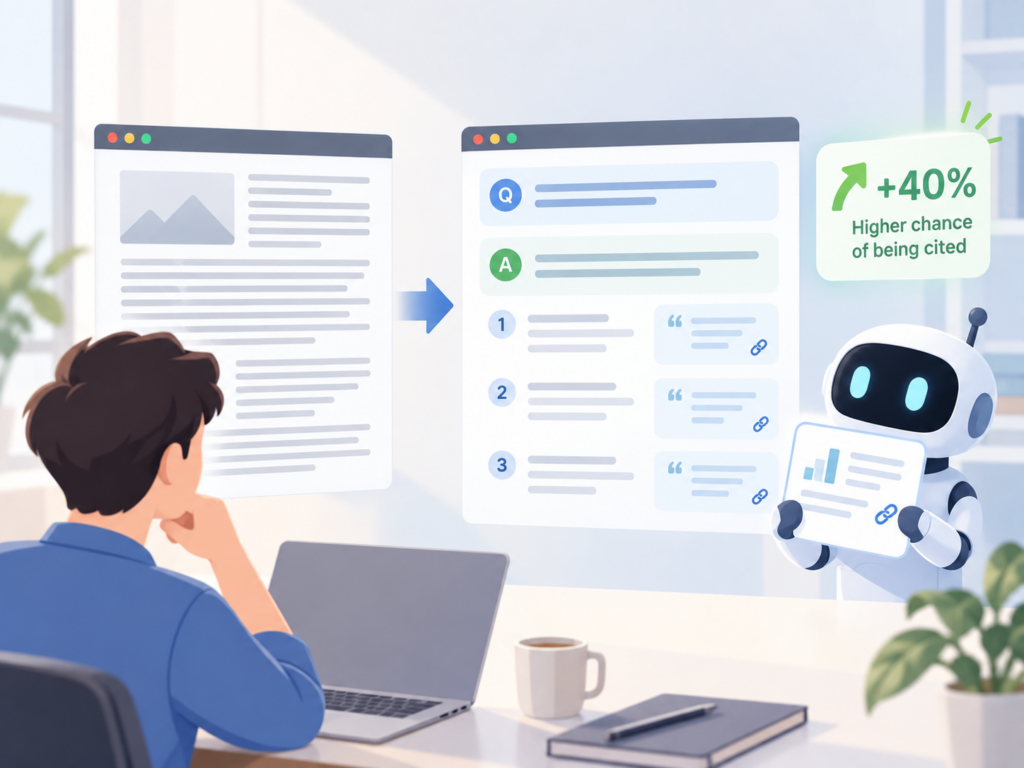
Structure content to answer questions directly rather than building toward a conclusion. AI systems extract information that’s easy to synthesize, and structured citations with clear statistics have been shown to improve citation odds by as much as 40 percent in Princeton’s GEO research.
Third-party authority carries more weight than most teams assume. AI models cite third-party sources roughly 6.5 times more often than brand-owned pages, so a mention in an industry publication or a well-regarded forum thread often does more for AI Mode visibility than another blog post on your own domain.
Finally, monitoring cadence has to shift from monthly to continuous. Ad rollouts like this one change the competitive landscape inside an answer overnight, not over a quarter, and catching the shift early is the difference between adjusting content strategy and explaining a traffic drop after the fact. Teams ready to start can get started with Topify to put that tracking in place before the next rollout lands.
Conclusion
AI Mode ads aren’t a temporary test. They’re built on infrastructure Google has been assembling for over a year, and the direction is clear: more commerce, more sponsored placement, less organic real estate inside the answer itself. The brands that hold up aren’t the ones with the highest rankings. They’re the ones that know, in real time, whether AI Mode is still choosing to say their name.
FAQ
Q: What exactly changed with AI Mode ads?
A: Google began placing AI-powered Shopping ads and sponsored product cards directly inside AI Mode conversations, appearing alongside or below the AI-generated answer rather than in a separate ad block.
Q: Do AI Mode ads replace organic results entirely?
A: Not entirely, but AI Mode already shows a synthesized conversation instead of a traditional results list, and ads now take up part of that same limited space, leaving less room for organic mentions to surface.
Q: How is this different from ads in regular AI Overviews?
A: AI Overviews still sit above a page of organic blue links. AI Mode replaces that page with a conversational interface, so ads placed there compete directly inside the answer instead of alongside a separate results list.
Q: Can SEO alone protect visibility once ads enter AI Mode?
A: Traditional SEO still feeds the retrieval layer AI systems draw from, but it doesn’t guarantee a mention inside the generated answer. Tracking citation rate and source overlap separately from rankings is what shows whether a brand is actually losing ground.

