
Your domain authority is 70. Your keyword rankings are solid. Your team has spent years building topical authority across every major product page. Then someone asks ChatGPT for a recommendation in your category, and your brand doesn’t show up once.
You check Perplexity. Same thing. Google AI Mode? A completely different set of names, most of which you’ve never considered competitors. Ahrefs’ research across 15,000 long-tail queries found that just 12% of AI citations overlap with Google and Bing’s top 10 results. That means 88% of the sources AI systems cite are invisible to your rank tracker. The disconnect between SEO performance and AI brand citation isn’t a glitch. It’s structural.
What AI Brand Citation Measures, and Why Rankings Don’t Capture It
AI brand citation is the rate at which AI search engines reference your brand by name, link to your domain, or pull from your content when generating answers. It’s a fundamentally different metric from search rankings because it reflects a different evaluation process.
Google ranks pages based on keyword relevance, backlinks, and technical signals. AI systems like ChatGPT, Perplexity, and Gemini evaluate whether a source is extractable, verifiable, and corroborated by third-party references. Growth Memo’s research found that ChatGPT includes source citations in 87% of its responses but only mentions brands in 20.7%of those answers. It behaves more like an academic paper with footnotes than a search results page with clickable listings.
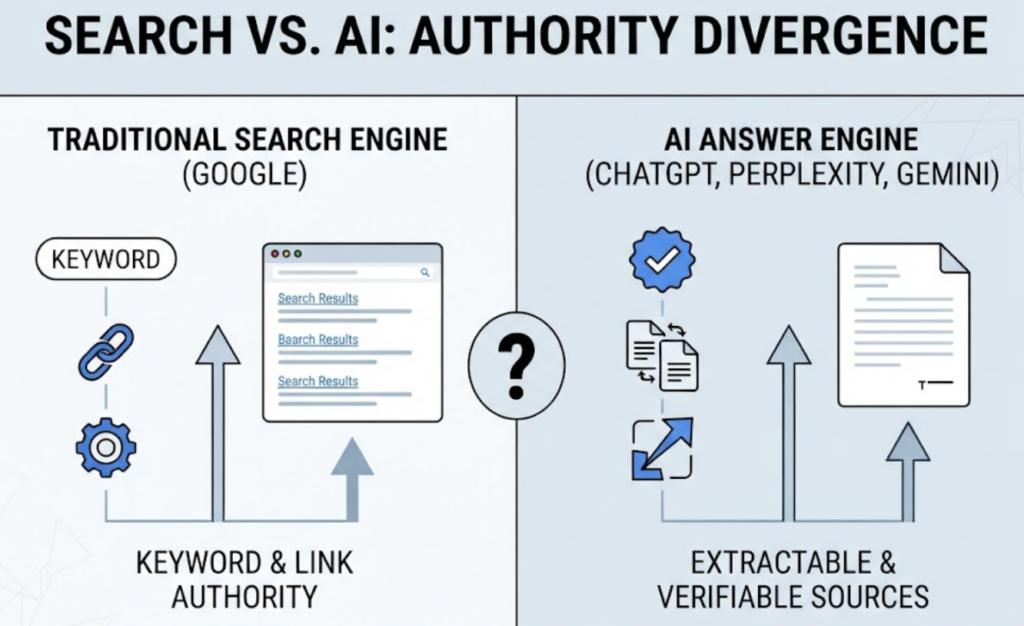
That’s the core distinction. Google answers “which pages match this query.” AI answers “which brands should I recommend, and what sources back that up.”
A brand can rank on page one for dozens of high-intent keywords and still have zero AI brand citation for those same queries. The signals that earn you a SERP position and the signals that earn you an AI citation overlap far less than most marketers assume.
The Data Behind the AI Brand Citation Gap: 2.1% Overlap
The numbers are stark. Semrush’s AI visibility analysis in early 2026 found that only 2.1% of pages ranking in Google’s top 10 also appear among ChatGPT’s citations for the same queries.
EMGI Group’s study of 150 SaaS companies drove the point further. Across 120 keywords, 44% of brands ranking in Google’s top 10 received zero ChatGPT citations. On the other side, 81% of brands that ChatGPT did recommend weren’t in Google’s top 10 at all.
This isn’t a narrow technical category problem, either. Marketing Automation showed the widest gap at 53%. Over half the brands ranking well on Google got no AI citation whatsoever.
Ahrefs’ independent analysis across four AI assistants confirmed the pattern. 80% of URLs cited by ChatGPT don’t rank anywhere in Google’s top 100. Not page two. Not page ten. Nowhere in the index that your SEO dashboard tracks. Moz’s study of nearly 40,000 queries took it one step further: 88% of Google AI Mode citations don’t match the URLs in the organic SERP for the same keyword.
A rank tracker is now a partial-coverage instrument. It measures one retrieval system while buyers increasingly use four or five.
Why ChatGPT and Perplexity Ignore High-Ranking Brands
The gap exists because AI systems select sources using criteria that barely overlap with traditional ranking factors.
ChatGPT’s source selection tends to favor content that is reference-like, extractable, and carries trust signals from multiple independent sources. That’s a finding from DataForSEO’s research comparing retrieval behavior to citation behavior. Being broadly indexed and popular gets you retrieved. Being structured, specific, and externally validated gets you cited.
Here’s the thing: 67% of the top 1,000 pages ChatGPT cites are domains that brand SEO can’t touch. Wikipedia, government sites, educational institutions, Apple’s App Store, major news outlets. You can’t pitch or optimize your way into those positions. They’re structural citation anchors in the AI knowledge graph.
Machine readability compounds the problem. Boring Marketing’s audit of 2,225 pages found that 36% were thin or non-extractable by AI systems, 77% carried no visible publication date, and only 21.2% displayed author signals. AI systems cite pages they can parse, date, and attribute. If your content doesn’t meet those criteria, it doesn’t matter how many backlinks it has.
The EMGI study surfaced a case that illustrates the inversion perfectly. Notion earned 13 ChatGPT citations across three unrelated SaaS categories despite ranking for zero of the 120 study keywords in Google’s top 20. Notion didn’t out-SEO its competitors on ChatGPT. It out-community-signaled them through Reddit threads, YouTube tutorials, and broad social proof that trained the model to treat it as a category-defining answer.
The Cross-Platform AI Brand Citation Blind Spot
The AI brand citation gap gets worse when you look across platforms.
Averi’s analysis of 680 million AI citations found only 11% domain overlap between ChatGPT and Perplexity. Superlines’ cross-platform study documented citation volume variance of up to 615x for the same brand between platforms. A company dominating Perplexity’s citation pool can be nearly absent from ChatGPT, and vice versa.
Growth Memo’s H1 2026 research put it plainly: 91% of AI citations appear in only one of ChatGPT, Perplexity, or AI Overviews.
That means if you’re tracking AI brand citation on a single platform, 89% of the citation picture is invisible to you. A brand manager who sees a healthy Perplexity citation rate and assumes the brand is visible across AI search is working with incomplete data. On the flip side, a zero score on ChatGPT might be masked by a strong Perplexity presence in any tool that reports a blended aggregate.
The practical implication is straightforward. Per-platform, per-prompt tracking isn’t optional. It’s the only way to know where your brand is actually cited and where the gaps are.
How to Close the AI Brand Citation Gap
Closing the gap requires changes in three areas: content architecture, off-site authority, and measurement infrastructure.
Content architecture for AI extraction. AirOps and Growth Memo’s fan-out study of 16,851 queries found that pages with headings closely matching the user’s query get cited 41% of the time vs. 29% for weak matches. Heading structure is the single strongest on-page lever for AI brand citation. Short, focused pages with clear factual claims outperform comprehensive “ultimate guides” in ChatGPT’s citation pipeline. Add visible publication dates, author signals, and structured data. These aren’t nice-to-haves. They’re the signals AI systems use to decide if a page is worth citing.
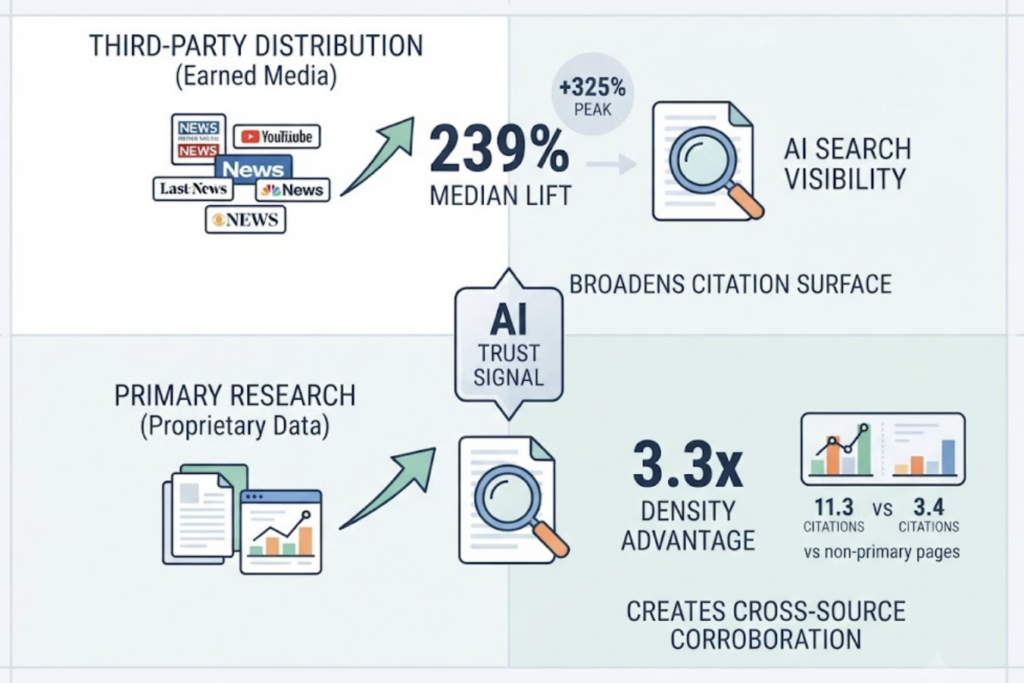
Off-site authority through earned media. Stacker’s GEO study across 87 stories and 2,600+ prompts found that distributing content through third-party news outlets produces a 239% median lift in AI search visibility. In some cases, the lift reached 325%. Growth Memo’s July 2026 data on original research showed that primary research pages average 11.3 citations vs. 3.4 for non-primary pages, a 3.3x density advantage. The combination of proprietary data and broad distribution creates the kind of cross-source corroboration that AI systems treat as a trust signal.
Prompt-level, cross-platform measurement. You can’t close a gap you aren’t measuring. And rank trackers don’t measure AI brand citation. You need a system that tracks brand mentions, source citations, and competitor positioning across ChatGPT, Perplexity, Gemini, and AI Overviews at the individual prompt level.
That’s where Topify fits in.
What Topify’s AI Brand Citation Analytics Reveal That Rank Trackers Don’t
Most SEO dashboards tell you where you rank. They don’t tell you whether AI systems are citing your brand, quoting your content, or recommending your competitors instead.
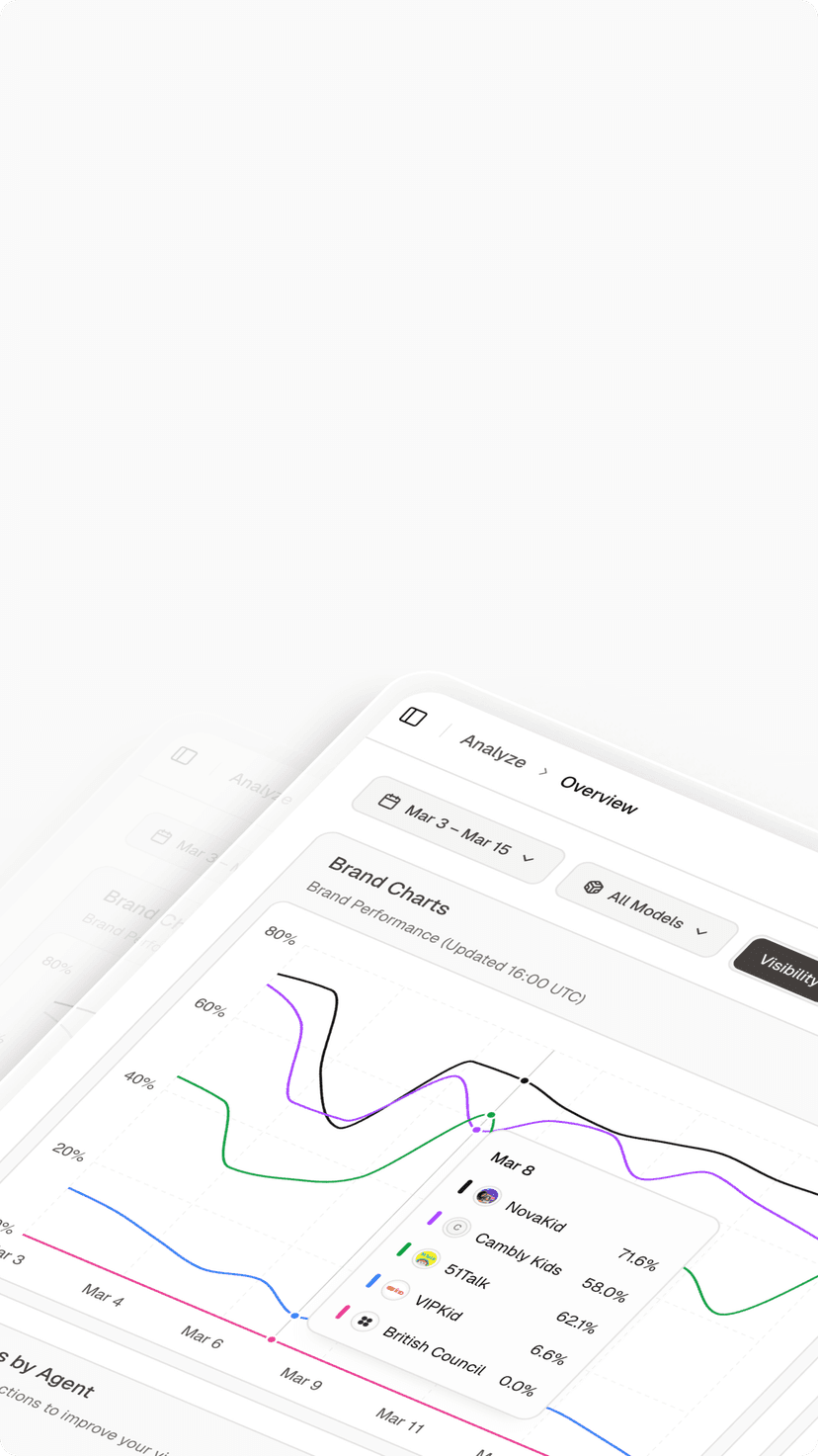
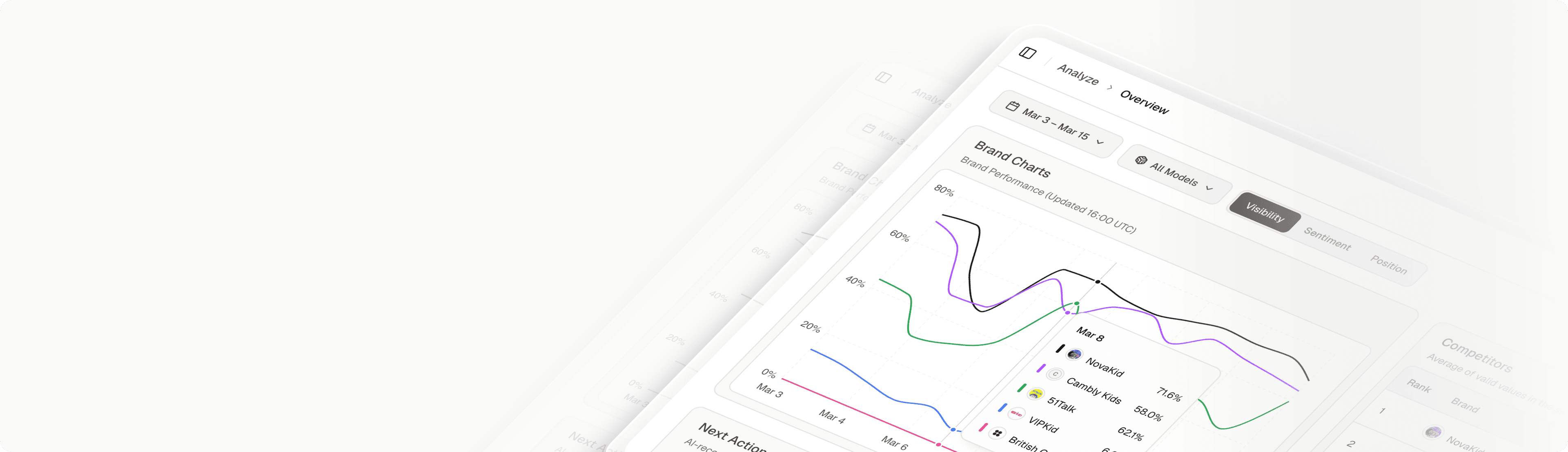
Topify’s Comprehensive GEO Analytics tracks AI brand citation across ChatGPT, Perplexity, Gemini, DeepSeek, and Google AI Overviews through seven core metrics: visibility, sentiment, position, volume, mentions, intent, and CVR. You can see not just whether you’re mentioned, but how often, in what context, and where you stand relative to competitors on each platform separately.
The Reverse-Engineer AI Citations feature goes a layer deeper. It analyzes the exact domains and URLs that AI platforms cite when answering prompts in your category. If a competitor’s whitepaper is getting cited on ChatGPT while your higher-ranking page gets ignored, you’ll see it. If a third-party review site is the primary source AI uses for your product category, you’ll know which one and how often.
Topify’s High-Value Prompt Discovery continuously surfaces the AI prompts that matter most for your brand, the ones with high search volume where citation patterns are still in flux. Combined with Dynamic Competitor Benchmarking, you get a clear picture of which brands are winning AI brand citation in your category and exactly which content is driving those citations.
For teams ready to move beyond tracking, Topify’s One-Click Execution lets you state your optimization goals in plain English and deploy a GEO strategy with a single click. No manual workflows. The system handles execution from content recommendations to distribution signals.
You can get started with Topify on a Basic plan at $99/month, which includes tracking across ChatGPT, Perplexity, and AI Overviews with 100 prompts and 9,000 AI answer analyses.
Conclusion
The AI brand citation gap is real, measurable, and growing. A brand can rank #1 on Google for every target keyword and still be invisible to ChatGPT, Perplexity, and Google AI Mode for those same queries. The data is consistent across every major study published in 2026: the overlap between traditional rankings and AI citations is somewhere between 2% and 12%, depending on the platform.
Closing that gap starts with accepting that SEO and AI brand citation are complementary but separate disciplines. The brands gaining ground right now are the ones auditing their content for machine extractability, investing in earned media that AI systems trust, and tracking citation performance at the prompt level across every platform their buyers use. The ones still relying on rank trackers alone are optimizing for a shrinking slice of how people find them.
FAQ
Q: What is AI brand citation?
A: AI brand citation refers to how often and in what context AI search engines like ChatGPT, Perplexity, and Google AI Overviews mention your brand, link to your domain, or use your content as a source when generating answers to user queries. It’s distinct from traditional search rankings because AI systems evaluate sources based on extractability, third-party corroboration, and content structure rather than backlinks and keyword density.
Q: Why do high-ranking SEO brands get ignored by ChatGPT?
A: ChatGPT selects sources based on whether content is reference-like, extractable, and validated by multiple independent sources. Ahrefs found that 80% of URLs ChatGPT cites don’t rank in Google’s top 100, and 67% of its most-cited pages are institutional domains that brands can’t optimize into. Strong Google rankings indicate keyword relevance and link authority, but those signals don’t translate directly to what AI models prioritize when selecting citations.
Q: How can I check if my brand is being cited by AI search engines?
A: Manual spot-checking involves querying your category keywords directly in ChatGPT, Perplexity, and Google AI Mode and looking for your brand in the responses. For systematic tracking, platforms like Topify monitor AI brand citation across multiple engines at the prompt level, showing citation rates, source analysis, and competitive positioning. Since 91% of AI citations appear on only one platform, cross-platform tracking is necessary for an accurate picture.
Q: What’s the difference between AI brand citation and AI brand mention?
A: A mention is when an AI system names your brand in its response. A citation is when it links to your domain or attributes specific information to your content as a source. ChatGPT cites sources in 87% of responses but only mentions brands in about 20.7% of them. A brand can be cited as a source (the AI used your page to build its answer) without being mentioned by name, and it can be mentioned without being cited as an authoritative source. Both matter, but citation indicates deeper trust in your content.