

A shopper never visits your product page, never lingers on the size chart, never adds anything to a cart, and never converts. Your analytics dashboard flags it as bot traffic and moves on. Except that “visit” might have been a real AI agent comparing your price against three competitors on behalf of a paying customer who’s about to buy from whichever site the agent recommends. Or it might have been a scraper harvesting your pricing data for a competitor. Your log file can’t tell you which one it was.
That’s the uncomfortable reality behind ai agent traffic in 2026. The category is growing too fast to ignore and too ambiguous to trust at face value.
What Counts as AI Agent Traffic Right Now
The scale alone forces the question. As of June 2026, Cloudflare Radar data shared by CEO Matthew Prince showed automated requests crossing 57.5% of all HTML web traffic, with humans falling to 42.5%. It’s the first time in internet history machines have held the majority.
Not all of that is what marketers mean by an AI buying agent. Search crawlers, monitoring tools, and SEO scanners still make up a huge chunk of “bot” traffic. But the subset that actually matters for commerce, autonomous agents that browse, compare, and transact on a person’s behalf, is the part growing fastest. HUMAN Security’s 2026 State of AI Traffic & Cyberthreat Benchmark Report found agentic AI traffic grew 7,851% year over year, up from just 1.7% of automated traffic at the start of 2025.
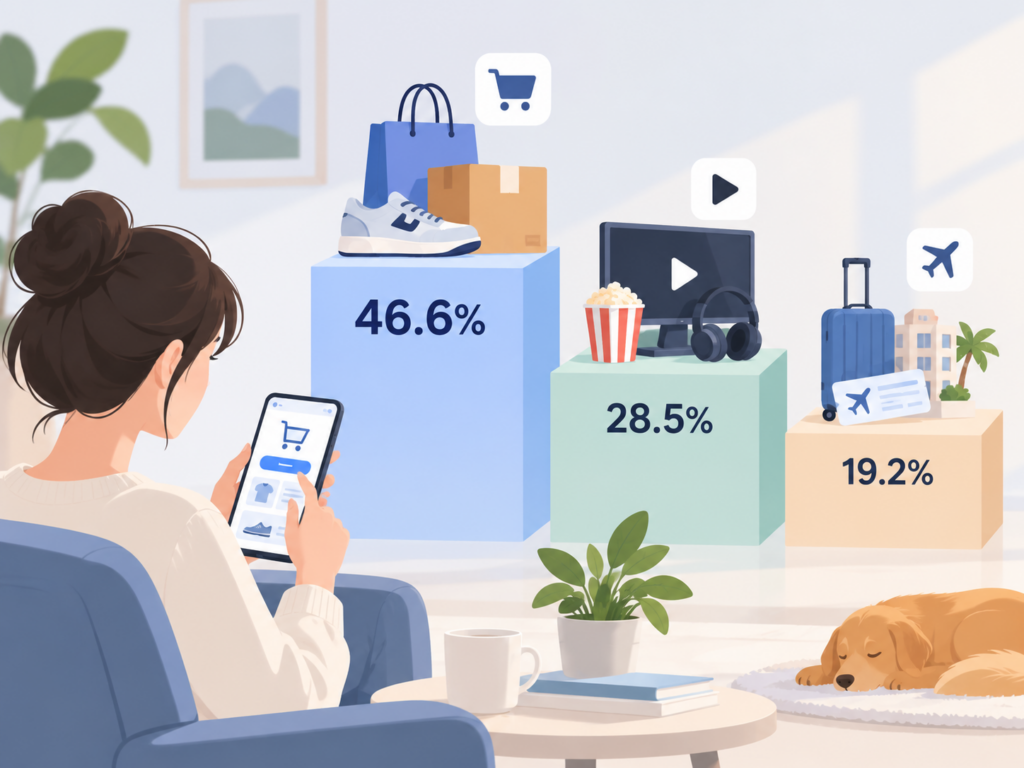
Retail and e-commerce absorb the bulk of it. That same HUMAN report puts retail and e-commerce at 46.6% of agentic traffic, ahead of streaming and media at 28.5% and travel and hospitality at 19.2%. And it’s not just browsing anymore.
Agents are checking out. HUMAN’s data shows a 2.31% checkout share for agentic sessions, small as a percentage, significant as a signal. Autonomous transaction execution without a human clicking “buy” was mostly theoretical before 2025. It’s operational now.
Why User-Agent Strings and IP Patterns Stopped Working
Traditional bot detection runs on three signals: the User-Agent header, request rate, and IP reputation. All three assume a bot behaves like a bot. AI agents don’t cooperate with that assumption.
OpenAI’s Operator sends a genuine Chrome user-agent string, moves at roughly human speed, and often routes through a residential proxy. Every checkpoint a firewall can inspect reads it as a person. That’s not a bot problem. It’s a detection-architecture problem.
The evasion isn’t accidental in every case, and that’s the part that should worry traffic operators. In one documented case, xAI’s Grok agent rotated through browser signatures mimicking Chrome on macOS and Safari on iPhone, without a single request identifying itself as an xAI agent. Not one line in the logs said “Grok.” Separately, Perplexity has faced legal action from Amazon over allegations that it spoofed human browser identities to bypass blocks and support its agentic shopping features.
Here’s the part that breaks pattern-based detection entirely: some agents cycle through thousands of legitimate-looking user-agent strings, so each session appears to originate from a different human visitor. Rate limiting doesn’t trip. IP blocklists don’t fire. The agent looks like a fresh person every time.
The Behavioral Overlap Problem
Even when you strip away the header and IP layer, AI buying agents and synthetic bots still look alike on the surface. Both browse without a mouse cursor. Both hit product pages faster than a human reads them. Both skip marketing copy and go straight for structured data like price, availability, and specs.
| Signal | AI Buying Agent | Synthetic Bot |
|---|---|---|
| Browser environment | Real Chromium, genuine headers | Often headless, or spoofed headers |
| Request pace | Near human speed | Human speed or bursty |
| Intent | Reads structured product data to complete a task | Extracts data for resale, monitoring, or abuse |
| Authorization | Acting on behalf of an identified user | Anonymous, no delegation context |
| Checkout behavior | May complete a real transaction | Never converts, or attempts fraud at checkout |
That overlap is the real reason false positives and false negatives both run high. A retailer that blocks anything that looks automated risks turning away a paying customer’s agent. A retailer that allows anything that looks like a browser risks letting a scraper walk straight through the front door.
Academic researchers are finding the tell isn’t in what an agent claims to be. It’s in what it can’t fake without extra engineering. A multi-layer fingerprinting study of six AI web agents found consistent header-ordering inconsistencies and Sec-Fetch rule violations across tools like AutoGen, Operator, and Skyvern, even when their user-agent strings looked identical to a real browser.
What Actually Distinguishes an AI Buying Agent from a Bot
Behavior alone won’t settle it. Intent and authorization will.
Declared Identity, Verified Cryptographically
Self-declaration was never trustworthy, since anything a request claims about itself can be spoofed. The industry’s answer is Web Bot Auth, an IETF-track standard built on RFC 9421 HTTP Message Signatures. Instead of trusting a header, a site verifies a cryptographic signature against a public key the agent operator publishes.
Cloudflare shipped it into general availability in mid-2026, with 19 verified AI agents at launch including ChatGPT Atlas, Claude in Chrome, Perplexity Browser, and Gemini Agent Mode. OpenAI now attaches these signatures to Operator requests by default, and the protocol has become the authentication foundation for Visa’s Trusted Agent Protocol and Mastercard Agent Pay, positioning it as core infrastructure for agentic commerce rather than a niche security feature.
That’s a meaningful shift from “guess based on behavior” to “verify based on proof.” But adoption is still uneven, and plenty of legitimate agent traffic today still arrives unsigned.
Authorization Context, Not Just Traffic Pattern
The clearest practical distinction industry analysts point to isn’t technical at all. It’s contextual: agentic commerce bots operate with explicit user authorization and legitimate purchase intent, while fraudulent bots operate anonymously and aim to waste ad spend or steal inventory. Both browse autonomously. Only one has a real person standing behind the action.
That’s a hard thing to see in a raw server log. It’s easier to see when you’re pulling data from the AI platforms themselves rather than inferring it from your own traffic.
The stakes are already visible at scale. During the most recent holiday shopping period, agentic commerce traffic on e-commerce sites surged 144% during Cyber Week alone, coinciding with the rollout of ChatGPT’s Instant Checkout and PayPal’s integration with Perplexity’s Instant Buy program. Meanwhile, one industry estimate suggests roughly 80% of retail sites remain unprotected against agent spoofing, where a malicious bot impersonates a legitimate AI agent to bypass security and distort analytics. That’s the gap most brands still can’t see.
How Topify Tracks Real AI Agent Activity
Guessing from log files puts brands in a reactive position: block too aggressively and lose real agent-driven sales, block too loosely and let scrapers through. The more reliable path is getting visibility from the source, not the guess.
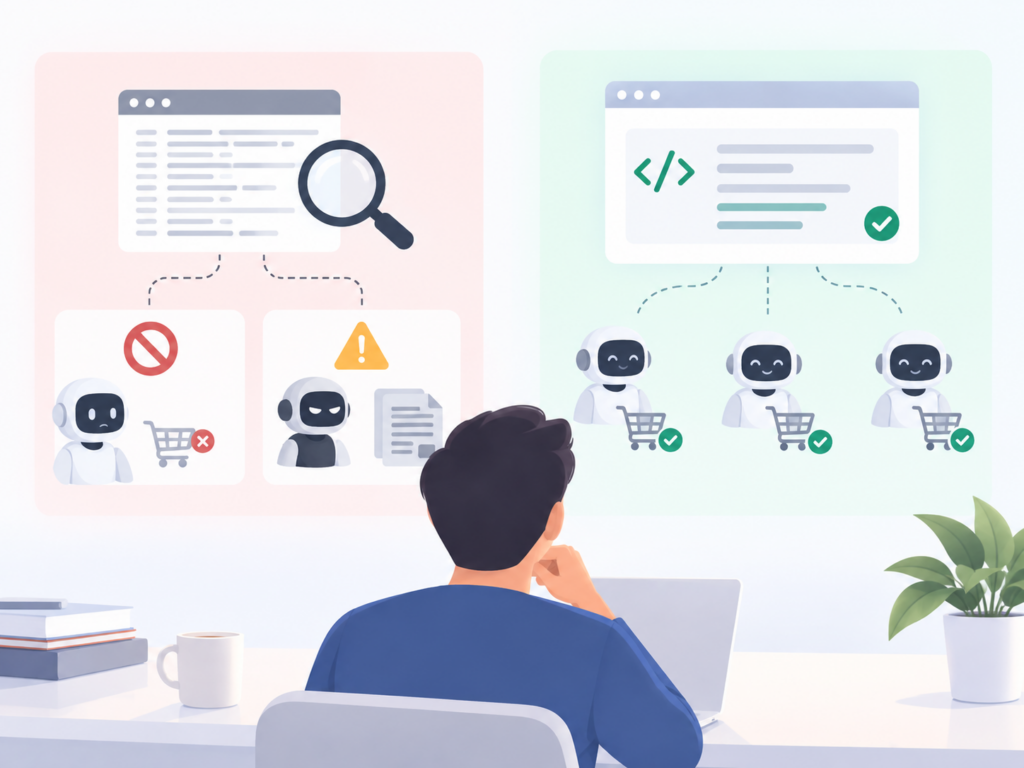
Topify’s AI Volume Analytics pulls data on real AI search and agent behavior directly from the platforms brands are trying to reach, rather than reconstructing intent from ambiguous header and IP signals after the fact. That means seeing which AI platforms are actually surfacing a brand, how often, and in what context, instead of squinting at a log line and hoping the User-Agent string is telling the truth.
Paired with Source Analysis, which tracks the exact domains and URLs AI systems cite when they recommend a product or brand, the two functions answer a question log files structurally can’t: not just “was this a bot,” but “did an AI system actually consider recommending us, and to whom.” That’s the layer of visibility that turns agent traffic from a security headache into a measurable channel.
Conclusion
Log files were built for a web where automated traffic meant search crawlers and the occasional scraper. That assumption has expired. AI buying agents and synthetic bots now share the same headers, similar request pacing, and overlapping behavioral fingerprints, which means the old signals, User-Agent strings, IP reputation, and raw request rate, can no longer carry the weight of a real trust decision on their own.
The direction of travel is toward verified identity and authorization context rather than inferred behavior. Web Bot Auth is the clearest sign of that shift, and it’s moving from proposal to production faster than most infrastructure standards do. Until adoption catches up across the wider web, brands that want to know whether they’re actually reaching AI shoppers, and not just getting scraped, need visibility that comes from the platform side, not the log file.
FAQ
How can I identify AI agent traffic in my server logs?
User-agent strings and IP addresses alone are unreliable, since agents increasingly rotate through legitimate-looking browser signatures and residential proxies. Look instead for header-ordering inconsistencies, Sec-Fetch rule violations, and cross-reference traffic against verified bot programs that support Web Bot Auth signatures.
Do AI shopping agents show up in standard analytics platforms like Google Analytics?
Often not accurately. Most analytics tools were built to filter out bots, not to identify authorized AI agents acting on a real customer’s behalf, so agent sessions frequently get miscategorized or excluded entirely.
What’s the difference between an AI buying agent and a scraper?
An AI buying agent typically acts with a specific user’s authorization to complete a task like comparing prices or checking out. A scraper usually operates anonymously to extract data for resale, monitoring, or competitive analysis, with no delegation from an end user.
Is Web Bot Auth required for AI agents to access websites?
Not yet universally, though adoption is accelerating. Cloudflare, OpenAI, Visa, and Mastercard have all built it into agentic commerce infrastructure, and unsigned agent traffic is increasingly likely to face friction like CAPTCHA-style challenges on sites that have adopted the standard.

