

Your keyword rankings are solid. Your domain authority is climbing. But last week, a prospect typed a buying question into ChatGPT, and the AI recommended three competitors without mentioning your brand once. Traditional SEO metrics couldn’t explain why, because they weren’t built to measure what generative models choose to say.
That gap between search rankings and AI visibility is widening fast. Traditional search volume is projected to drop by 25% as users shift toward AI-driven answer engines. The marketers who thrive in 2026 won’t be the ones with the highest DA scores. They’ll be the ones who’ve built an entirely new AEO skill set on top of their SEO foundation.
Your SEO Playbook Doesn’t Work on AI Search. Here’s What Does.
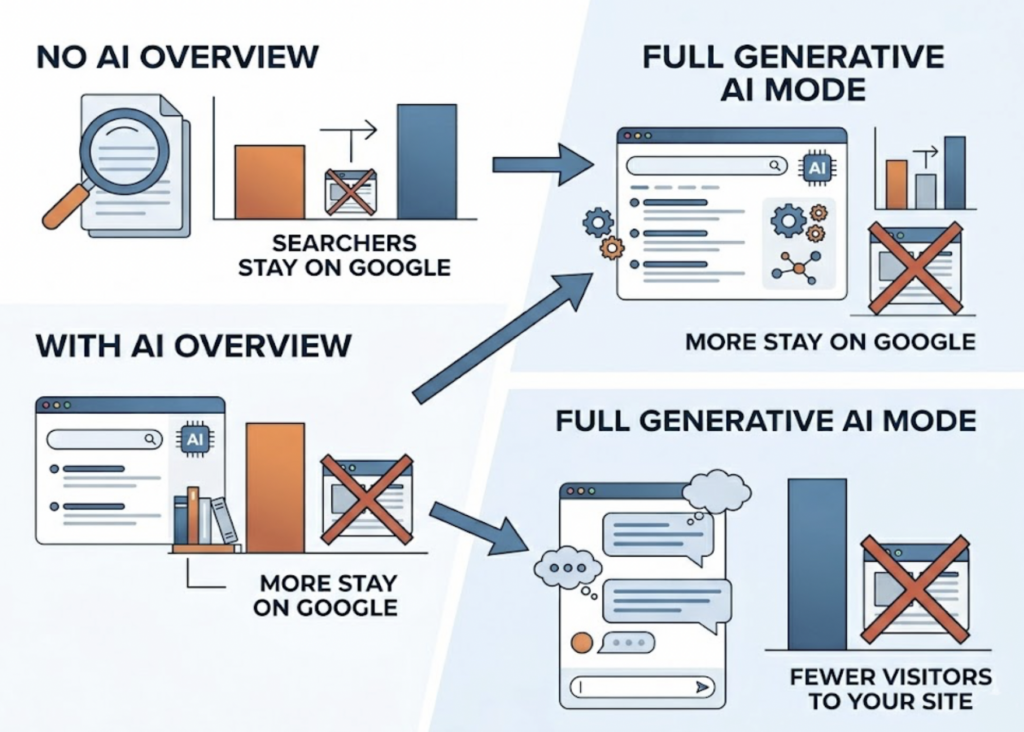
The core behavior behind search has changed. In 2024, users typed keywords and scanned ten blue links. In 2026, they pose complex, multi-sentence questions to ChatGPT, Perplexity, and Gemini, expecting a single synthesized answer.
That shift creates a brutal visibility bottleneck. Where Google offered ten spots on page one, a generative response typically cites only two to seven sources. Keyword repetition and backlink volume don’t determine who makes that cut. Factual density, structural clarity, and third-party consensus do.
From Keywords to Context: The AEO Skill Shift
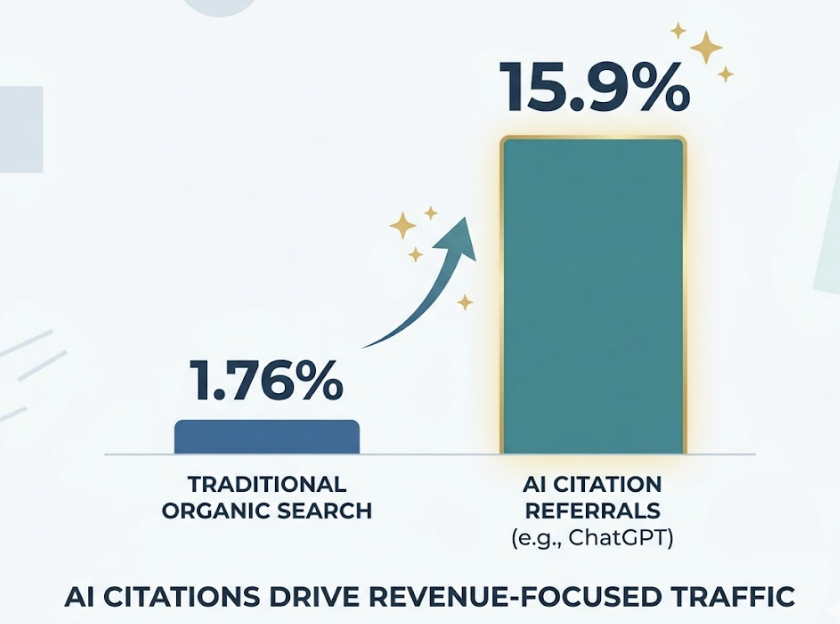
Here’s the thing most SEO professionals miss: the traffic that does come through AI citations is dramatically more valuable. ChatGPT-referred visitors convert at 15.9%, compared to a 1.76% baseline for traditional organic search. That’s roughly a 9x improvement in lead efficiency. The AEO skill you need isn’t about chasing volume anymore. It’s about earning the citation that actually drives revenue.
Legacy SEO was lexical. You matched specific words between a query and a page. AEO is semantic. AI models break a user’s complex prompt into multiple sub-queries through a process called “query fan-out,” then look for content that provides unique data or insights the model can’t find in its baseline training data.
That means the skill set shifts from keyword density to context mastery.
| Skill Dimension | SEO Era | AEO Era |
|---|---|---|
| Content Unit | Comprehensive webpage | Modular “answer chunks” |
| Primary Goal | Rank for keywords, earn clicks | Get extracted into AI synthesis |
| Success Metric | Keyword rank and CTR | Share of Model and citation rate |
| Conversion Baseline | ~2% average | ~14-27% for AI citations |
| Feedback Loop | Search Console clicks | Sentiment and position weighting |
The practical difference is real. SEO optimized for rankings and clicks in a list of links. AEO optimizes for selection and synthesis within an AI-generated answer. You can rank #1 on Google and still be invisible to ChatGPT.
5 AEO Skills That Separate 2026 Marketers from 2024 Ones
Research from Princeton University and IIT Delhi, known as the GEO-BENCH study, identified specific content features that predict AI citation frequency. Marketers who integrate these factors into their workflows can see up to a 40% increase in visibility. Here are the five AEO skills built on that research.
Skill 1: AI Answer Architecture
This is the structural engineering of content for machine extraction. The key framework is BLUF: Bottom Line Up Front. Data shows that 44.2% of AI citations reference the first 30% of a page.
In practice, that means leading with a modular summary box instead of a narrative introduction. A SaaS company writing about CRM ROI would open with “CRM ROI typically reaches 250% within 18 months for mid-market firms,” formatted under a question-based H2 header. That structure is purpose-built for Perplexity and ChatGPT to extract directly.
Skill 2: Citation Source Strategy
Publishing content isn’t enough. You need to engineer a “citation trail” across the web. AI models look for consensus across multiple sources before recommending a brand.
That means distributing key statistics to industry journalists, engaging in detailed discussions on platforms like Reddit, and updating entity profiles across high-trust databases. Original statistics boost visibility by 33.9%. Expert quotations add 32%. Authoritative citations contribute 30.3%. The AEO skill here is thinking like a PR strategist, not just a content marketer.
Skill 3: Multi-Platform Visibility Tracking
Your brand might show up in 60% of relevant ChatGPT responses but only 5% on Perplexity. Each AI platform has a different retrieval architecture, which means each one cites different source types.
The skill is diagnosing why you’re visible on one platform and invisible on another. Perplexity tends to lean heavily on Reddit threads and community discussions. ChatGPT favors long-form blog posts and authoritative domains. Without cross-platform monitoring, you’re optimizing blind.
Skill 4: Prompt-Level Intent Analysis
Traditional keyword research is giving way to what some practitioners call “dark query research.” The prompts users type into AI platforms average 15 to 25 words and often involve multi-turn conversations.
A travel agency, for example, won’t win by targeting “best resorts Mexico.” The high-value prompt is: “Compare family-friendly all-inclusive resorts in Mexico vs. Portugal for a 10-day trip in July, focusing on flight time from NYC and pool safety.” Creating content that addresses every nuance of that prompt earns the citation. Generic listicles don’t.
Skill 5: Sentiment and Position Awareness
Getting mentioned isn’t enough if the AI describes your brand with cautious or negative framing. An enterprise company might appear in 80% of category queries but carry a “Neutral-to-Negative” sentiment because the AI’s training data includes outdated pricing information.
The AEO skill here is monitoring not just whether you’re cited, but how. Sentiment recovery requires publishing updated case studies, earning positive third-party reviews, and actively tracking the shift in AI perception over time.
Where GEO Takes the AEO Skill Stack Further
AEO gets you selected for an answer. GEO gets you influence over the system-wide interpretation of your brand.
The difference matters in 2026 because we’ve entered the “Agentic Web.” Autonomous AI agents from companies like Microsoft, Lindy.ai, and others now search, compare, and act on behalf of users. If an AI agent can’t parse your real-time pricing or inventory, your brand is excluded from the consideration set entirely.
GEO skills include implementing technical discovery protocols that most marketers haven’t encountered yet:
llms.txt is a markdown-formatted index at the site root that gives AI agents a curated overview of your brand, stripped of HTML for token efficiency. AGENTS.md is an onboarding document that defines how AI agents should interact with your site’s tools and APIs. Model Context Protocol (MCP) is an open standard that lets AI assistants connect directly to marketing data for autonomous optimization.
The AEO skill stack is the understanding layer. GEO is the execution layer. You need both.
Tools That Turn AEO Skills into Action
Skills without tools stay theoretical. To put the AEO skill stack into practice, you need platforms that connect data to action.
For teams just getting started, a GEO free tools reference document is available on GitHub. It covers baseline audit tools and structural readiness checkers that help you learn the fundamentals without a budget commitment.
But free tools have limits. Most offer single-page snapshots with no historical tracking, minimal competitor insight, and scores without a roadmap. As your AEO skills mature, you’ll hit a ceiling.
That’s where Topify closes the gap. It’s a platform built specifically for the five AEO skills outlined above:
Visibility Tracking and Sentiment Monitoring maps directly to Skill 5. Topify scores brand presence and tracks Share of Model as a primary KPI across ChatGPT, Gemini, Perplexity, and Google AI Overviews.
Source Analysis and Citation Reverse-Engineering supports Skill 2. It reveals exactly which URLs and domains AI engines cite instead of yours, so you can target citation gaps with surgical precision.
High-Value Prompt Discovery addresses Skill 4. Instead of estimated search volume, Topify surfaces the specific conversational questions driving real AI traffic.
One-Click Execution supports Skill 1. Page-level optimization recommendations deploy through guided workflows, turning architectural best practices into action without manual restructuring.
Dynamic Competitor Benchmarking gives teams the cross-platform visibility that Skill 3 demands. Whether you’re defending an 86% share in a mature category or competing for marginal gains in a fragmented market, the data is continuous, not a one-time snapshot.
| Capability | Free GEO Checkers | Topify Platform |
|---|---|---|
| Audit Focus | Single-page structural readiness | Multi-model Brand Visibility Index |
| Tracking | Snapshot, no historical data | Continuous daily monitoring and trends |
| Competitor Insight | Minimal or none | Dynamic cross-platform benchmarking |
| Actionability | Scores without a roadmap | One-click strategy deployment |
| Integration | None | GA4 and Shopify for revenue attribution |
How to Build Your AEO Skill Stack in 90 Days
Month 1: Audit and Foundations. Audit current content for AI readiness: structure, clarity, and authority signals. Identify the 10 to 20 commercial prompts that define your buyer journey. Establish Share of Model as a KPI and integrate AI visibility tracking into your dashboards. Use the GitHub free tools reference for initial assessments and Topify’svisibility checker for cross-platform baselines.
Month 2: Optimization and Monitoring. Restructure your top 10 performing pages using answer-first formatting. Implement FAQ schema and add citation-worthy statistics with proper attribution. Start earning third-party validation by seeding content into high-authority communities and industry platforms. Use Topify’s Source Analysis to identify which domains AI engines are citing instead of yours.
Month 3: Agentic Execution and Benchmarking. Scale optimization to the next 20 to 30 priority pages. Implement llms.txt and AGENTS.md for agentic discovery. Conduct a full competitive audit to identify citation gaps and adjust strategy to displace competitors in high-value AI responses. Get started with Topify to close the loop between insight and execution.
Conclusion
The AEO skill stack isn’t a nice-to-have certification. It’s the operating system for marketing in 2026.
Your SEO foundation still matters. But the layer that drives revenue, the layer where a 15.9% conversion rate replaces a 1.76% baseline, is built on AEO and GEO skills. Start with free tools to learn the fundamentals, then move to a platform like Topify that connects visibility data to execution. The brands that build this skill stack now won’t just survive the shift to generative search. They’ll own it.
FAQ
Q: What is an AEO skill?
A: An AEO skill is the ability to structure and distribute content so that AI-powered search features, like Google AI Overviews, ChatGPT, and Perplexity, select and cite your brand as the definitive answer to a user’s question.
Q: How is AEO different from SEO?
A: SEO optimizes for rankings and clicks in a list of links. AEO optimizes for selection and synthesis within an AI-generated answer. Success in AEO often leads to “zero-click” visibility, where your brand gains authority even if the user doesn’t visit your site.
Q: Do I need to learn GEO if I already know AEO?
A: Yes. AEO focuses on being selected for an answer. GEO focuses on influencing how the AI model interprets your brand across the entire web, including AI agents, cross-platform sentiment, and entity authority.
Q: What tools help build AEO skills?
A: Free resources like the GEO free tools reference on GitHub are solid for initial audits. For ongoing multi-model tracking, competitor benchmarking, and one-click strategy deployment, Topify is built specifically for the AEO and GEO workflow.

