
You shipped clean docs, structured your schema, and climbed to page one. Then an AI coding agent tried to integrate your API, couldn’t parse your documentation in a single fetch, and recommended your competitor instead. No click. No visit. No conversion.
That’s the new failure mode developers and technical marketers don’t see coming. Zero-click searches already account for 58.5% of the US search market, and AI Overviews now appear in close to 47% of all Google queries. The traffic that’s left increasingly flows through AI agents, not human browsers. GitHub’s AEO and GEO skill repositories have exploded since late 2025, giving you dozens of options to audit and optimize your site for this shift.
The problem isn’t finding an AEO skill. It’s figuring out which one actually solves your problem.
What AEO Skills Actually Do, and Why They’re Not Just “SEO for AI”
An AEO skill is a structured instruction set, typically a SKILL.md file plus supporting scripts, that gives an AI coding agent the ability to audit, fix, or monitor a website’s visibility to other AI systems. You install it in Claude Code, Cursor, Codex, or any compatible agent, and it turns your terminal into a GEO diagnostic tool.
The distinction between AEO and its predecessors matters here. Traditional SEO optimizes for human browsers clicking through ranked links. GEO, formalized by Princeton and Georgia Tech researchers at KDD 2024, optimizes for LLM citation during retrieval-augmented generation. AEO goes one layer deeper: it structures content so AI agents can not only read it but execute tasks based on it.
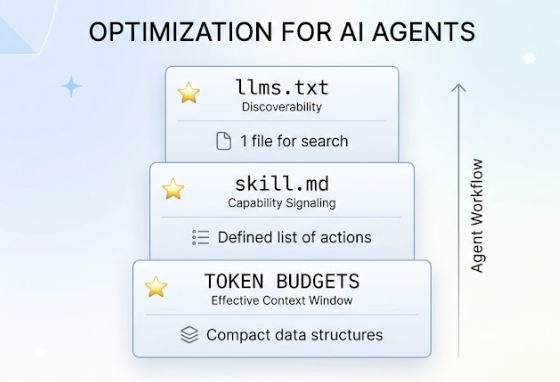
Google’s Addy Osmani put it plainly in his April 2026 framework: agents don’t browse. They issue a single HTTP request, strip the HTML, count tokens, and either use the content or discard it. That behavior demands a different optimization stack, one built around llms.txt for discoverability, skill.md for capability signaling, and strict token budgets to fit within an agent’s effective context window.
By mid-2025, only about 0.3% of the top 1,000 websites had adopted the llms.txt standard. That number is growing, but the gap between “optimized for agents” and “invisible to agents” is still wide.
Most AEO Skills Stop at Diagnosis. Here’s What They Miss.
Open-source AEO skills on GitHub follow a predictable pattern: Audit → Score → Report. You run a command, get a GEO score between 0 and 100, see a list of issues ranked by severity, and then you’re on your own.
That’s valuable for Day 1. It tells you whether AI crawlers are blocked, whether your schema markup exists, and whether your content is structured for citation. But it doesn’t answer the question that matters on Day 30: “Did the fix actually change how ChatGPT talks about my brand?”
AI retrieval patterns shift constantly. Models update their RAG layers, citation preferences change, and new competitors enter the conversation. A one-time audit can’t track that. This isn’t a flaw in open-source skills. It’s a design boundary. Open-source tools solve the diagnostic problem. Continuous monitoring and automated execution require a different layer.
That distinction shapes how you should evaluate the six most active AEO skill projects right now.
6 AEO Skills Compared: What Each One Actually Measures
| Skill | Primary Focus | Execution Capability | CI/CD Ready | API Key Required | Agent Compatibility |
|---|---|---|---|---|---|
| Topify geo-skills | Execution + Monitoring | High (platform-aided) | Yes | No (skill) / Yes (platform) | Claude Code, Cursor, Codex |
| Auriti-Labs geo-optimizer | Research-backed audit | Medium (fix scripts) | Strongest | No | Claude Code, Cursor, MCP clients |
| aaron-he-zhu seo-geo | Authority quality gates | Medium (writer skills) | Yes | No | 35+ agents |
| zubair-trabzada geo-seo | Agency reports + CRM | Low (diagnostic-first) | No | No | Claude Code |
| Cognitic-Labs geoskills | Zero-API diagnostics | Low | No | No | Claude Code, OpenCode, Codex, Cursor |
| luka2chat geo-skills | Pure knowledge base | None | No | No | Cursor, Claude Code, Codex |
The table tells one story. The details tell another. Each skill optimizes for a different user and a different stage of the AEO workflow.
Topify’s AEO Skill: From Audit to Execution in One Stack
Most AEO skills hand you a report and wish you luck. Topify built the layer that comes after the report.
Topify’s geo-skills repository provides the open-source diagnostic foundation: GEO score auditing, AI crawler accessibility checks, and citability analysis. You can run it in Claude Code or Cursor without an API key and get an immediate read on where your site stands.
What makes Topify’s approach different is what happens next. The open-source skill connects to the Topify platform, which adds three capabilities no standalone skill offers:
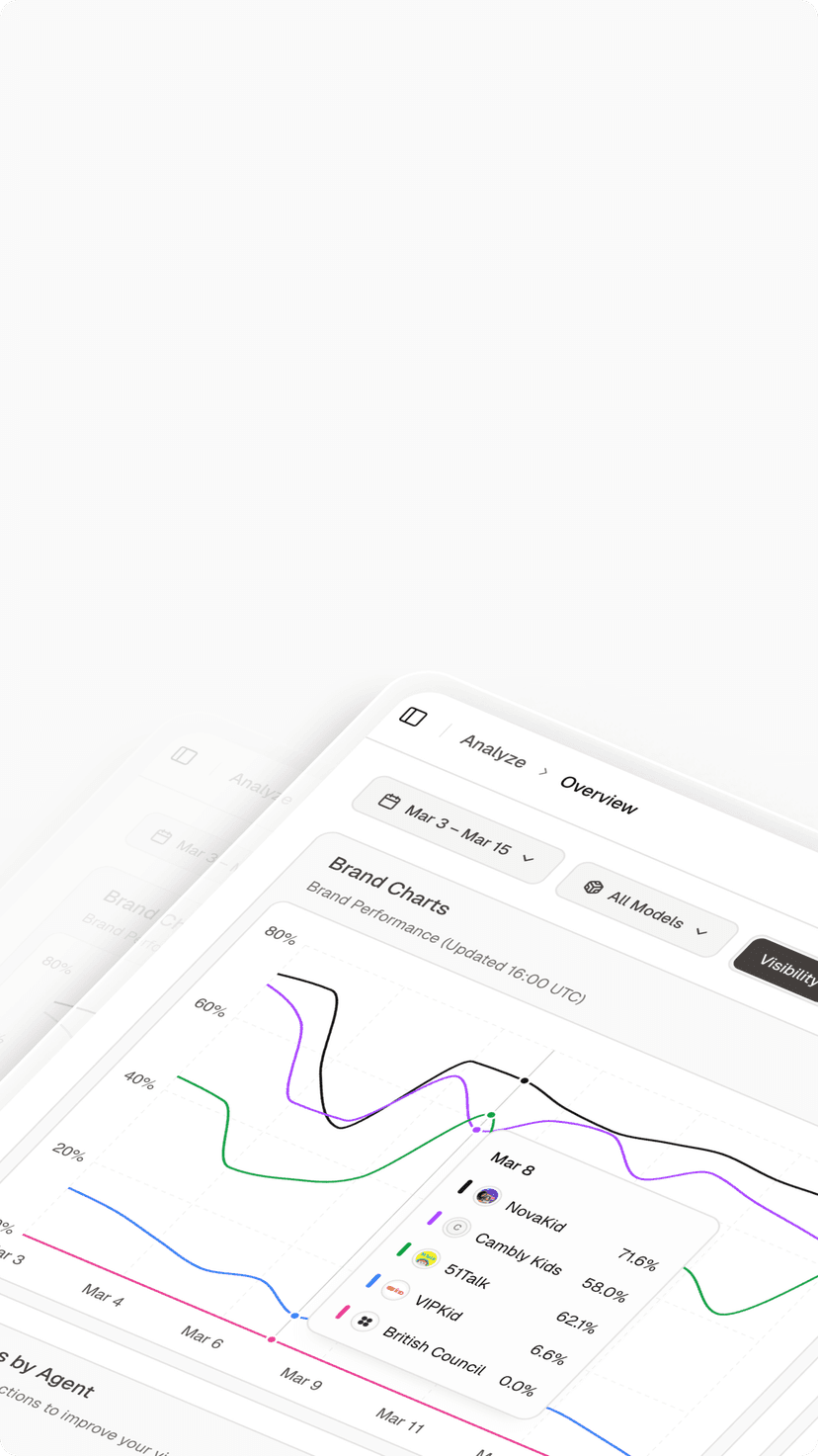
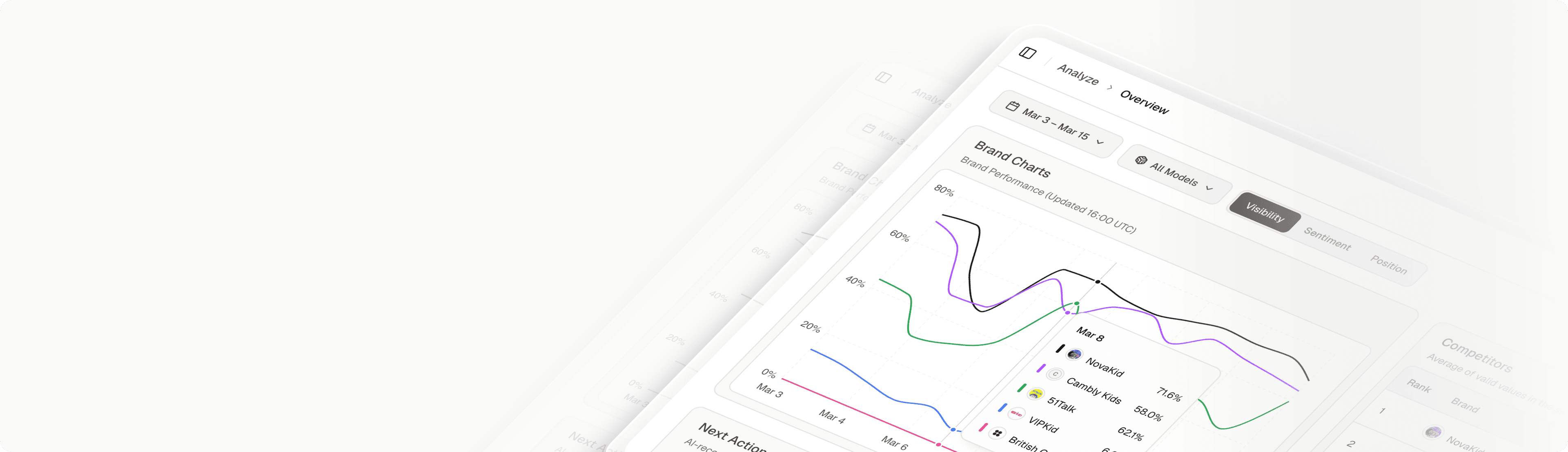
Continuous AI visibility tracking. The platform monitors how ChatGPT, Perplexity, Gemini, DeepSeek, and other AI engines mention and cite your brand across hundreds of prompts. You’re not checking once. You’re watching the trend.
Citation blind spot detection. Topify identifies specific high-value prompt scenarios where a competitor gets cited but you don’t. These “dark queries,” prompts with high AI research volume but near-zero traditional keyword volume, are invisible to tools like Ahrefs or Semrush. Topify’s Prompt Intelligence surfaces them.
One-click agent execution. Instead of exporting a PDF for a developer to implement, Topify’s AI agent builds the fixes (schema injections, content refreshes, structured data updates) and assists in deployment. You define goals in plain English, review the proposed strategy, and deploy with a single click.
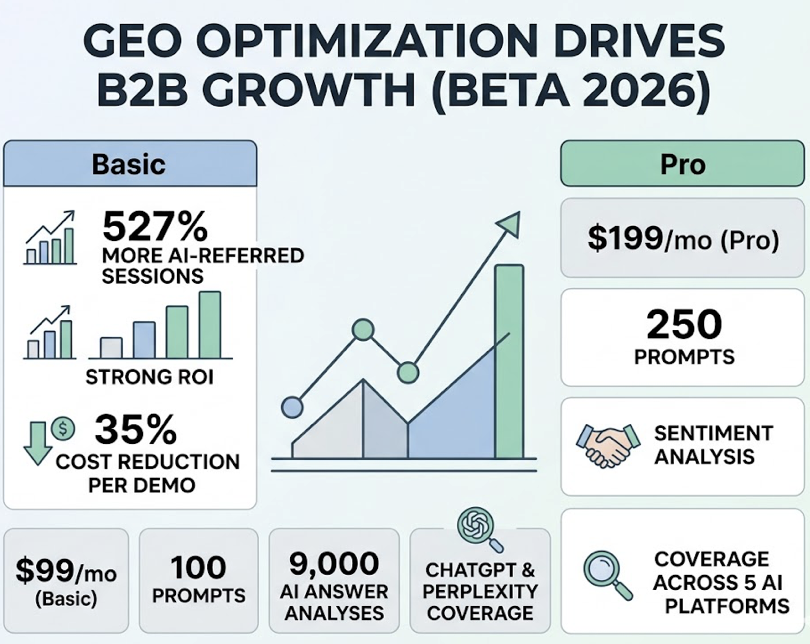
Research from early 2026 indicates that GEO optimization can drive a 527% increase in AI-referred sessions and a 35% reduction in cost per demo request. At $99/mo for the Basic plan (100 prompts, 9,000 AI answer analyses, ChatGPT and Perplexity coverage), the ROI math works for most B2B SaaS teams. The Pro plan at $199/mo adds 250 prompts and sentiment analysis across 5 AI platforms.
The bottom line: Topify is the only option that pairs an open-source diagnostic skill with a SaaS platform for continuous monitoring and automated execution. If you’re choosing one stack to cover the full AEO lifecycle, this is the one that closes the loop.
5 Open-Source AEO Skills Worth Installing
Cognitic-Labs/geoskills: The Fastest Free Audit
Six skills, zero API keys, and a composite GEO Score weighted across four dimensions: Technical Accessibility (20%), Content Citability (35%), Structured Data (20%), and Entity & Brand Signals (25%). Cognitic-Labs/geoskills checks access for 11 AI crawlers including GPTBot, ClaudeBot, and PerplexityBot. Install with npx skills add Cognitic-Labs/geoskillsand run /geo-audit https://your-site.com. You get a severity-ranked issue list and a fix plan in under a minute. Ideal for developers who want a quick sanity check before diving deeper.
Auriti-Labs/geo-optimizer-skill: The Research-Grade Engine
Built directly on the Princeton KDD 2024 and AutoGEO ICLR 2026 research papers, this toolkit runs 47 citability checks against your site. The Princeton data shows that adding expert quotations increases LLM citation probability by 41%, statistics by 33%, and fluent prose by 29%. Auriti-Labs turns those findings into actionable audit items.
Its CI/CD integration is the strongest in the ecosystem. SARIF format for GitHub Code Scanning, JUnit for Jenkins and GitLab CI, and GitHub Actions annotations out of the box. Teams can enforce GEO-readiness as a required status check before merging documentation changes. If your docs are mission-critical and you need research-backed rigor, this is the skill to install.
aaron-he-zhu/seo-geo-claude-skills: The Full-Stack Library
Twenty skills and 17 commands spanning the entire SEO-to-GEO pipeline: keyword research, content writing, technical audits, rank tracking, and GEO drift monitoring. The seo-geo-claude-skills library is anchored by two evaluation frameworks. CORE-EEAT (80 items) assesses content quality across Contextual Clarity, Organization, Referenceability, and Exclusivity. CITE (40 items) evaluates domain authority through Credibility, Infrastructure, Trust, and Endorsement.
The “veto mechanism” stands out: certain technical failures (like blocked AI crawlers or missing HTTPS) trigger an automatic BLOCK verdict regardless of the overall score. This makes it suited for enterprise teams where a single compliance failure can’t reach production. Compatible with 35+ agents via npx skills add.
zubair-trabzada/geo-seo-claude: The Agency Toolkit
Thirteen sub-skills, five parallel subagents, and a built-in prospect CRM. The geo-seo-claude toolkit is designed for GEO consultants who need to turn audits into revenue. The “Full Audit Flow” launches five subagents simultaneously to analyze AI visibility, platform readiness, technical SEO, content quality, and schema markup.
The output isn’t a terminal printout. It’s a client-ready PDF with score gauges, bar charts, and prioritized action plans generated via ReportLab. Add the /geo prospect and /geo proposal commands, and you’ve got a pipeline from audit to signed contract. If you’re selling GEO services to non-technical CMOs, this is the skill that speaks their language.
luka2chat/geo-skills: The Knowledge-Only Approach
No tools, no SaaS recommendations, no code generation. luka2chat/geo-skills is a pure best-practice knowledge base that teaches your AI agent how to implement GEO correctly. It covers Schema.org markup patterns, robots.txt crawler rules, and content structure templates that AI engines tend to cite. Think of it as the reference manual you give your agent before it starts doing real work. Pair it with an execution-oriented skill for the full workflow.
Pick the Right AEO Skill for Your Workflow
The right choice depends on where you are and what you’re building:
“I just need a quick audit.” Start with Cognitic-Labs/geoskills. It’s fast, free, and zero-config. If you want the audit connected to a monitoring layer, use Topify’s geo-skills instead.
“I’m managing docs for a developer-facing API.” Install Auriti-Labs/geo-optimizer-skill and add it to your CI pipeline. Enforce GEO scores as merge gates so documentation never accidentally locks out AI crawlers.
“I run content ops at an enterprise.” Adopt aaron-he-zhu/seo-geo-claude-skills. The CORE-EEAT and CITE frameworks give you standardized quality gates across teams, and the veto mechanism prevents compliance failures.
“I’m a GEO agency managing client accounts.” Use zubair-trabzada/geo-seo-claude for client-facing reports and proposals. Layer Topify’s platform underneath for the continuous monitoring your clients expect.
“I want the full lifecycle: diagnose, track, execute.” That’s Topify. Start with the open-source skill for the initial audit, then connect the platform for ongoing visibility tracking and one-click execution. It’s the only stack that covers all three phases without switching tools.
The open-source skills solve the Day 1 problem. But AI search engines shift their citation patterns every few weeks. What works today might not work next month. Continuous monitoring and the ability to act on what you find, that’s the long-term play.
Conclusion
AEO skills gave developers something they’ve never had before: the ability to audit and optimize AI visibility from inside their terminal. In 2026, the ecosystem is rich enough that there’s a skill for every workflow, from free one-time audits to enterprise quality gates to full agency toolkits.
But the pattern is clear. Diagnosis alone isn’t enough. AI-referred traffic converts at over 4x the rate of traditional organic search. The brands capturing that traffic aren’t just auditing. They’re monitoring visibility weekly, catching citation blind spots early, and deploying fixes before competitors fill the gap.
Start with Topify’s free GEO tools to see where your site stands. Then decide how far you want to go.
FAQ
Q: What’s the difference between an AEO skill and a GEO tool?
A: A GEO tool typically refers to any software that helps optimize content for AI citation, including SaaS dashboards and browser-based platforms. An AEO skill is specifically a structured instruction file (SKILL.md) that runs inside an AI coding agent like Claude Code or Cursor, giving the agent diagnostic and optimization capabilities directly in your terminal.
Q: Can I use multiple AEO skills at the same time?
A: Yes. Skills occupy different parts of the workflow. You might use Cognitic-Labs/geoskills for a quick audit, Auriti-Labs for CI/CD enforcement, and Topify’s platform for ongoing monitoring. They don’t conflict because they solve different problems.
Q: Do I need an API key to run these GEO skills?
A: Most open-source AEO skills, including Cognitic-Labs/geoskills, Auriti-Labs/geo-optimizer-skill, and luka2chat/geo-skills, work without any API key. Topify’s open-source diagnostic skill is also key-free. The Topify platform and some advanced features in other tools require authentication.
Q: How often should I re-run a GEO audit on my site?
A: For the initial fix cycle, weekly audits make sense until your GEO score stabilizes. After that, monthly audits catch regressions from content updates or infrastructure changes. For continuous coverage, a monitoring platform like Topifytracks AI visibility daily without manual re-runs.