

Your team assumed technical accuracy was the whole game. You wrote detailed documentation, published benchmark comparisons, and made sure every product claim was defensible. Then someone asked ChatGPT a question in your exact category, and the answer cited a GitHub thread and a niche engineering forum instead of anything you published. Nothing was wrong with your content. It just wasn’t the kind of source GPT-6 reaches for when the question gets technical.
GPT-6 Astra’s Benchmark Jump Is Concentrated, Not Uniform
OpenAI’s GPT-6 Astra launched on September 3, 2026, and the benchmark table tells a more specific story than “smarter model.” On BenchCAD, which tests whether a model can reconstruct a 3D object from multi-view renders by writing CAD code, Astra scores 95.9%, up from 83.3% for its predecessor GPT-5.6 Sol and ahead of Claude Fable 5.1’s 84.3%. On Terminal-Bench 4.0, which covers software engineering and system configuration tasks, Astra jumps to 57.7% from Sol’s 37.3%.
That’s a real gain, and it’s concentrated in tasks that look like engineering work rather than general programming.
On DeepSWE v1.1, a 113-task agentic coding benchmark, the field bunches up tightly: Astra at 74.1%, Claude Opus 5 at 73.7%, a Gemini Flash model at 73.8%, and Fable 5.1 at 67.4%. On FrontierCode 1.1 Main, Astra and Fable 5 land within a fraction of a point of each other. Artificial Analysis’s Coding Agent Index, which blends several of these tests, puts Astra at 67.0 against Fable 5’s 67.2 and Opus 5’s 68.1.
The pattern is a specialization, not a sweep. GPT-6 pulled ahead where the task involves geometry, terminal workflows, and hands-on system operation. On broad software engineering benchmarks, it’s roughly tied with the rest of the frontier field.
Why Coding and CAD Recommendations Work Differently
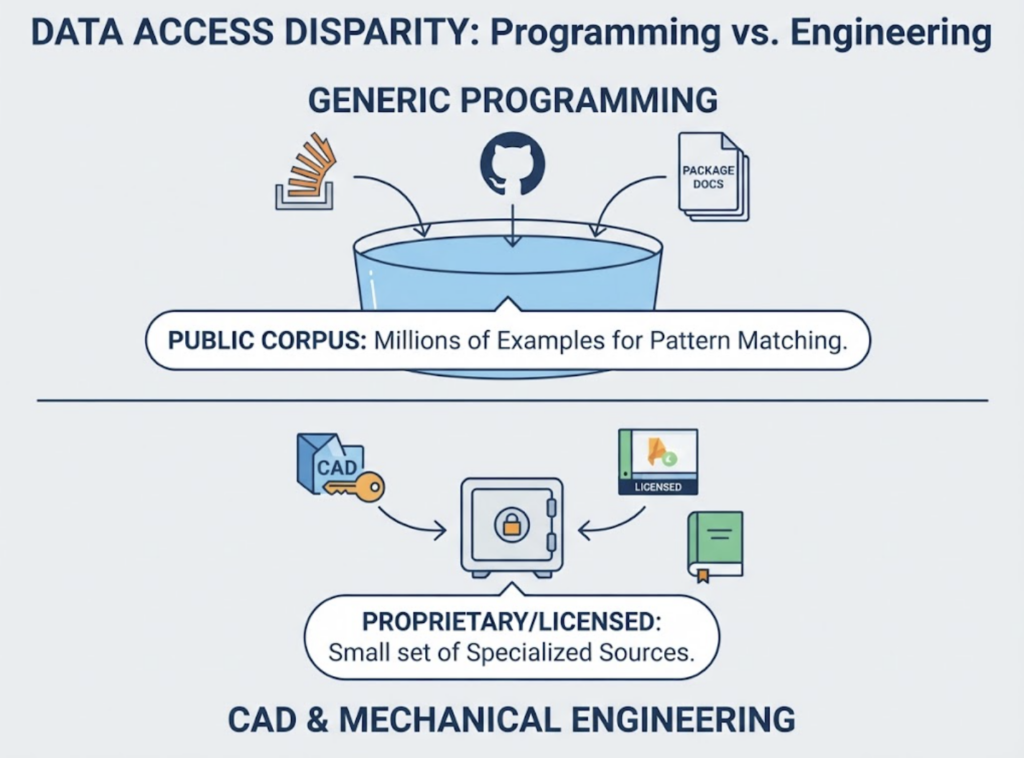
Generic programming questions draw on an enormous, public corpus. Stack Overflow threads, GitHub issues, and package documentation give a language model millions of examples to pattern-match against. CAD and mechanical engineering don’t work that way. The geometry lives inside proprietary file formats, licensed software, and a much smaller set of specialized sources.
That gap is showing up in independent testing. A comparison run called CAD Arena had six models rebuild 18 real parts across five CAD environments, including SolidWorks, Onshape, Siemens NX, and Fusion. GPT-6 Astra scored best in Onshape with 0.723 points, while Fable 5.1 led in SolidWorks at 0.710. The testers also noted that Astra’s Fusion run cost roughly $5.11 per part, compared with about $16.35 for Fable 5.1 on the same task, excluding CAD license fees.
The model choice mattered more than the software choice, according to the same test.
Creators have already been running Astra directly inside Onshape, SolidWorks, and FreeCAD through MCP connections, generating multi-part assemblies (a 41-part turbojet in one documented run) and exporting working STEP files. One breakdown of a weekend’s worth of these demos noted that the same underlying model family kept appearingacross architecture, robotics, and mechanical projects, each surfacing through a different plugin or integration.
The Coding Side Has Its Own Version of This Pattern
The coding half of Astra’s gains tells a related but separate story. On Terminal-Bench 4.0, which runs agents through real terminal sessions rather than isolated code snippets, Astra’s jump from 37.3% to 57.7% lines up with a cost drop too, coming in at roughly 9% below Sol and 63% below Fable 5.1 on the same tasks. On an internal database migration benchmark, Astra reaches 63.9% against Sol’s 42.7% and Fable 5.1’s 57.8%.
Terminal work and database migrations are hands-on-a-live-system tasks, closer in spirit to CAD’s “operate the software” pattern than to writing a self-contained function. The sources that inform good answers here (shell scripting conventions, migration tooling docs, DevOps runbooks) sit in a different corner of the internet than the CAD community threads discussed above, but they share the same trait: narrow, technical, and largely invisible to a GEO strategy built around general product content.
The Model Sits Above the Software, Not Inside It
None of this replaces CAD systems. Autodesk, Siemens, and SolidWorks are all shipping their own natural language assistants, and the geometry engine, constraints, and file formats stay with the CAD software. What GPT-6 adds is the ability to hold a longer chain of steps together: read a drawing, generate code, check the render, fix an error, and move to the next component without a person handing off each stage manually.
That distinction matters for GEO. If AI treats CAD software as a tool it operates rather than a topic it discusses in the abstract, the sources it trusts for “how do I do X in SolidWorks” are going to be documentation, community threads, and demonstrated workflows, not marketing pages.
The Vertical GEO Blind Spot Most Brands Haven’t Noticed
Most GEO advice still treats “AI search visibility” as one problem with one playbook: publish structured content, earn citations, get mentioned. That playbook was built and validated largely on general consumer and SaaS queries, and it works reasonably well there. Research on generative engine optimization has found that targeted content changes can lift visibility in AI answers by as much as 40%, with the biggest gains going to smaller, previously under-ranked sites.
A generic GEO checklist doesn’t survive contact with a CAD workflow.
Ask GPT-6 a question about your general product category and it likely draws on the same mix of reviews, comparison articles, and brand content that any GEO strategy targets. Ask it how to model a specific bracket in Fusion or debug a build error in a terminal session, and it reaches for a different layer entirely: official API docs, GitHub repositories, Reddit threads in r/SolidWorks or r/FreeCAD, and benchmark papers like the one behind BenchCAD itself. Your brand can be well optimized for the first kind of query and completely invisible in the second, and a single visibility score won’t tell you which is happening.
What Changes When the Vertical Gets More Technical
| General SaaS / consumer vertical | Coding, CAD, and engineering vertical | |
|---|---|---|
| Primary AI sources | Reviews, comparison content, brand pages | Official docs, GitHub, forums, benchmark papers |
| Buyer role | Marketer, ops lead, generalist | Engineer, developer, technical evaluator |
| What AI is doing | Summarizing opinions and features | Reasoning through a workflow or task |
| GEO risk if ignored | Missed brand mentions | Missed inclusion in the actual technical answer |
Tracking Visibility Where GPT-6 Actually Looks
The practical fix isn’t a different GEO philosophy. It’s tracking the right sources for the vertical you’re actually in. Topify approaches this through Source Analysis, which surfaces the specific domains and URLs that AI platforms cite when they answer a question, so a CAD or developer tools brand can see whether it’s showing up next to GitHub and official documentation, or missing from that set entirely.
Paired with Competitor Monitoring, the same setup tracks who GPT-6 and other models recommend for a given technical prompt, and how that ranking shifts as new integrations or benchmark results land. For a team trying to figure out how to track AI search visibility across a technical vertical specifically, that combination is closer to what the job actually requires than a single aggregate score.
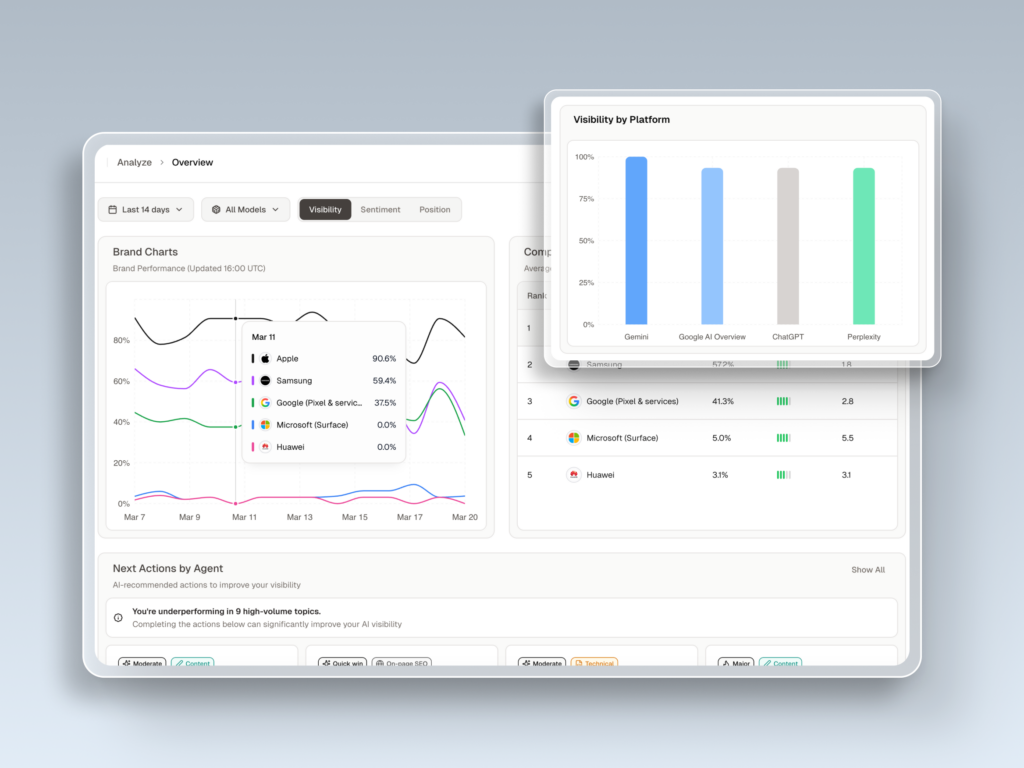
In practice, that means a CAD software vendor can spot that GPT-6 keeps citing a competitor’s API documentation for a specific modeling task, trace it to a documentation gap, and fix the content problem instead of guessing at a broader brand messaging issue.
Conclusion
GPT-6’s gains in coding and CAD aren’t evidence that AI got smarter across the board. They’re evidence that specific technical verticals now have their own recommendation logic, built on a narrower and more specialized set of sources than the ones general GEO content targets. Brands competing in coding, CAD, or engineering software need to know which sources GPT-6 is actually citing for their category, not just whether their brand name shows up somewhere in an AI answer.
FAQ
Q: Does GPT-6 Astra replace CAD software like SolidWorks or Fusion?
A: No. Independent testing and OpenAI’s own framing describe Astra operating CAD software through APIs and MCP connections, generating and editing geometry, while the CAD application still owns the file formats, constraints, and rendering.
Q: Why does GPT-6 score so much higher on BenchCAD than on general coding benchmarks?
A: BenchCAD tests a narrower skill (reconstructing CAD geometry from images), where Astra jumped from 83.3% to 95.9%. On broader coding benchmarks like DeepSWE, it’s close to Fable 5.1, Opus 5, and Gemini Flash, suggesting the gain is concentrated rather than general.
Q: Is GEO different for developer tools compared to CAD or engineering brands?
A: The source types overlap (both lean on GitHub and technical forums), but developer tools GEO tends to run through code repositories and package registries, while CAD and mechanical engineering GEO runs through proprietary software documentation, benchmark papers, and specialized communities tied to specific applications.
Q: How do I know if my brand is visible in GPT-6’s answers for my technical vertical?
A: You need visibility tracking that reports on the specific sources cited for your category’s prompts, not just overall brand mention counts, since technical verticals draw on a much narrower source set than general consumer queries.

