

A customer emails support asking why your pricing page doesn’t match what ChatGPT just told them. Someone checks, finds nothing wrong on the website, then realizes the AI invented a discount tier that never existed. That’s usually how brands find out about a hallucination: after someone already acted on it. Nearly half of consumers look for confirmation after seeing an AI answer, but when what they find doesn’t match, most don’t file a complaint. They just quietly go with a competitor instead.
Your Brand Doesn’t Find Out About an AI Hallucination Until a Customer Does
Most companies still monitor AI mentions the way they monitor reviews: reactively. Someone screenshots a wrong answer, forwards it to marketing, and only then does anyone start checking other platforms.
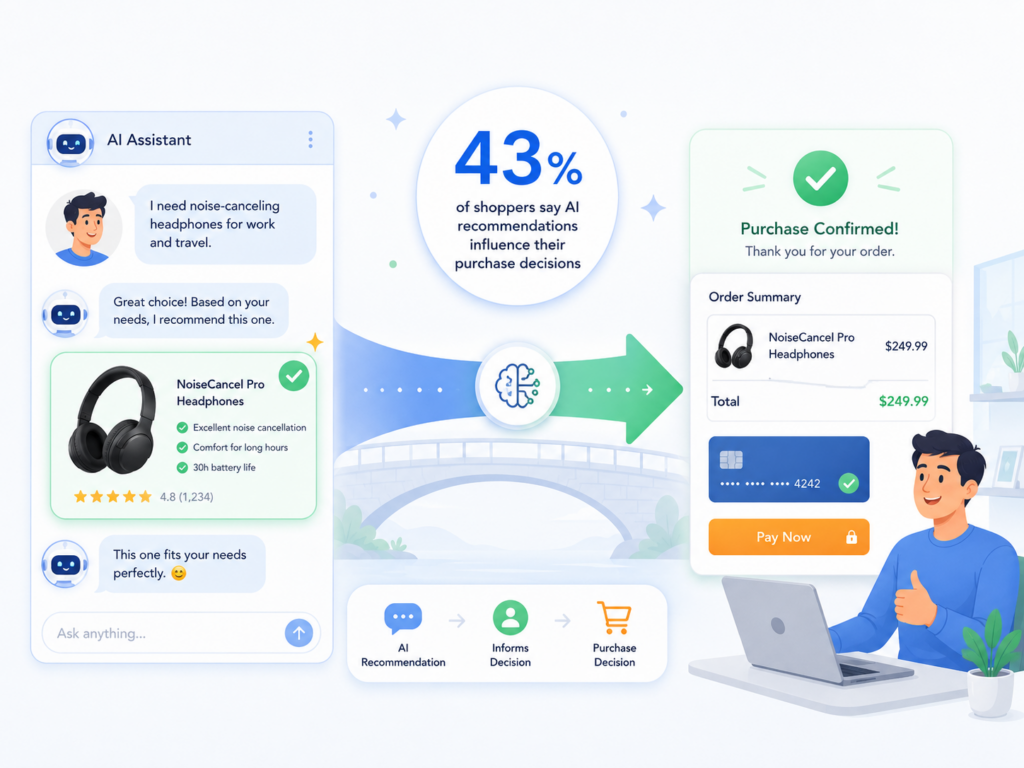
That gap matters more than it used to. Forty-three percent of shoppers bought a product an AI chatbot recommended in the past three months, which means a wrong answer isn’t a footnote anymore. It’s sitting inside a purchase decision.
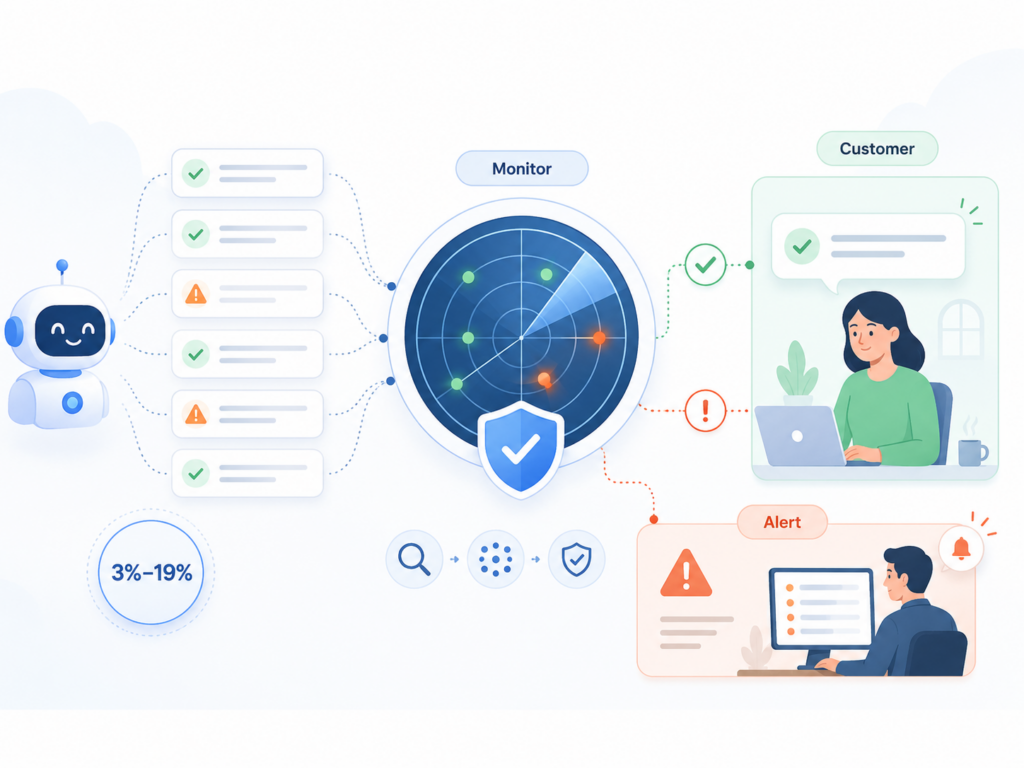
Hallucinations aren’t rare edge cases either. A 2026 benchmark across five frontier models found hallucination rates between 3.1% and 19.1% depending on the model and the task, and citation accuracy came out as the worst-performing category. Citations are exactly what AI platforms lean on when they describe your brand.
What Makes a Brand Hallucination Different From a Ranking Problem
Not showing up in an AI answer is a visibility problem. Showing up with the wrong facts is a trust problem, and the two require completely different fixes.
A ranking gap gets solved with better content and better prompts. A hallucination means the AI is actively telling people something false about your pricing, your policies, or your leadership, and repeating it with total confidence. There’s no “we’re still indexing you” excuse.
The stakes are already visible in court records. In Walters v. OpenAI, ChatGPT fabricated a detailed embezzlement complaint against a radio host who had no connection to the case, complete with a fake case number. The suit was eventually dismissed, but the underlying lesson holds regardless of the legal outcome: a model can generate something specific, wrong, and reputation-damaging without any prompt asking it to.
Step 1: Map Every Prompt Where Your Brand Could Get Mentioned
You can’t monitor for hallucinations if you’re only watching your own brand name. Most of the risk sits in category questions, comparison prompts, and “is X worth it” queries where an AI is synthesizing from multiple, sometimes conflicting, sources.
Start by listing the prompt types that actually drive traffic and decisions in your category: product comparisons, pricing questions, “alternatives to” searches, and common support questions. Then check what AI platforms are actually saying in response to each one, not just whether your brand appears.
This is closer to prompt discovery than keyword research. You’re not optimizing for what people type into Google. You’re identifying the conversational questions where an AI might fill in a gap in its training data with something invented.
Step 2: Watch Sentiment and Source Shifts, Not Just Mentions
A hallucination rarely arrives as an isolated, obvious lie. It usually shows up first as a small shift: the AI’s tone about your brand turns slightly more negative, or the sources it’s citing change from your own site to a stale forum thread or an outdated review.
Tracking mention count alone misses this. What catches it is watching sentiment and source data together, so a drop in tone lines up with a specific citation you can actually go check. That pairing is the difference between “something feels off” and “here’s the exact page the AI is pulling from, and here’s why it’s wrong.”
In practice, this looks like running sentiment tracking and source analysis side by side across the same set of platforms, so a dip in one flags exactly where to look in the other. Topify builds this pairing into its GEO analytics, scoring brand sentiment from 0 to 100 and separately surfacing the exact domains and URLs that ChatGPT, Perplexity, and Gemini are citing when they answer questions about you.
Step 3: Set Alert Thresholds Before a Small Error Turns Into a Pattern
An early-warning system needs a trigger, not just a dashboard someone checks when they remember to. Without a threshold, teams either get alert fatigue from noise or miss the signal entirely because nobody’s watching that week.
A reasonable starting point: flag anything where a factual claim about your brand appears identically across two or more platforms, or where sentiment drops by a meaningful margin within a short window. Both patterns suggest the error has already propagated past a single bad answer.
The goal isn’t zero hallucinations. Even the best-performing frontier models still hallucinate somewhere between 3% and 19% of the time depending on the task, so some error rate is the baseline you’re working with, not a bug you’ll ever fully eliminate. The goal is catching the pattern before a customer does.
The Mistakes That Turn One Bad Answer Into a Reputation Problem
The most common mistake is treating a single wrong answer as the whole problem instead of asking whether it’s systemic. If the same error shows up on three platforms, fixing it once won’t fix it everywhere.
The second mistake is confusing a correction job with a positioning job. As one AI reputation guide puts it, “ChatGPT says we have no API” is a correction task, but “ChatGPT describes us as expensive and dated” needs an entirely different playbook built around sentiment and content, not fact-checking.
The third mistake is waiting on the platform’s own feedback tools to fix it. No major AI platform currently offers a direct brand-correction channel, and community reports from brand managers confirm that the fastest fix comes from updating the source content itself, not from thumbs-down clicks.
Putting the System Together with Topify
None of the three steps above work as one-off checks. A prompt list goes stale within weeks, sentiment shifts happen gradually, and thresholds only mean something if they’re being watched continuously.
Topify’s Comprehensive GEO Analytics runs these as one connected system instead of three separate habits: prompt discovery surfaces where your brand could be mentioned, sentiment and source tracking watch for the early signals of a hallucination, and competitor benchmarking shows whether an issue is brand-specific or category-wide. Pricing starts at $99 a month on the Basic plan, which covers ChatGPT, Perplexity, and AI Overview tracking across 100 prompts, enough for most teams to get an early-warning baseline running without a big commitment upfront.
Teams that get this right treat it the same way they’d treat uptime monitoring: quiet most of the time, and worth every minute of setup the one time it catches something before a customer does.
Conclusion
An AI hallucination about your brand doesn’t wait for a good time to show up, and by the time a customer flags it, the wrong answer has usually already influenced a decision. Mapping your prompts, watching sentiment and sources together, and setting real alert thresholds turns that into something you catch early instead of something you clean up late. Start with the prompts your customers are already asking, and build the monitoring habit before you need it.
FAQ
Q: How do I know if ChatGPT or another AI is hallucinating about my brand?
A: Search the prompts your customers actually ask, not just your brand name, across ChatGPT, Perplexity, and Google AI Overviews. Compare specific claims, like pricing, features, or leadership, against your actual website. A mismatch on a specific fact, not just a difference in tone, is the clearest sign of a hallucination.
Q: Can I get OpenAI or Google to correct a hallucination about my company?
A: Not directly. Neither OpenAI nor Google currently offers a formal brand-correction process, and thumbs-down feedback alone rarely changes an answer. The most reliable fix is updating the source content, your website, Wikipedia, and other cited pages, so the AI has accurate material to draw from going forward.
Q: How is an AI hallucination different from bad brand sentiment?
A: A hallucination is a factual error, like a wrong price or a fabricated policy. Bad sentiment is the AI’s tone or framing, such as describing your brand as outdated when it isn’t. They require different fixes: hallucinations get corrected at the source, sentiment gets addressed through content and positioning.
Q: How often do AI models actually hallucinate?
A: It depends heavily on the task. Frontier models in 2026 hallucinate on roughly 3% to 19% of factual and citation-heavy queries, and the rate climbs much higher on narrow or specialized topics. That baseline error rate is one reason continuous monitoring matters more than a one-time check.

