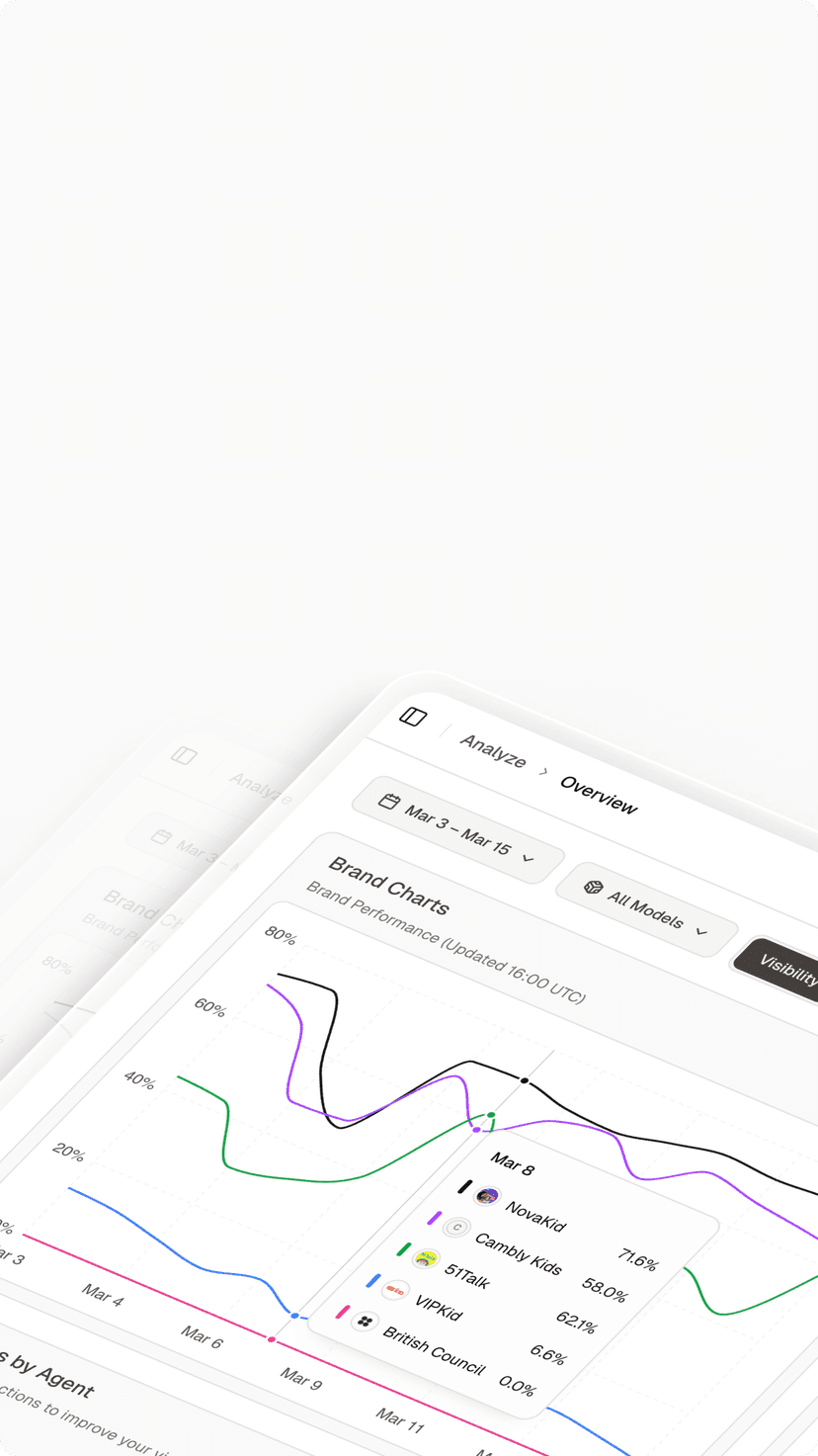
An agency account lead opens a morning notification and sees a sharp visibility drop. Before the team has checked the underlying answers, the screenshot reaches a client discussion and turns into a proposed content emergency. The notification identified a result worth reviewing, but it didn’t establish whether the change would repeat or justify the requested response.
An AI visibility report needs a confirmation rule between the first signal and a business escalation. That rule should define the evidence to collect, the conditions to preserve, and the person who can decide what happens next. Your objective is a useful response process, with enough discipline to prevent every temporary movement from becoming a strategic explanation.
Define a Confirmable Alert in an AI Visibility Report
A confirmable alert names a measurable event and the decision it could change. Brand presence falling within a defined question family is more actionable than something looks wrong. Specify the affected platform, collection window, outcome, and comparison before choosing a notification threshold.
Keep the event definition distinct from its suspected cause. The observed result might justify reviewing answer evidence, but it doesn’t establish that a competitor campaign, model update, or website change caused the movement. Put those explanations in a hypothesis field until supporting evidence exists.
Decide what confirmation means operationally. It could require a comparable follow-up collection, reviewer agreement about the coded outcome, or both. The rule should be written before an alarming result appears, because a rule invented afterward can shift according to the team’s reaction.
An alert opens an investigation; the evidence determines its scope.
Include a business relevance condition. A change affecting a high-value buying scenario may deserve quicker attention than the same numeric movement in a peripheral question family. Record that priority rationale separately from the statistical evidence so urgency doesn’t masquerade as certainty.
Separate the Trigger From the Escalation Rule
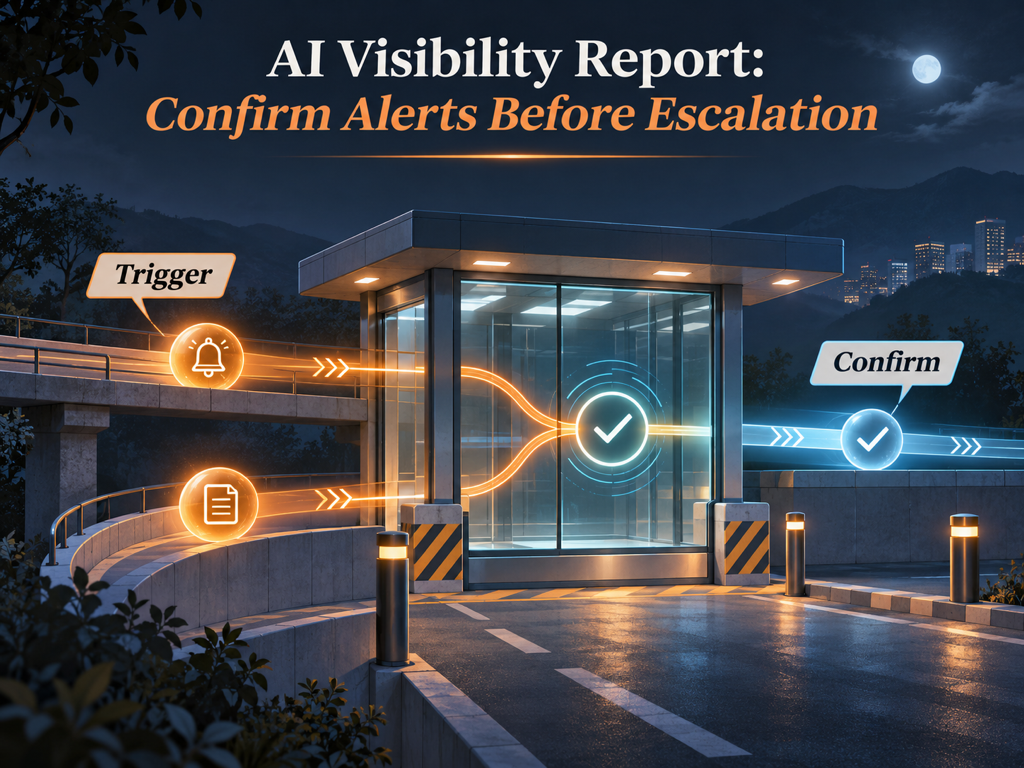
The trigger defines when the team looks. The escalation rule defines when someone outside the measurement workflow needs to act. Those thresholds can differ without making the initial notification useless.
A synthetic policy might send a review task when a specified outcome changes beyond the team’s documented tolerance, then require a comparable confirmation collection before requesting a content intervention. The tolerance is a local operating choice, not a universal threshold recommended for all visibility programs.
Assign an owner to the review task. A notification without responsibility can either disappear or spread informally without a complete record. The owner should inspect the evidence, apply the confirmation procedure, and write the disposition before expanding the audience.
| Stage | Required record | Permitted next step |
|---|---|---|
| Trigger | Defined metric, scope, comparison, timestamp | Open a review task |
| Initial review | Answer evidence and protocol check | Collect confirmation or resolve a known issue |
| Confirmation | New observations under documented conditions | Assess whether the event repeated |
| Disposition | Confirmed, not reproduced, or unresolved | Choose an accountable follow-up |
| Escalation | Evidence, business impact, limitation, owner | Request a specific decision or action |
Keep urgent operational incidents on their appropriate response path. A broken public page may justify immediate repair based on direct page evidence, even while a visibility trend remains unconfirmed. The point is to match the action to the evidence supporting it rather than forcing every problem through the same alert rule.
Account for Repeated Looks at the Same Metric
Repeated inspection changes how you should interpret surprising observations. Looking across many question families and checking them frequently creates more opportunities to find an unusual result. A notification system should account for the number and timing of those opportunities rather than treating every threshold crossing as isolated evidence.
NIST’s process-monitoring guidance discusses false alarms in control-chart settings. The relevant lesson is that an alert rule has assumptions and operating behavior. It doesn’t justify copying an industrial control limit directly into a changing AI-answer collection.
Start by listing how often the rule runs and how many series it inspects. A report reviewed once a week across a fixed set of prompts differs from a system scanning many overlapping segments throughout the day. The latter can repeatedly surface related versions of the same underlying event.
Deduplicate investigations when multiple triggers share the same evidence. Several notifications from overlapping question groups may belong to one review case. Preserve the original triggers, but don’t count each as independent confirmation of a broad brand problem.
Avoid claiming a calibrated false-alarm rate without the necessary model and validation. You can still use a transparent operational rule with clearly stated limits. Label it as a review policy rather than a formal guarantee about the probability that each alert is wrong.
Design a Confirmation Sample
Define the follow-up collection in advance. Preserve question versions, relevant context, platform or mode, language, and eligibility rules wherever the comparison requires them. Set a collection window and decide how many observations the review will examine before deciding its disposition.
A confirmation run should add evidence rather than reuse the original answers under a different label. Keep new run identifiers and retain both collections. Re-scoring the initial answers can resolve a coding question, but it isn’t a second observation of platform behavior.
Be explicit about dependence. Repeated questions on the same platform may share conditions, and a short interval doesn’t guarantee an independent sample. Describe the procedure you used without automatically calling the results independent trials.
Predefine the outcome that would support escalation. For example, the rule might require the same directional movement in the specified question group and a reviewer-verified change in the actual recommendation text. That is an illustrative operational policy, not a universally validated statistical test.
Don’t keep collecting only until the result confirms your concern. A stopping rule that changes with each answer can make the record difficult to interpret. When the planned evidence is inconclusive, use the unresolved disposition and specify what additional investigation would answer the remaining question.
Record Confirmed and Unresolved Alerts
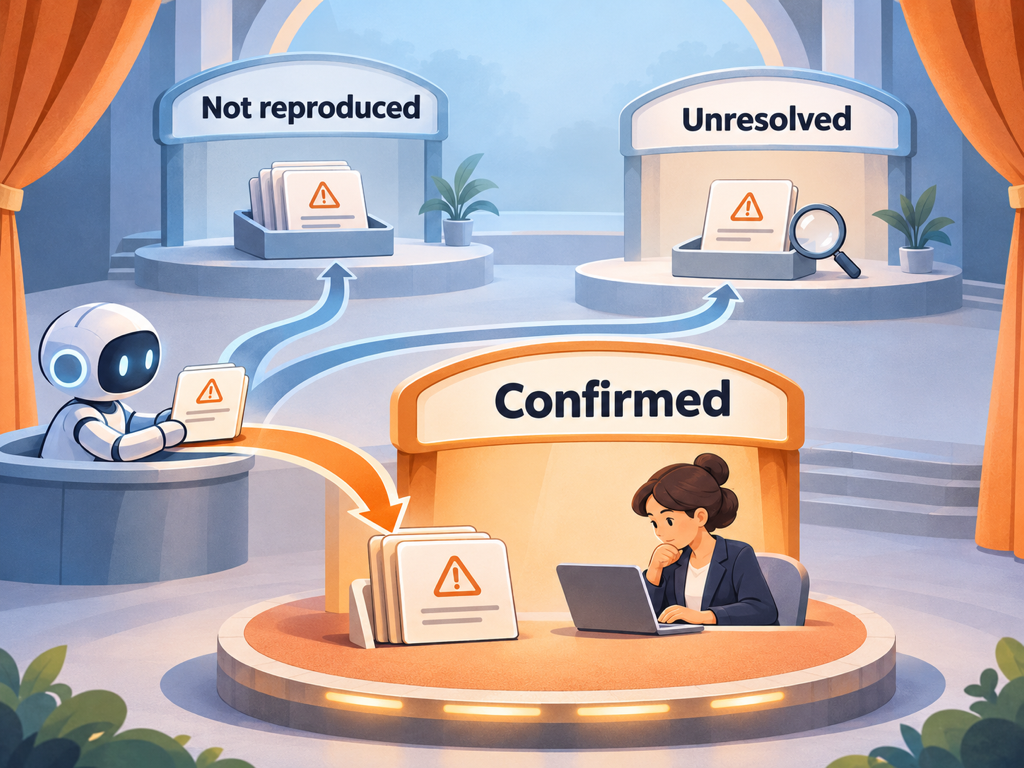
Use confirmed, not reproduced, and unresolved as separate outcomes. Confirmed means the event met the stated rule within the tested scope. Not reproduced means the confirmation collection didn’t meet it; unresolved means the evidence or comparability was insufficient to decide.
Don’t translate not reproduced into nothing happened. The original observation remains part of the record, and the confirmation may cover a different time. Explain what the later collection showed without rewriting the earlier answer history.
Confirmation narrows uncertainty; it doesn’t identify a cause by itself.
Store the disposition with the original trigger, answer evidence, follow-up procedure, and reviewer. This creates a useful record for improving the alert policy. A series of unresolved cases may reveal a collection problem, while frequent nonreproduction may justify reviewing an overly sensitive operational trigger.
Use the executive reporting discussion when translating the confirmed scope into a business decision. Keep the alert’s evidence and the proposed response connected so a stakeholder can understand why this case needs attention now.
Review the policy after enough completed cases exist to identify recurring problems. Don’t retune it after every unwelcome notification, because that can make the program’s behavior inconsistent over time. Record each policy version and when it began governing new alerts.
Send an Evidence-Based Escalation Note
Topify describes monitoring brand visibility, citation sources, and other AI-search outcomes through its analytics feature. Those observations can help select the question family and answer evidence for an investigation. Keep the confirmation procedure described here as an explicit additional process.
The analyst’s input is a scoped movement in monitored outcomes; the action is to inspect answers and gather comparable follow-up observations under a predefined rule. The output is a disposition and a decision request, such as reviewing a specific content gap or collecting better evidence. This doesn’t establish that Topify automatically implements the alert thresholds, statistical calibration, or confirmation workflow in this article. Verify your actual setup’s available fields and notification behavior, then document the manual steps and their owner. A tool-generated result and a team-approved escalation should remain distinguishable in the final record.
Write the escalation note around one requested action. Include what changed, which observations support it, what confirmation established, and what remains uncertain. Link the evidence record and name the responsible person so the recipient can review the case without reconstructing it from a screenshot.
Conclusion
A useful alert process separates a reason to look from a reason to escalate. Define the event, specify a confirmation procedure, and preserve confirmed, not reproduced, and unresolved outcomes. Repeated inspection and overlapping segments require particular care, because several notifications can still depend on the same evidence.
Choose one important series in your AI-search analytics workflow and write its trigger, confirmation rule, and escalation owner before enabling a broader response policy. Test the process on a small set of review cases and retain the evidence behind each disposition. The immediate goal is a decision request another person can assess, with a clear scope and an honest account of what the follow-up established.
FAQ
Should one visibility drop trigger an escalation?
It can trigger a review. Escalation should follow the rule and evidence appropriate to the business decision, with direct operational incidents handled through their own procedures.
How can repeated checks create more false alarms?
More checks create more opportunities to encounter unusual results. The exact behavior depends on the rule, data, and dependence between observations; don’t assume a universal rate.
What makes a confirmation sample comparable?
Preserve the question definition, relevant collection conditions, outcome coding, and eligibility rules. Record deviations and avoid claiming independence without support.
How should an unconfirmed alert be reported?
Distinguish not reproduced from unresolved. Retain the original observation and explain what the confirmation collection could and couldn’t establish.