

A software company has a 4.8 rating on G2. Its PR team hasn’t had a real crisis in two years. Then someone on the sales floor asks ChatGPT what it thinks of the product, and the answer is vague, three years out of date, and quietly favors a competitor.
Nothing on the review sites moved. But the reputation did.
That’s the gap most brands still can’t see. Reputation management didn’t disappear. It moved into a room nobody’s monitoring yet.
Reputation Used to Mean Reviews and Press. Now It Means AI Answers
Traditional reputation management was built around a simple assumption: people validate a brand by reading things, reviews, press coverage, forum threads, star ratings. So the tools followed that assumption, watching Google, Yelp, and social mentions for anything that could dent the score.
That assumption is breaking down. More than a third of consumers now start their searches with AI tools instead of Google, and the shift is accelerating fast enough that Gartner projects traditional search volume will drop 25% by 2026as answer engines take over more of the research phase.
That’s not a niche behavior anymore. People aren’t reading ten links and forming their own opinion. They’re asking one question and getting one paragraph back, and that paragraph is doing the work reviews and press clippings used to do.
AI Reputation Management: Same Job, Different Battlefield
AI reputation management isn’t a new discipline invented to sell software. It’s the same job, monitor how a brand is perceived, catch problems early, correct the record, applied to a channel that didn’t exist five years ago.

The mechanics are different, though, and that difference matters. Traditional reputation management deals with a list: ten blue links, ranked, each one clickable and separately arguable. AI reputation management deals with a synthesis: one confident paragraph that blends dozens of sources into a single verdict, with no link for the brand to contest.
You can respond to a bad review. You can’t easily respond to a sentence buried inside a model’s training weights.
Why Your Star Rating Doesn’t Save You From a Bad AI Summary
Here’s the part most brand teams miss: AI models don’t check your current review score before answering. They generate an answer based on whatever mix of sources they were trained on or retrieved at query time, and that mix can be stale, thin, or just wrong.
The scale of this problem is bigger than most teams assume. A widely cited 2025 study from Columbia’s Tow Center for Digital Journalism tested AI search engines across sixteen hundred queries and found that most responses contained factual errors, with error rates ranging from roughly a third on one platform to the large majority on another. Separately, a comparison across 29 large language models found hallucination rates spanning from the mid-teens to over half, even among leading systems.
Your brand’s reputation score didn’t change. The sources AI trusts to describe you did.
That’s the mechanism behind the gap in the opening example. The 4.8-star brand and the vague ChatGPT answer aren’t contradicting each other. They’re describing two different information supply chains, and only one of them is being watched.
What AI Reputation Management Actually Requires
Mapping the old reputation management playbook onto AI search means rebuilding three capabilities most brands don’t currently have.
Monitoring. You need to know how your brand is actually described across ChatGPT, Gemini, and Perplexity, not just whether it’s mentioned, but in what tone. This is the job of AI sentiment tracking, scoring each mention on a consistent scale rather than eyeballing a handful of screenshots.
Attribution. A vague or negative answer usually traces back to a specific source, an outdated press release, a stale forum thread, a third-party comparison page nobody at the company has seen. Finding that source is what separates a real fix from a guess.
Comparison. Reputation isn’t absolute. A brand described as “reliable but expensive” looks fine until the next answer calls a competitor “the industry standard.” AI reputation management means watching that relative position too, not just your own scorecard in isolation.
How Topify Turns This Into a Repeatable Process
Topify was built around this exact gap. Its Sentiment Analysis module scores every AI mention of a brand on a 0-100 scale across ChatGPT, Gemini, Perplexity, and other major platforms, so a drop from the high 70s to the low 60s over two weeks becomes a signal worth investigating rather than an anecdote someone happened to notice.
From there, Source Analysis traces a negative or outdated mention back to the specific domain the model is drawing from, whether that’s a five-year-old review or a competitor’s comparison page, so the team knows exactly what to fix rather than guessing at a general “brand perception” problem. Competitor Monitoring adds the relative view, showing whether a brand’s sentiment and position are moving up or down against the same rivals AI is comparing it to.
None of this replaces the traditional reputation playbook. It extends the same monitor-diagnose-fix loop into a channel that most users treat as objective truth once they see it, according to Topify’s own usage data, which is exactly why a stale or wrong AI answer carries more weight than a stray one-star review ever did.
From Reactive PR to Continuous AI Monitoring
The old model of reputation management was mostly reactive. Something goes wrong, a crisis team assembles, damage gets contained, everyone moves on until the next incident.
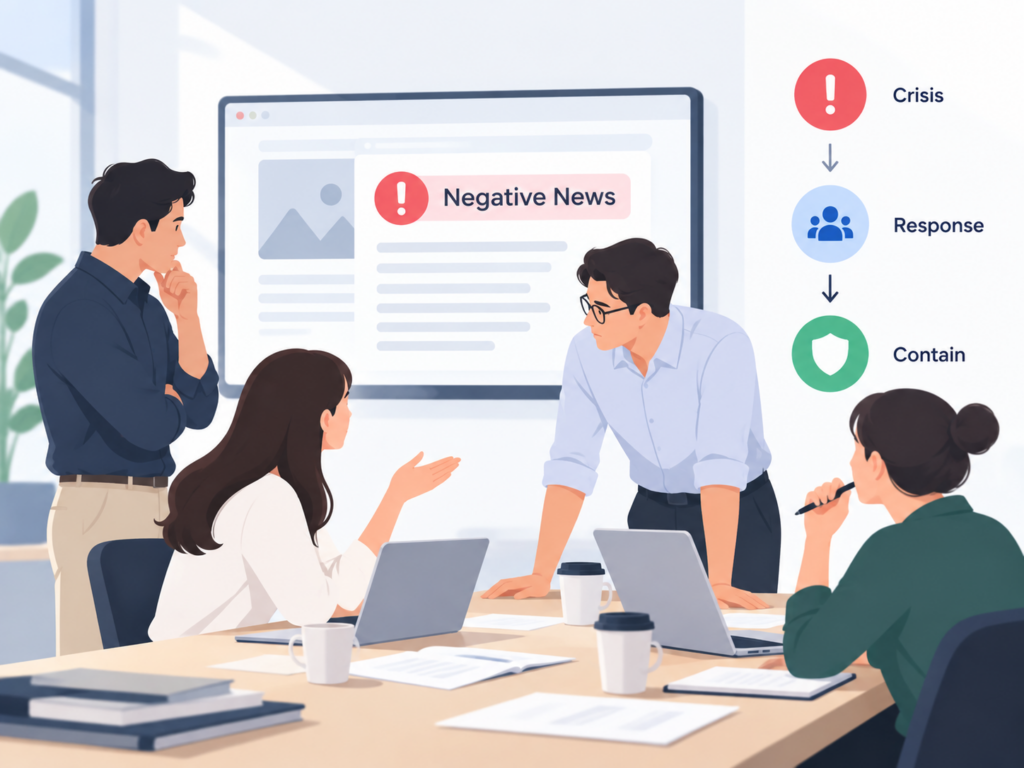
AI reputation management doesn’t really allow for that rhythm. Models get retrained, retrieval indexes refresh, and a brand’s AI reputation can drift quietly over weeks with no single triggering event to react to. That pushes the discipline toward continuous tracking rather than incident response, closer to a dashboard you check weekly than a fire alarm you wait to hear.
Brands that treat this as a one-time audit will keep getting surprised by answers they didn’t know existed.
Conclusion
Reputation management isn’t a relic of the review-and-press era. It’s the same discipline, applied to a new place where people now form first impressions of a brand: a single AI-generated answer. The tools have to change because the format of the “evidence” changed, from a ranked list of links to one confident paragraph with no visible sources.
The brands that get ahead of this aren’t the ones with the highest star rating. They’re the ones who know, in real time, what ChatGPT is actually saying about them, and why.
FAQ
Is AI reputation management the same thing as GEO?
They overlap but aren’t identical. Generative Engine Optimization (GEO) focuses on getting AI models to mention and recommend a brand in the first place. AI reputation management focuses on the tone and accuracy of what gets said once the brand is already mentioned.
How often does AI-generated brand sentiment actually change?
It varies by how frequently a model refreshes its retrieval sources and training data, but shifts of several points on a 0-100 sentiment scale within a two-week window aren’t unusual, often tied to a specific new source entering the mix.
Can you actually fix a negative or outdated ChatGPT answer about your brand?
Not by asking the model directly. The realistic path is identifying the source content the model is likely drawing from and publishing clearer, more current information that outweighs it over time, the same content-based logic that underlies traditional SEO, just aimed at a different kind of index.

