A technical SEO team opens its logs and finds thousands of automated requests hitting faceted URLs, stale feeds, thin tag pages, and parameter variants. The same site contains a small set of product, policy, and comparison pages that answer the questions buyers actually ask, yet the team cannot tell whether those pages receive enough attention from AI search crawlers. Blocking everything looks safe. Leaving everything open looks wasteful.
AI crawl budget is the discipline of allocating accessible URLs, server capacity, and monitoring effort to pages that can improve an answer. It is not a published quota you can read from a dashboard. The practical goal is to reduce low-value crawl paths without hiding useful evidence from search, user-initiated browsing, ad validation, or future retrieval systems.
AI crawl budget is an allocation problem
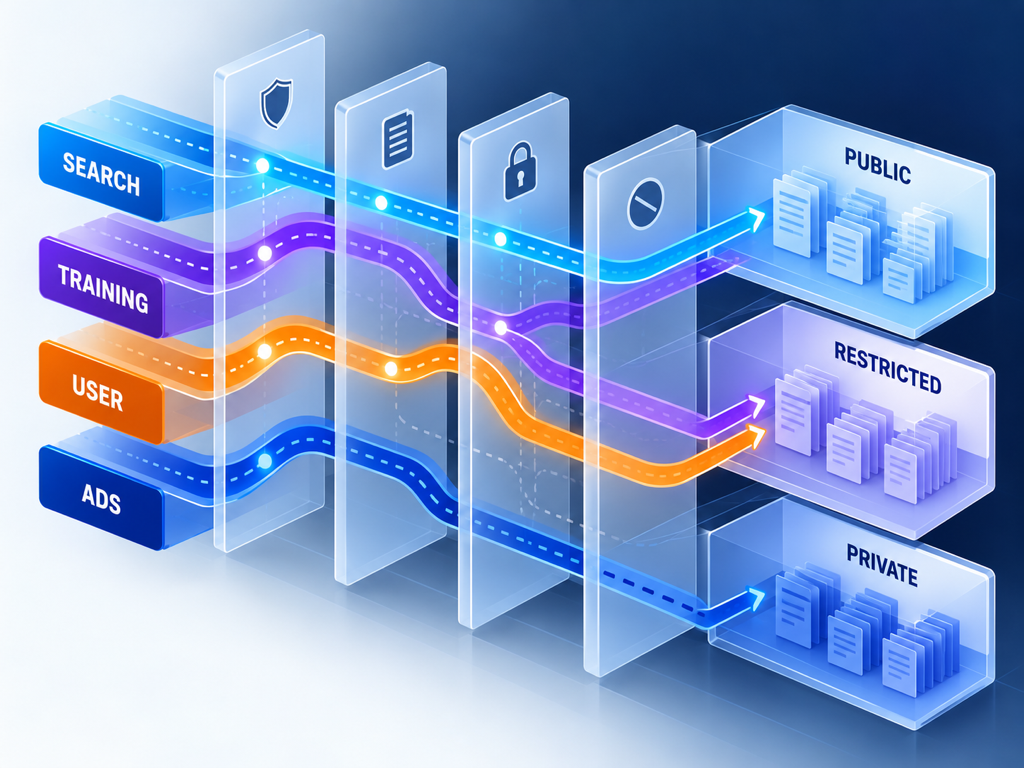
Traditional crawl-budget discussions focus on how a search engine spends requests across a site. AI adds more crawler identities and more possible purposes. One bot may support search discovery, another may collect training data, another may visit because a user explicitly asked for a page, and another may validate an advertising landing page.
That means a single allow-or-block decision can be too blunt. You need to decide which systems may access which content for which business reason, then validate that infrastructure enforces the policy you intended.
The budget has at least four components:
- URL budget: how many unique, useful pages exist versus duplicate or low-value variants.
- request budget: how much automated traffic your infrastructure can serve safely.
- governance budget: how precisely your team can maintain crawler-specific rules.
- measurement budget: how many prompts, pages, and response changes you can monitor well.
Reducing waste in one component can create waste in another. For example, blocking a high-value comparison page may save requests but increase the cost of diagnosing why a brand stopped appearing in relevant answers.
Separate crawler roles before writing access rules
OpenAI's current crawler documentation assigns different jobs to different agents. OAI-SearchBot supports search, GPTBot relates to potential model training, ChatGPT-User can fetch pages in response to user actions, and OAI-AdsBot validates pages submitted as ads. The policy that fits one role does not automatically fit the others.
Start by mapping business intent rather than copying a generic robots.txt file. A publisher may want content discoverable in ChatGPT Search while opting out of training. An advertiser may need OAI-AdsBot to reach a campaign landing page even if unrelated internal paths remain restricted. A private customer portal should stay protected regardless of crawler identity.
| Crawler role | Typical business question | Useful default review | Main risk |
|---|---|---|---|
| Search discovery | Should public pages appear as sources? | Allow valuable public content | Blocking citation opportunities |
| Model training | May content be used for training? | Apply the publisher's explicit policy | Confusing training with search visibility |
| User-initiated fetch | Can a user-requested page be reached? | Evaluate authentication and safety | Assuming robots rules govern every user action |
| Ad validation | Can a submitted landing page be reviewed? | Allow campaign URLs and required assets | Failed review due to 403, 429, or challenges |
Document the owner for every rule. Marketing should not silently change infrastructure policy, and security should not unknowingly remove a search surface the content team measures.
Find URL patterns that create crawl waste
The largest savings usually come from URL systems, not individual pages. Common sources of waste include parameter combinations, calendar archives, internal search results, tracking URLs, duplicate print views, session identifiers, expired promotions, and pagination that exposes nearly identical item sets.
Group requests by canonical URL pattern, response code, content type, crawler identity, and last meaningful update. A raw list of top URLs hides the pattern. A grouped view can show that /filter?color=blue&sort=price and thousands of siblings consume requests while adding little evidence.
Next, compare requested URLs with your sitemap and internal linking graph. Valuable pages that are absent from both are difficult to discover consistently. Low-value variants that appear in navigation or sitemaps receive an importance signal the team may not intend.
Server errors also waste the budget. Repeated 5xx responses invite retries, while redirect chains require multiple requests to reach one resource. Soft 404s are worse because they return a successful status for content that no longer serves a useful answer.
Protect pages that support high-value answers
A page deserves crawl access when it supplies evidence a user or answer engine cannot easily replace. Product specifications, original research, current pricing, official policies, support documentation, compatibility tables, and first-party methodology are common examples.
Value is contextual. A short status page can be more important than a long thought-leadership article during an outage. A niche integration guide may matter more than a generic category explainer because it resolves a specific technical decision.
Score page classes using four factors:
- Answer value: does the page resolve a real question?
- Uniqueness: is the information authoritative or difficult to replace?
- Freshness sensitivity: would stale content change a decision?
- business relevance: does the page support discovery, trust, adoption, or support?
Do not use word count as a proxy for value. A compact table with exact limits may be more retrievable and useful than 2,000 words of broad commentary.
Use controls that match the source of waste
Different problems require different controls. robots.txt is useful for crawler-specific path rules, but it does not remove a URL from every possible index and it is not an authentication system. A blocked private URL is still unsafe if any unauthenticated visitor can load it.
Canonical tags help consolidate duplicate variants, while redirects retire obsolete URLs. noindex communicates an indexing preference when a crawler can access the page and supports the directive. Sitemaps help expose canonical, valuable URLs and their meaningful modification dates. Application and CDN rules manage request rates, bot verification, and abusive traffic.
The safest sequence is:
- Remove unnecessary internal links to crawl traps.
- Consolidate duplicate URL generation at the application layer.
- Return accurate 3xx, 4xx, and 5xx status codes.
- Publish clean canonicals and sitemaps.
- Add crawler-specific access rules only after the URL architecture is understood.
- Test from the edge and origin, not only by reading configuration files.
A robots rule can look correct while a WAF blocks the same agent. The opposite can also happen: the WAF allows a request that the application sends through an expensive rendering path.
Build a crawl-priority scorecard instead of a blocklist
A blocklist answers only which paths should not be fetched. A scorecard helps teams reason about the pages they want a crawler to find and revisit.
For each URL class, assign a simple high, medium, or low rating for answer value, uniqueness, update frequency, and operational cost. Record the intended crawler roles and the rule owner. Revisit the score when a content type or product changes.
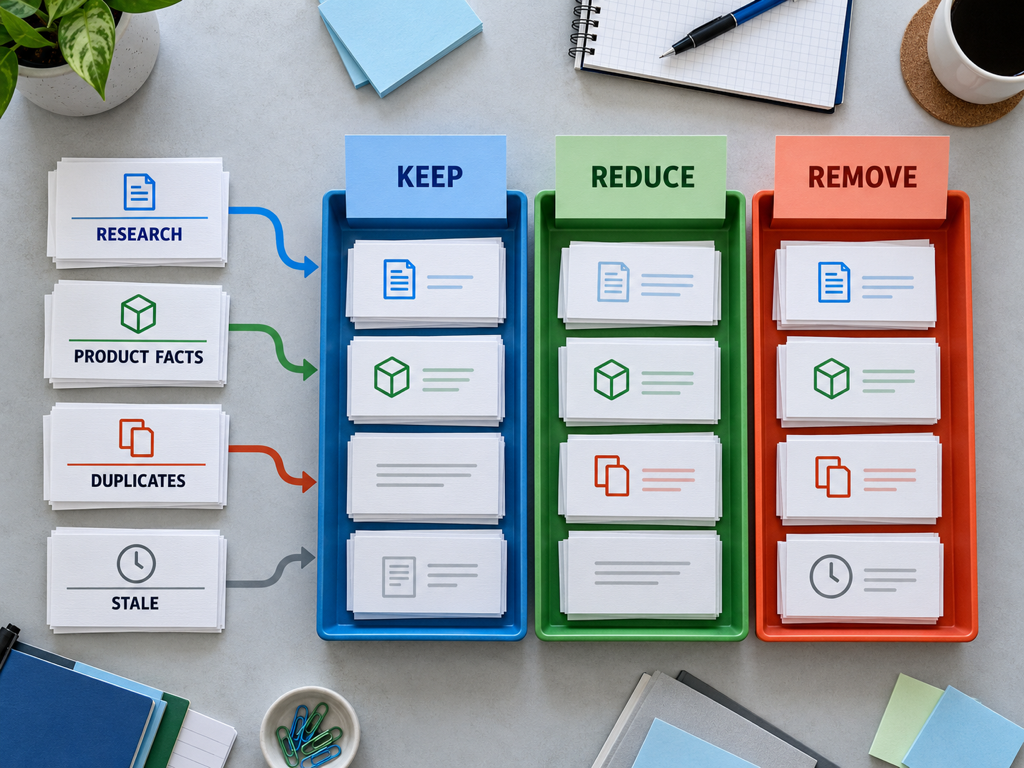
Add two monitoring thresholds. The first catches valuable URL classes that receive no verified crawler activity over a meaningful period. The second catches low-value classes whose request volume grows unexpectedly. Neither threshold proves an AI visibility problem, but both identify where investigation should begin.
Avoid a universal target such as “every important page must be crawled daily.” Some pages change hourly; others remain authoritative for months. Match expected revisit cadence to change risk.
Connect access changes to answer-level evidence
Log analysis can show that requests moved from duplicate filters toward canonical pages. It cannot show that your brand became more visible in AI answers. That requires a fixed prompt set and repeated observation across relevant platforms.
Before changing access rules, capture a baseline for prompts connected to each high-value page class. Record whether the brand appears, its position, the answer's framing, and the cited URLs. After the change, use the same prompts, region, and cadence. A rise in crawler requests without a change in answers may mean the content is accessible but not competitive evidence.
Do not run one manual prompt and call the result a trend. AI outputs vary, and different products may retrieve different sources for the same intent.
Topify turns crawl access into a measurable hypothesis
Topify can supply the answer-level side of a crawl-budget experiment. A team can group prompts by the product, policy, or comparison pages protected in its scorecard, establish baseline visibility and citation sources, then compare those measures after it removes traps or changes crawler access.
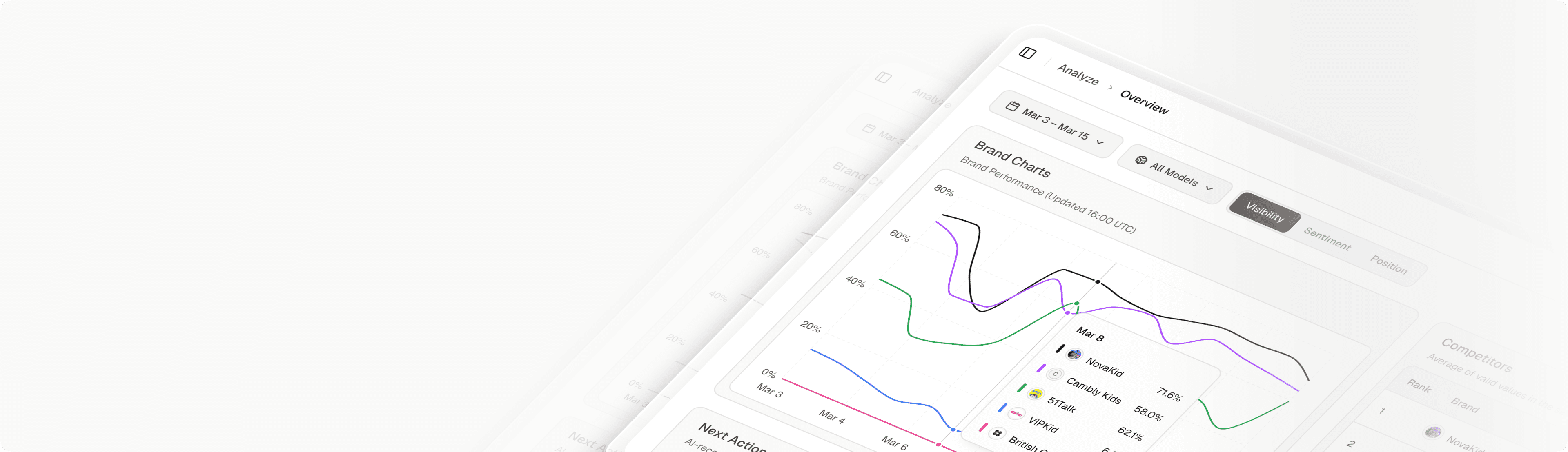
The platform's public overview analytics documentation describes visibility, sentiment, position, competitor rankings, topic breakdowns, and time-series outputs. Those measures help answer whether access work coincided with a stronger presence in relevant responses. Topify does not measure server cost or prove that a single robots change caused a model to cite a page. Pair it with verified edge and origin logs, and treat the combined evidence as an operational test. The related article AI Citations vs. Google Rankings: Track Both also explains why a page's traditional search position cannot substitute for citation monitoring.
The decision becomes clearer: keep the new rule when crawl waste falls and answer evidence improves or remains healthy. Revisit it when valuable URLs disappear from monitored sources.
Conclusion
AI crawl budget is not a magic quota. It is a set of decisions about URL quality, crawler purpose, infrastructure capacity, and measurement. Start with URL patterns, separate search, training, user, and ad roles, then protect the small set of pages that supply distinctive and current evidence. Use application fixes, status codes, canonicals, sitemaps, robots rules, and edge controls for the problems they actually solve.
Before changing a broad rule, capture an answer baseline. After the change, compare both verified request behavior and AI responses. Topify's AI visibility workflow can provide the mention, position, and citation evidence that logs cannot, while your infrastructure data confirms whether crawlers reached the intended pages.
FAQ
Does OpenAI publish a fixed crawl budget for each website?
No. Publishers should treat crawl budget as an internal allocation framework rather than a guaranteed request quota from OpenAI.
Can robots.txt protect private customer data?
No. Robots rules communicate crawler preferences. Private data requires authentication, authorization, and appropriate application security.
Should GPTBot and OAI-SearchBot have the same rules?
Not necessarily. They have different documented purposes, so a publisher can apply different policies based on its search-discovery and training preferences.
How do I know whether a crawl-budget change worked?
Compare verified requests by URL class, infrastructure cost, error rates, and a stable set of AI answer and citation metrics before and after the change.