A citation analyst opens a source link and lands in a long document. The answer refers to a specific finding, but the review note says only page twelve. In one reader that number points to the cover sequence; in another version the same material appears in a chapter without stable screen pagination. The link works, yet the evidence remains difficult to find.
AI citation analytics needs a locator that matches the document format and version. A filename and a page number may be insufficient for a PDF, while a screen position can be unstable in a reflowable publication. The operational task is to record enough context for another reviewer to reach the same passage without implying that every AI service reads every supported format.
Define Document Evidence for AI Citation Analytics
Separate three objects in the record: the citation displayed in the answer, the document reached through that link, and the passage the reviewer located. Each can be present without establishing the others. A valid document URL doesn’t demonstrate that the linked publication supports the answer’s statement.
This workflow concentrates on locating evidence. Whether the passage actually supports the claim remains a separate editorial judgment, as does whether a particular assistant accessed that version. Keeping those boundaries explicit prevents a successful navigation check from becoming a broader accuracy claim.
Google lists PDF and EPUB among indexable file types. That is a statement about Google Search’s indexing capabilities, not a guarantee that a file is indexed or that any other AI system can retrieve and interpret it. Record provider-specific access only when the observation or documentation supports it.
For your evidence register, start with the displayed link, document title, publisher, version, and retrieval date. Add a format-appropriate locator and the reviewer’s result. These fields make the record useful even when the original answer includes only a broad source link.
Verify the Document Version and Format
Check the publication you actually reached rather than assuming its extension tells the whole story. A link can lead to a landing page, a different download, or an updated edition. Record that result before attaching a passage locator to it.
Capture the version identifiers the publisher provides. A publication date, edition label, revision number, or named release can help distinguish otherwise similar documents. When no identifier is visible, record that limitation rather than inventing a stable version name.
Use a synthetic annual report as an example. A citation may display the same title across two editions, but the later report adds introductory pages and moves the relevant section. A locator written for the first edition should remain attached to that edition instead of silently migrating to the newer file.
Decide which version the review is meant to establish. You might be checking the currently accessible document or examining a permitted archived copy collected with the original answer. Those are different evidence questions; label the record accordingly.
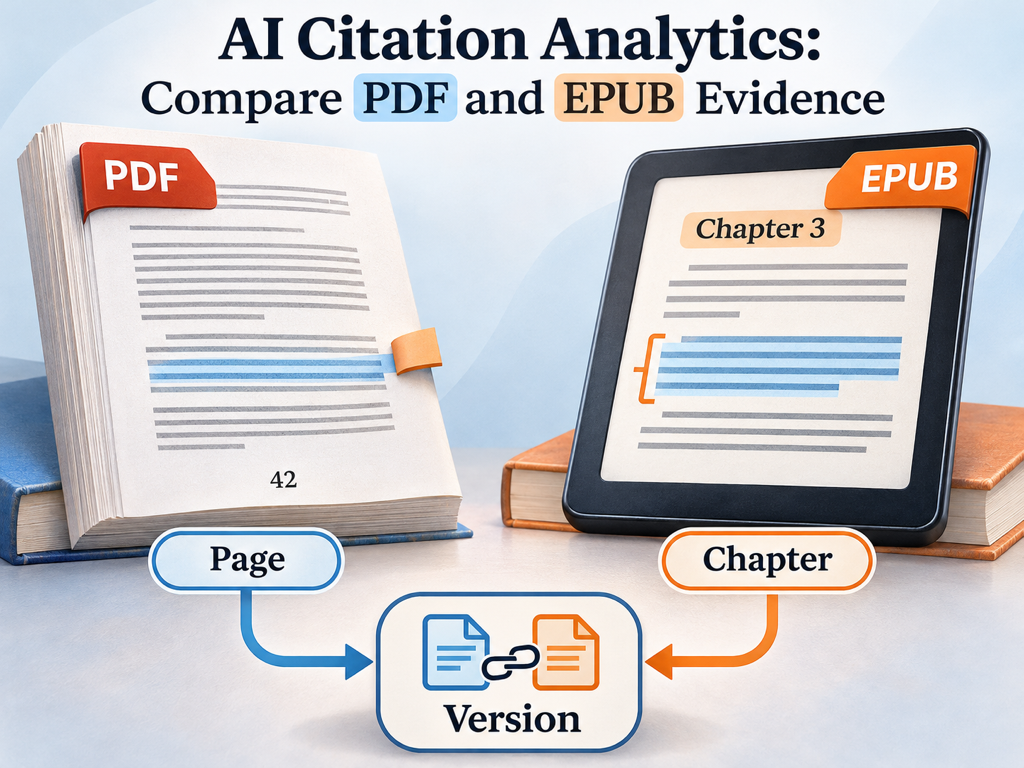
A locator belongs to a document version, not merely a filename.
Keep a short description of access conditions as well. A document visible after authentication may be available to your reviewer without being publicly accessible. Don’t infer general retrieval access from the fact that someone on your team could open it.
Locate Evidence in PDF Files
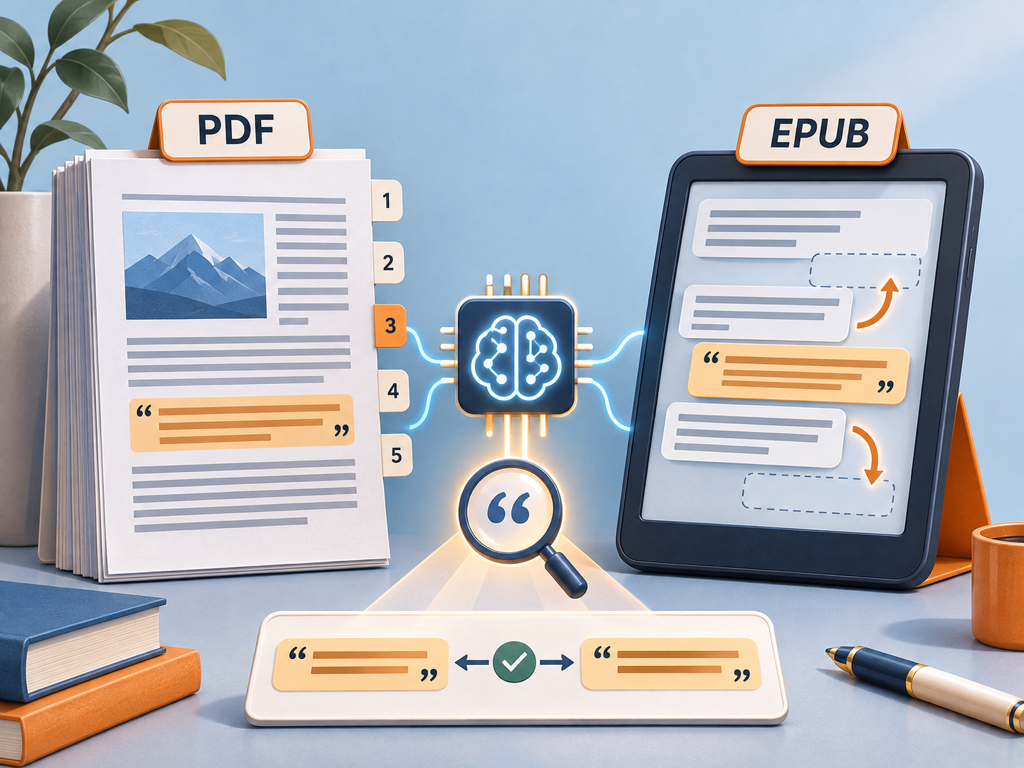
For a PDF, distinguish the page label printed on the document from the page position shown by the reader. Front matter, unnumbered pages, and separate numbering sequences can make those references differ. Record both when they are useful, alongside a heading or brief permitted text cue.
In a synthetic example, printed page twelve might occupy the sixteenth position in the file. A review note that says printed page twelve, reader position sixteen, section Procurement Costs is easier to follow than page twelve alone. These example numbers illustrate a locator structure, not a rule about any specific PDF.
Verify the passage visually as well as through any text search you use. Scanned pages, extraction order, and multi-column layouts can make a successful string match insufficient to identify the intended context. If the reviewer cannot locate the passage, record that outcome without assuming the document lacks it.
| Locator element | PDF review | EPUB review |
|---|---|---|
| Publication identity | Title, publisher, edition | Title, publisher, edition |
| Primary location | Section and printed page label | Chapter or navigation heading |
| Secondary location | Reader page position | Stable section identifier when available |
| Text cue | Short distinctive passage cue | Short distinctive passage cue |
| Environment | Reader and file version | Reading system and layout type |
| Uncertainty | Missing label or unreadable page | Unstable screen pagination or missing navigation |
Store only the passage detail needed for inspection and permitted by your handling rules. A concise location cue can be enough to guide a reviewer back to the source. Reproducing an entire document in the analytics record is usually unnecessary for this navigation task.
Locate Evidence in EPUB Files
An EPUB locator should begin with publication identity and structural location. The EPUB specification describes a packaged publication format, while its structure supports navigation through content documents. Use the chapter or navigation heading the reviewer can actually reach, then add a distinctive text cue.
Don’t treat every EPUB as reflowable. EPUB supports different layout approaches, and a publication may provide page navigation associated with a fixed reference. Record the layout and available navigation rather than assuming either universal page stability or universal absence of page numbers.
For reflowable content, a screen page can change with reading conditions. The EPUB reading-system documentation describes dynamic pagination for reflowable layouts; that document is a Candidate Recommendation, so distinguish its status from the published EPUB 3.3 Recommendation. A chapter-plus-text cue is a practical human-review fallback when the displayed page count isn’t portable.
Avoid replacing one fragile locator with another unexplained technical string. A reading-system-specific position may help a colleague using the same software, but the record should still include a human-readable chapter and passage cue. Test the locator in the environment your reviewers will actually use.
Preserve the uncertainty when navigation is poor. Missing headings or inconsistent reader behavior can make a passage difficult to reproduce even when you found it once. That is a reviewability problem worth reporting separately from whether the content is factually correct.
Compare Formats Without Assuming Equal Access
Keep format support, indexing eligibility, actual indexing, retrieval, and passage location in separate fields. A document’s inclusion in a supported-format list establishes only the capability described by that list. It doesn’t demonstrate the later steps for the specific file or answer under review.
For a fair format comparison, choose equivalent publication versions and a clearly defined evidence target. Otherwise, a difference attributed to PDF versus EPUB may simply reflect a revised chapter, a missing appendix, or a different access condition. Record those differences before comparing navigation effort.
Use a small manual review with named conditions. Ask a second reviewer to locate the target from the saved record, then note success, ambiguity, or failure and the reason. The aim is reproducibility for your team, not a benchmark claiming one format performs better across AI engines.
Successful navigation and verified AI access remain different findings.
the explanation of citations and brand mentions supplies another useful boundary: a source link and a brand appearance are different events. Document-format review adds a third question, whether the linked evidence can be located by a reader.
Turn Document Checks Into a Reviewable Citation Record
Topify describes identifying the domains and URLs cited in relevant AI answers. Its citation analysis feature can provide the source-level starting point for a focused document review. Select a consequential cited document, then add the format and locator fields in your manual evidence register.
The input is a recorded citation URL; the action is to verify the reached publication and test whether another reviewer can locate the relevant passage. The output supports a decision about whether the citation is reviewable, needs a better locator, or remains unresolved. This doesn’t establish that Topify parses every PDF or EPUB, stores publication versions, or validates passage support automatically. Confirm the fields available in your actual setup and retain the manual checks separately. Prioritize documents whose ambiguity affects a real content or reporting decision, rather than treating every linked file as an equally urgent audit task.
Give each unresolved case an owner and a next step. That might mean checking a publisher’s edition information, adding a chapter cue, or marking an inaccessible document as unverified. A complete register should make the remaining work obvious without overstating what the analyst established.
Conclusion
A document citation becomes easier to review when its locator matches the publication’s format and version. For PDFs, distinguish printed labels from reader positions; for EPUBs, preserve structural navigation and a useful passage cue. Keep the ability to locate evidence separate from indexing eligibility, AI access, and claim support.
Start with one important document found through your citation source review. Write its version-specific locator and ask another analyst to follow it without additional guidance. Record where the attempt succeeds and where it becomes ambiguous. That small exercise gives your team a practical standard for future records, while avoiding unsupported conclusions about which file format every answer engine can read or cite.
FAQ
Are PDF page numbers the same as reader page positions?
Not necessarily. Record printed page labels and reader positions separately when front matter or numbering sequences make them differ.
How can an EPUB passage be located without fixed pages?
Use publication identity, a chapter or navigation heading, and a short distinctive text cue. Include a stable section identifier when the publication provides one.
Does Google indexing support prove AI access?
No. Supported formats describe an indexing capability. They don’t prove access, indexing, or passage use by a particular AI service.
What belongs in a document citation evidence record?
Keep the displayed citation URL, publication identity and version, format, locator, review environment, and the outcome of the location check.