A content analyst clicks a citation expecting to inspect the supporting paragraph. The source page opens, but the browser remains at the top of a long article. Another colleague sees a highlighted passage using the same link. The team has recorded a working URL, yet it hasn’t established a consistent route from the answer to the evidence.
AI citation analytics can make that difference visible with a passage-navigation check. The check asks whether a reader reaches the intended location in a documented environment, rather than whether the page merely loads. Keep that outcome separate from the truth of the answer’s claim and the history of any redirects along the way.
Define Passage Reachability in AI Citation Analytics
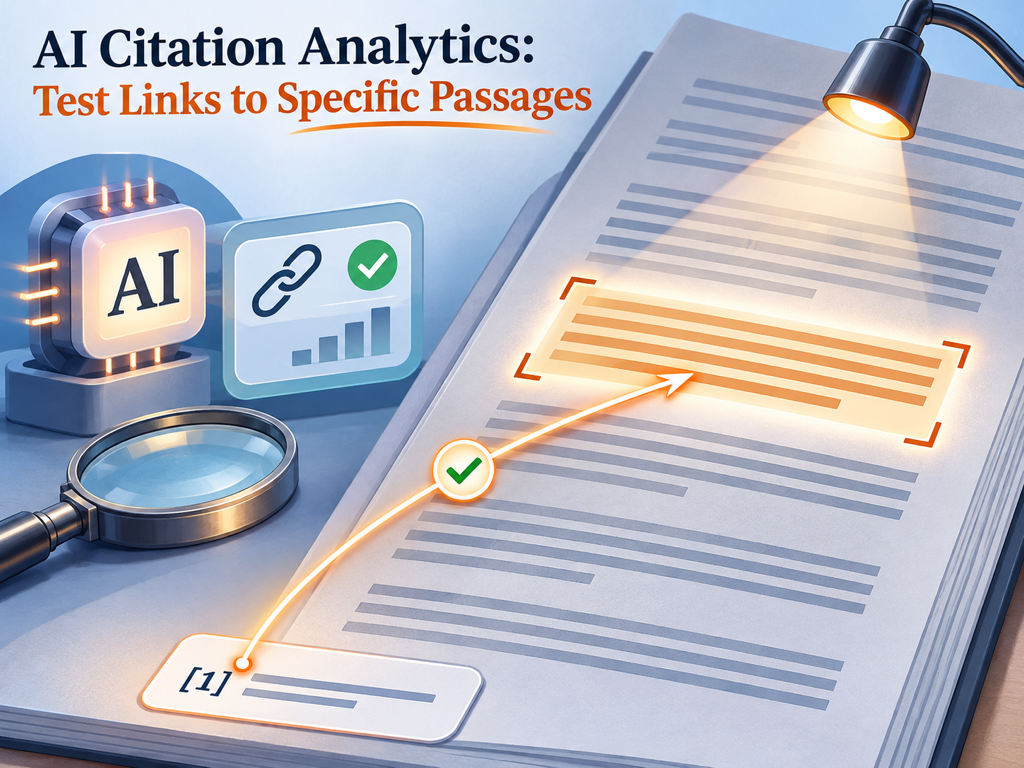
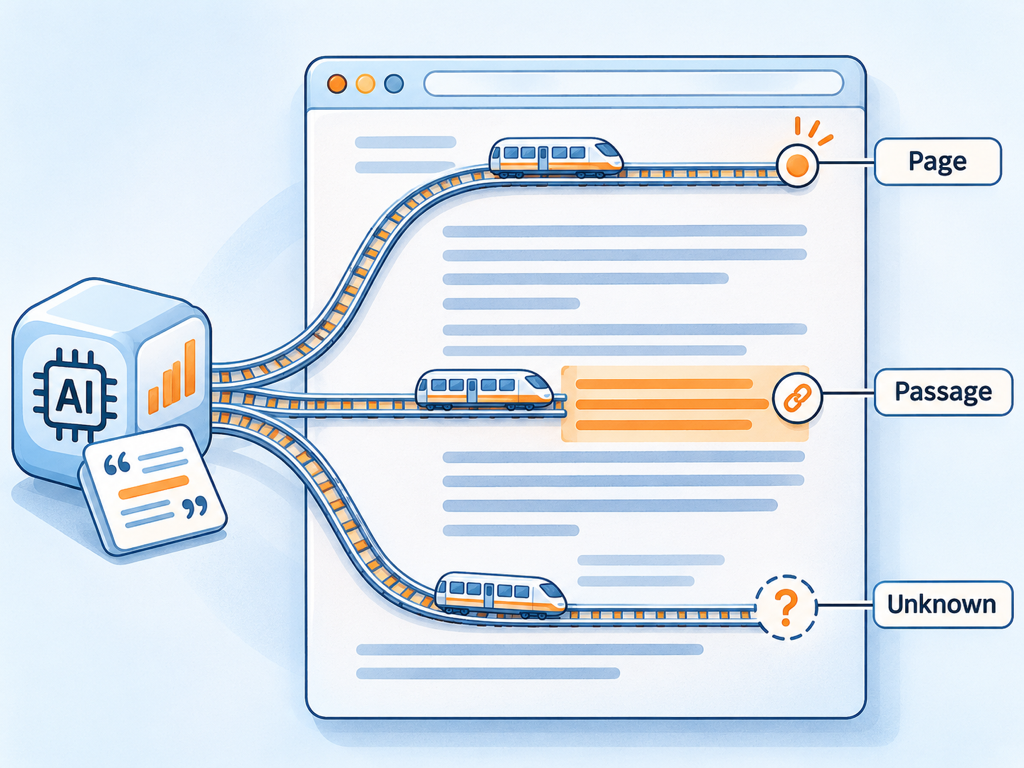
Passage reachability is the ability to locate the intended section from the recorded citation link under stated conditions. A page-level success means the document opened. A passage-level success means the expected location became identifiable, whether through an anchor, a highlight, or a documented manual cue.
Define success before testing. You might require the target section to appear in view and match a saved heading, or accept a highlighted text range that identifies the expected passage. A vague instruction to check the citation leaves reviewers to make incompatible judgments.
The URL Fragment Text Directives document describes a mechanism for referring to text in a URL fragment. It is a Draft Community Group Report, explicitly not a W3C Standard or a standards-track specification. Treat its described behavior as a mechanism to investigate, not a guarantee of universal browser support.
A working page link can still be a weak evidence handoff.
Record the intended passage as well as the observed destination. Otherwise, a browser that scrolls somewhere on the page may receive a pass even when it highlights a repeated phrase in the wrong section. The expected target needs enough context for another reviewer to recognize it.
Preserve the Complete Citation Link
Retain the full link displayed or copied from the answer, including the fragment after the hash character. A page URL with its fragment removed can still open successfully while losing the part intended to identify a section. Keep a separate normalized URL only when another analysis needs it.
Use distinct fields for the captured citation, reached page, and tested navigation result. This article doesn’t attempt to reconstruct redirect history; its purpose is to preserve the input to the passage test. Record the date and environment so reviewers know when and where the result was observed.
A synthetic link ending in an element identifier such as #requirements is different from a text directive referring to a phrase. Keep the original form rather than rewriting both into a generic page label. That difference determines what the reviewer should try to verify.
Avoid putting confidential text into a new public link merely to create a locator. A text-bearing fragment can itself contain readable source words. Review what the link carries before sharing it outside the original evidence context.
Store a short expected-target note with the captured link. Include the section heading and a permitted distinctive phrase when useful. That note is the fallback for understanding the intended evidence if navigation behavior later changes.
Test Anchors and Text Fragments Separately
An element anchor and a text directive identify locations differently. An anchor refers to an element identifier, while a text directive uses specified text to describe a target range. Don’t assume that a page supporting one mechanism will produce the same outcome for the other.
For an anchor test, open the captured link and inspect the reached section. Confirm that its heading or surrounding content matches the expected target. An element can exist while its meaning has changed, so a visible scroll movement alone is insufficient.
For a text-directive test, inspect whether the intended passage is indicated and whether the match is unambiguous. The draft describes possible user-agent behaviors such as highlighting or bringing a text range into view, without mandating one visual presentation. Record what the tested environment actually did.
Use a decision table to avoid a single misleading working-link flag. These outcomes are proposed review categories, not automatic platform classifications.
| Observation | Navigation result | Next action |
|---|---|---|
| Expected passage identified | Passage reached | Preserve environment and evidence |
| Page opens at a general location | Page reached only | Add a usable manual locator |
| Different passage is indicated | Wrong target | Inspect repeated text or changed content |
| Document cannot be inspected | Unresolved | Record access or loading limitation |
| Reviewer cannot identify expected target | Insufficient target record | Improve the target note before retesting |
Keep claim support as a separate result. Reaching the expected paragraph doesn’t establish that it supports every statement in the AI answer. Likewise, a failed navigation shortcut doesn’t establish that the underlying source lacks relevant evidence.
Compare Reader Environments
Test the environments that matter to the people receiving the report. A desktop browser, mobile browser, and embedded client may expose different navigation behavior. Document those conditions instead of claiming the link works or fails universally.
Use the same captured link and expected-target note in each test. Record browser or client name, visible version information when available, device class, and test time. Note any meaningful differences in access conditions, such as authentication or a consent overlay.
A synthetic review might show passage navigation in one browser and page-only navigation in another. Report both observations without inventing a compatibility percentage from a small convenience sample. The operational conclusion is that the evidence handoff needs a fallback for some readers.
Don’t change the link halfway through the comparison without creating a new test input. If you add context words to a text directive or replace an anchor, you have repaired a different locator. Retain the original result and label the revised link as a proposed improvement.
Choose a fallback that remains useful without special navigation behavior. A section heading and brief passage cue can help someone find the intended material manually. The fallback should complement the link rather than imply that all clients must implement the same mechanism.
Classify Passage Navigation Outcomes
Keep a small stable outcome vocabulary. Passage reached, page reached only, wrong target, and unresolved usually communicate more than a binary valid flag. Add a short reason instead of creating dozens of categories that reviewers apply inconsistently.
Distinguish environmental limits from content changes when the evidence allows it. A page-only result in one client may reflect its navigation behavior, while a previously highlighted phrase that no longer exists raises a different question. Don’t assign either explanation when the record supports only an unresolved result.
Navigation evidence is about the reader’s path to a location.
Prioritize repair by consequence. A missing locator in a short source may create little review friction, while an ambiguous destination in a long technical report can block an important decision. Use the expected review task to decide which cases need immediate attention.
Apply the distinction between citations and brand mentions when summarizing findings. A citation can be present, a brand can be absent, and the passage shortcut can fail at the same time. These observations belong in separate fields so one doesn’t erase another.
Retest a sample after consequential source changes, but preserve the historical observation. A later successful navigation doesn’t prove that an earlier recipient reached the passage. Date the new result and explain whether it verifies a repair or simply records current behavior.
Include Passage Checks in Citation Review
Topify describes analyzing cited domains and URLs across relevant AI answers. Its citation analysis feature offers a source-level starting point for deciding which references deserve closer inspection. Use that list to select citations whose evidence handoff matters to a current review.
The analyst’s input is the captured link and expected passage; the action is a manual navigation test in named reader environments. The output is a passage-reachability result that can accompany source-level citation analysis. It supports decisions about adding a fallback locator, repairing an owned page’s anchor, or documenting a client limitation. The public feature description doesn’t establish that Topify automatically tests text fragments, validates browser compatibility, or confirms claim support. Keep those manual checks explicit, and verify which raw link details are available in your actual workflow before promising a repeatable review to stakeholders.
Assign repairs to the right owner. Your web team can investigate an owned page’s section identifier; it can’t guarantee how every external publisher or client handles navigation. Where you lack control, improve the review note and state the remaining limitation.
Conclusion
A citation URL should help a reader reach the evidence, but page access and passage navigation are different outcomes. Preserve the complete captured link, define the intended target, and test the reader environments that matter. Record page-only and unresolved results without turning them into unsupported claims about source accuracy.
Choose one consequential reference from your citation source analysis and ask a colleague to follow it using only the saved record. Add a heading and passage cue wherever the shortcut leaves ambiguity. That exercise establishes a practical standard for evidence handoffs and shows where a repair is possible, where a fallback is needed, and where the current result must remain limited to the environment you observed.
FAQ
What is the difference between an anchor and a text fragment?
An anchor refers to an element identifier on a page. A text directive describes a text range; its observed navigation behavior depends on the tested environment.
Why can a citation open the page without selecting the passage?
The locator may be missing, stale, ambiguous, or handled differently by the client. Record the observed outcome before deciding which explanation fits.
Should fragments be preserved in citation records?
Yes, preserve the captured link in a raw field. Removing its fragment can discard the information intended to identify a section or passage.
How should failed passage navigation be reported?
Separate page access from passage reachability. Include the environment, expected target, observed outcome, and a manual locator when one can be verified.