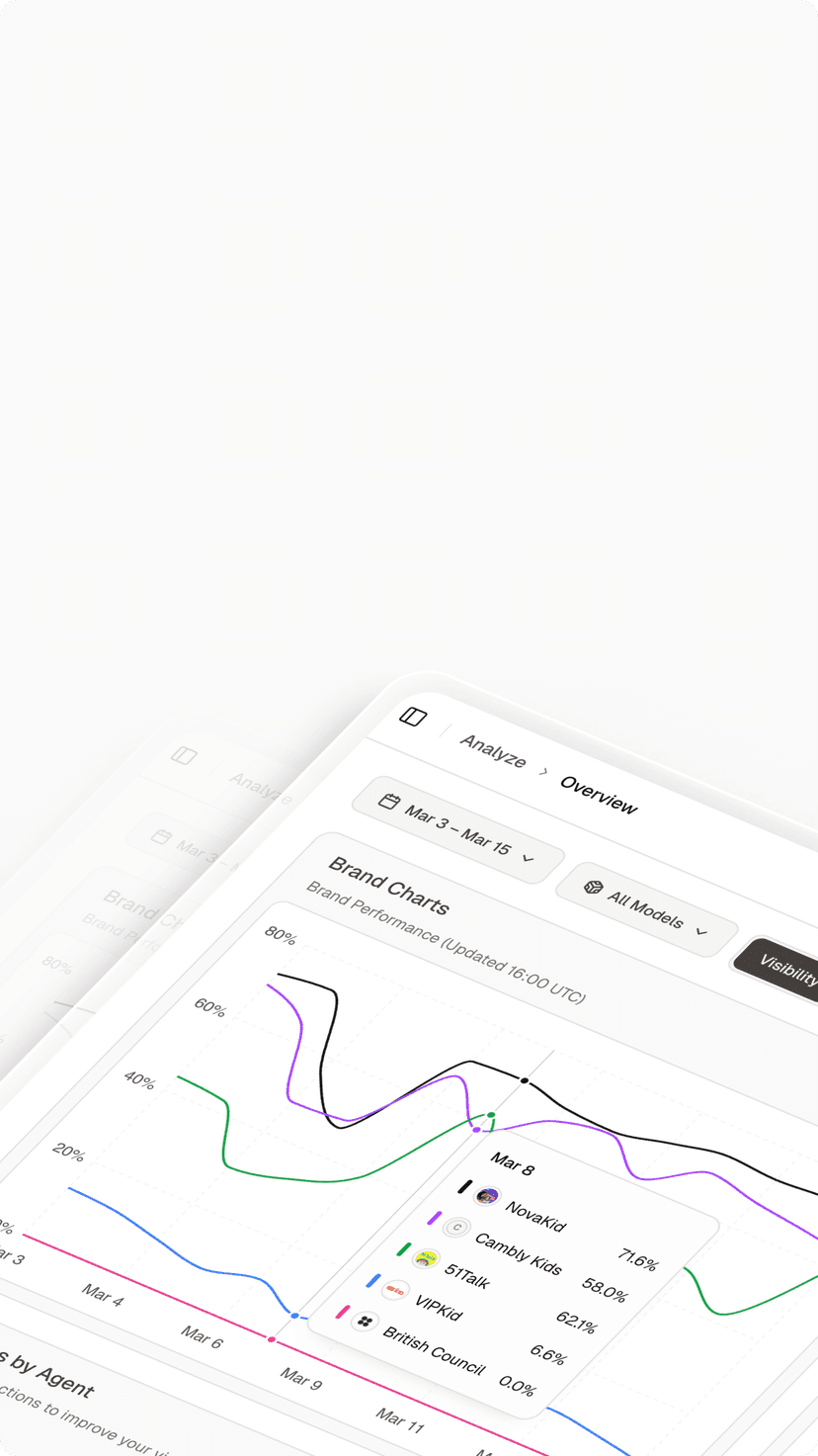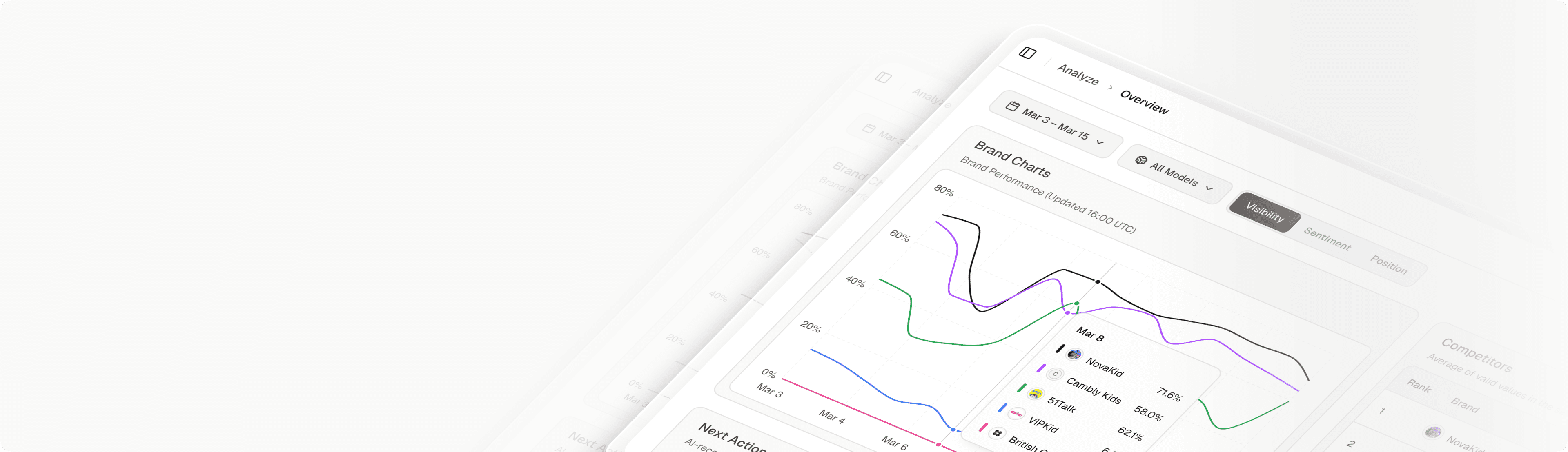
A customer researcher adds a product’s supposed advantages to a buyer question and gets a more favorable answer. The result enters a visibility report as an improvement, even though the underlying product evidence and publishing work have not changed. The team now needs to know whether it measured a stronger recommendation or simply supplied the conclusion inside the question.
A prompt research tool is useful only when the selected questions still represent the decision you want to study. Presuppositions, praise, and unsupported comparisons can alter that decision before monitoring begins. The practical task is to create neutral controls that retain real buyer requirements, compare the complete observations, and keep wording effects separate from claims about brand performance.
Find the Presupposition Before Using a Prompt Research Tool
Look for conclusions presented as facts inside the question. “Why is this product the easiest option?” assumes ease of use before the answer begins. “Which option fits a team that needs a short setup process?” states a requirement without naming the winner.
The distinction is editorially useful even before testing a model. A question can ask for an evaluation, request an explanation of a supplied assertion, or seek evidence that the assertion is true. Those tasks may produce different answers because they ask for different work, not merely because one version is longer.
Pew Research Center’s question-writing guidance explains that wording can affect human survey responses and emphasizes clear, specific questions. That provides a design caution, not a measured effect size for AI answers. Treat the review method here as a proposed prompt-quality workflow that requires its own observations.
Mark the potentially leading phrase and the proposition it assumes. A reviewer should be able to say exactly what conclusion entered the prompt: superiority, popularity, reliability, low cost, or suitability for a named audience. Without that specificity, “make it less biased” becomes an instruction to rewrite by taste.
Write Neutral Controls That Preserve the Buyer Decision
Keep the task and decision constraints stable while removing the assumed conclusion. A neutral control should still ask about the same buyer, use case, budget basis, and evidence need. Deleting those details can create a different question that is less useful for comparison.
These synthetic pairs illustrate wording review. They are not prompts that have been activated or results from an executed monitoring experiment.
| Wording under review | What it presupposes | Neutral control | Requirement retained |
|---|---|---|---|
| Why is Vendor A the simplest choice for a small team? | Vendor A is simplest | Which options suit a small team that needs simple setup? | Team size and setup need |
| Which reliable tool should replace Vendor B? | Replacement is required and candidates are reliable | Should this team replace Vendor B, and what evidence would support that decision? | Replacement decision |
| Why do experts prefer this platform? | A preference exists | What evidence shows whether the platform fits this workflow? | Need for external evidence |
| How much better is A than B for reporting? | A is better | How do A and B differ for this reporting task? | Named comparison and task |
Annotate the change beside the pair. A short explanation such as “removed unsupported superiority assumption” is more useful than a generic version number alone. Preserve the original wording so later reviewers can reproduce the distinction.
Have another reviewer check the retained requirements before running anything. A neutral rewrite can accidentally broaden the category, remove a compatibility condition, or shift from selection to explanation. Catch those changes before interpreting a difference in answers.
Keep Factual Context Separate From Endorsement
Factual context can belong in a question. A buyer may already know the current system, a documented integration requirement, or a hard implementation deadline. Removing all context in pursuit of neutrality can make the prompt less representative of the actual decision.
Require a source or clear scenario label for material supplied facts. A hypothetical team constraint should be identified as part of the scenario. A product capability presented as factual should be checked against current evidence rather than inserted because it appears in marketing copy.
Separate the fact from the evaluative adjective. “Supports this integration according to current documentation” states a bounded claim. “The superior integration platform” supplies an endorsement that the answer may repeat without independently establishing the comparison.
Use a two-column review note: information the answer may accept as scenario context, and propositions the answer is supposed to evaluate. This creates a visible boundary around the task. It also helps a reviewer detect prompts that ask for proof while quietly treating the disputed assertion as a given.
Neutrality should preserve the decision, not erase it.
Compare Answers Without Selecting the Favorable Run
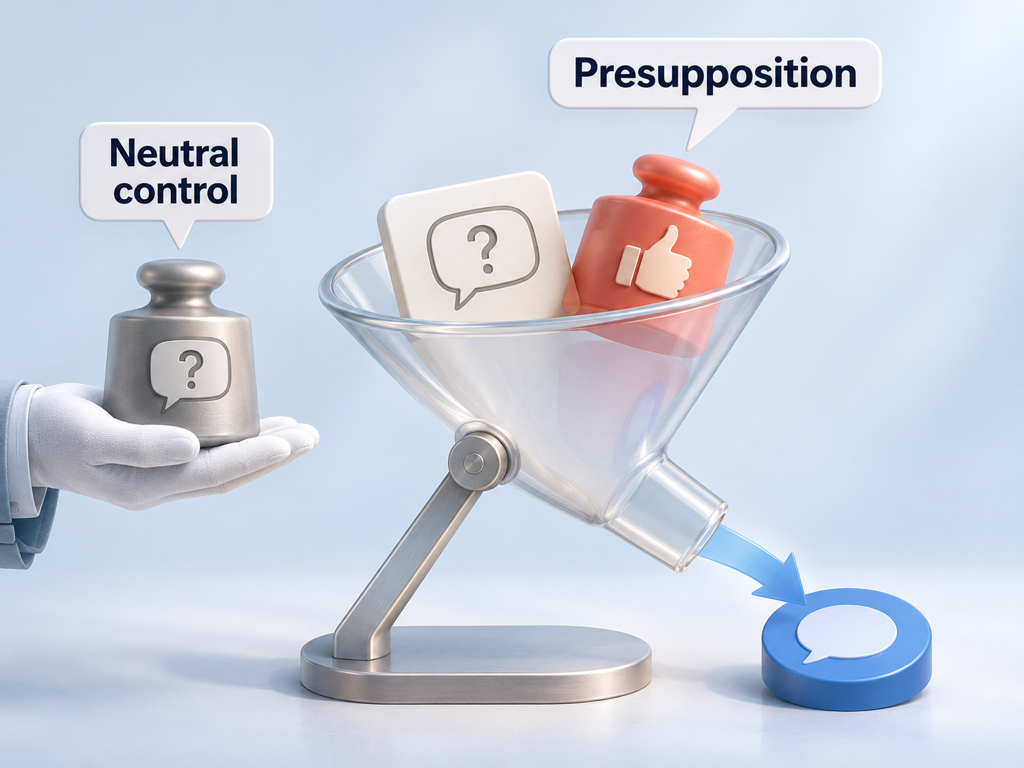
Write the comparison plan before collecting answers. Specify the prompt pair, collection conditions, observations to retain, and the decision the comparison should inform. A plan reduces the temptation to stop when one rewrite produces the desired recommendation.
Keep all retained runs, including unchanged, unfavorable, or inconclusive results. Record collection failures separately rather than quietly replacing them with new attempts until the answer looks useful. Any retry policy should be explicit so the final sample reflects a known procedure.
Compare more than whether the brand appears. Inspect recommendation strength, qualification, factual support, and source use. A neutral question may produce a less enthusiastic answer while adding evidence that makes it more useful to a real buyer.
Do not call a wording comparison a campaign lift test. The intervention is the question itself, and the observations are collected under that question’s conditions. A favorable result cannot establish that publishing, demand, or market perception improved unless separate evidence supports those claims.
Use an inconclusive outcome when the comparison cannot resolve the issue. A small sample or inconsistent results can justify further review without requiring a winner. The reporting goal is to identify dependence on wording, not manufacture a stable ranking from a few selected responses.
Review Recommendation Changes With the Source Evidence
Inspect what changed in the answer’s reasoning when the wording changed. A different recommendation can arise alongside a different interpretation of the task, a different qualification, or a different source set. Record those differences before attributing the result to one phrase.
Use a claim-by-claim comparison for material outcomes. Identify the recommendation, its stated conditions, and the evidence offered. Then ask whether the neutral control still addressed the intended buyer decision or whether the rewrite changed what counted as a good answer.
Keep unsupported praise separate from useful specificity. An answer that repeats “easiest” without defining setup effort supplies less decision evidence than an answer that explains prerequisites and trade-offs. The latter may be commercially less flattering while being more informative.
A synthetic review might find that the leading version repeats an assumed advantage while the neutral version asks for missing requirements. That result would support a note about task framing in the retained sample. It would not prove a universal model weakness or quantify a real-world visibility penalty.
A favorable adjective is not the same as supporting evidence.
Publish a Reviewable Prompt Set for Monitoring
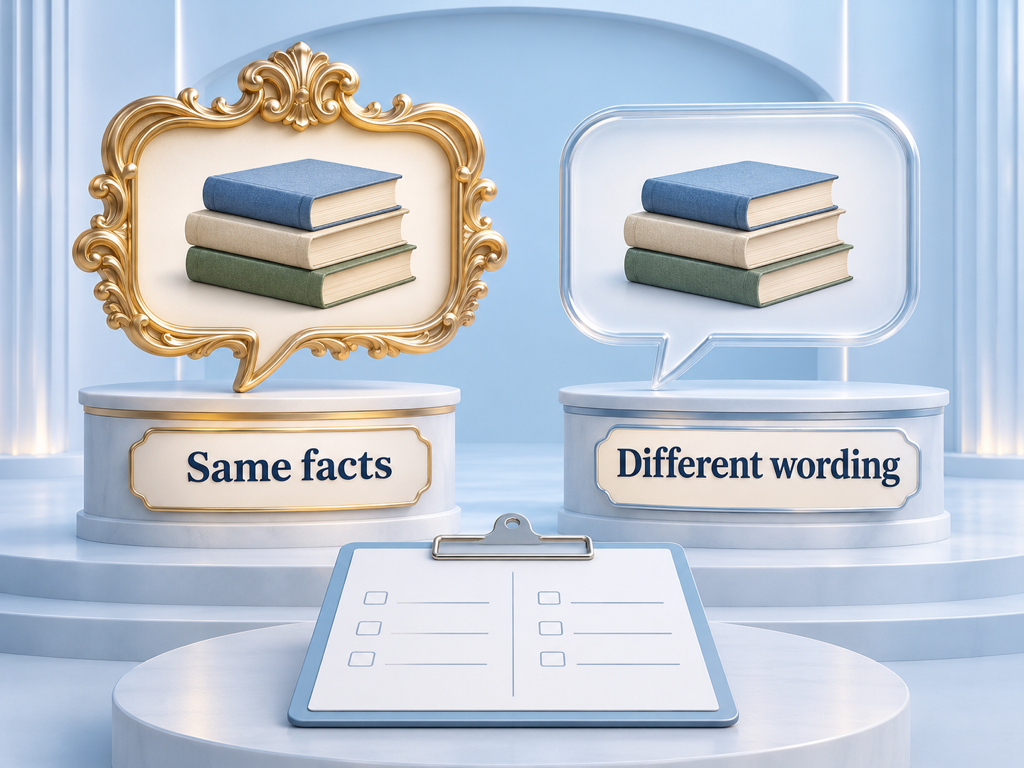
Topify can support discovery of candidate buyer questions before the wording review. Supply a defined brand and relevant product context, then use its prompt discovery workflow to identify questions worth evaluating for recommendation visibility. Human reviewers can examine presuppositions, preserve factual constraints, and approve the wording that fits the intended research task.
Keep the original candidate, neutral control, change explanation, and review status in an independent record unless the available workflow has been verified to preserve those fields. Discovery can help prioritize questions, but it does not guarantee neutral wording or establish a causal effect from a rewrite. Move only the approved set into a separately authorized monitoring program, with the exact questions and collection plan visible before activation. The output should support a concrete content or evidence investigation, rather than reward whichever phrasing makes the brand look strongest.
A related approach to preserving buyer intent during prompt grouping helps prevent a neutral rewrite from being merged into a different decision family. Keep wording review and grouping review distinct so each has an inspectable reason.
For maintenance, define a trigger for re-review. Changes in the product, buyer requirements, or the supplied factual context can make an old prompt misleading even when its grammar remains neutral. Preserve a dated decision instead of assuming that one approval lasts indefinitely.
Conclusion
Leading wording can supply the conclusion a monitoring program was meant to investigate. Mark presuppositions, create neutral controls that preserve the buyer decision, and separate factual context from endorsement. Keep the complete comparison record, including inconclusive outcomes, and inspect the evidence behind recommendation changes. A favorable answer under a rewritten prompt is an observation about that collection procedure, not proof of a marketing improvement.
Begin with one consequential buyer question. Save the original, identify its assumed proposition, and ask a second reviewer to check the neutral version before any new run. Use prompt discovery to build the candidate set, followed by explicit human approval of the wording. The result should be a reviewable research question that helps the team learn, even when the answer is less flattering.
FAQ
What makes a buyer prompt leading?
It treats a disputed conclusion as established or supplies evaluative wording that the answer is supposed to assess. Identify the exact assumption rather than labeling every detailed prompt biased.
Should factual product context be removed?
No. Retain relevant, verified context and explicit scenario constraints. Separate those facts from unsupported praise or a conclusion the answer should evaluate.
Does a neutral rewrite guarantee unbiased answers?
No. It addresses a specific wording concern, not every source of variation or bias. Retain collection conditions and review the resulting evidence.
Can a stronger result from one prompt prove improvement?
It can show what happened in that observation. It cannot, by itself, establish improved market performance or the effect of a content campaign.