A content editor checks an answer that links to a product demonstration. The answer describes a feature as generally available, but the video contains a spoken qualification, a brief screen label, and a description added after publication. Opening the right URL does not resolve which part supports the claim.
LLM citation tracking needs a more specific review unit for video. A source can contain several evidence channels at once, and the relevant statement may apply only during one segment or under one condition. The editor’s decision is whether the cited material supports the answer as written, which interval and channel establish that support, and when the result should remain unverified.
Define a Video Evidence Unit for LLM Citation Tracking
Treat a video citation as an address that starts an investigation. The working evidence unit should identify the source URL, the answer claim, the reviewed time interval, the evidence channel, and the review outcome. Add the collection and review times so later changes do not erase the original observation.
A timestamp makes a claim easier to inspect, but it is not a verdict. The selected moment may show an interface state without explaining whether it is a preview, an example, or a generally supported workflow. Preserve the surrounding qualification before deciding what the segment establishes.
Google’s video-understanding documentation describes developer capabilities for analyzing videos and referring to moments within them. That supports the feasibility of timestamp-based review in that API context. It does not prove how a consumer search product processed a particular cited video or which channels it consulted.
Define the desired outcome narrowly. A review can establish that a human found supporting evidence in a specific interval. It may also establish that the answer overstates the segment, that different channels conflict, or that access limitations prevented verification. Each is more informative than a binary “video cited” flag.
Locate the Segment Behind the Claimed Evidence
Start from the exact answer claim rather than watching the video with an undefined question. Identify the feature, condition, comparison, or numerical assertion that needs support. Then locate candidate moments using the available chapters, transcript, captions, or manual playback, while preserving which aid led you there.
Record a start and end time for the reviewed interval. A single point can be useful for navigation, but a statement usually occupies a span. Include enough context to capture the whole qualification and the transition that establishes what the viewer is seeing.
The current Gemini documentation recommends MM:SS when referring to video moments in prompts. Keep your own evidence record unambiguous for the video’s length, and distinguish a reviewer-supplied timestamp from a timestamp actually present in the original answer.
Mark location status explicitly. “Exact cited interval,” “reviewer-located supporting interval,” and “relevant moment not located” describe different evidence. Do not add a timestamp later and make the record appear as though the answer supplied it.
Use the same source version throughout a review when possible. If the video is replaced, edited, or inaccessible during a later check, record a new observation and preserve the limits of comparison. The URL alone may not capture everything that changed.
Separate Speech From On-Screen Information
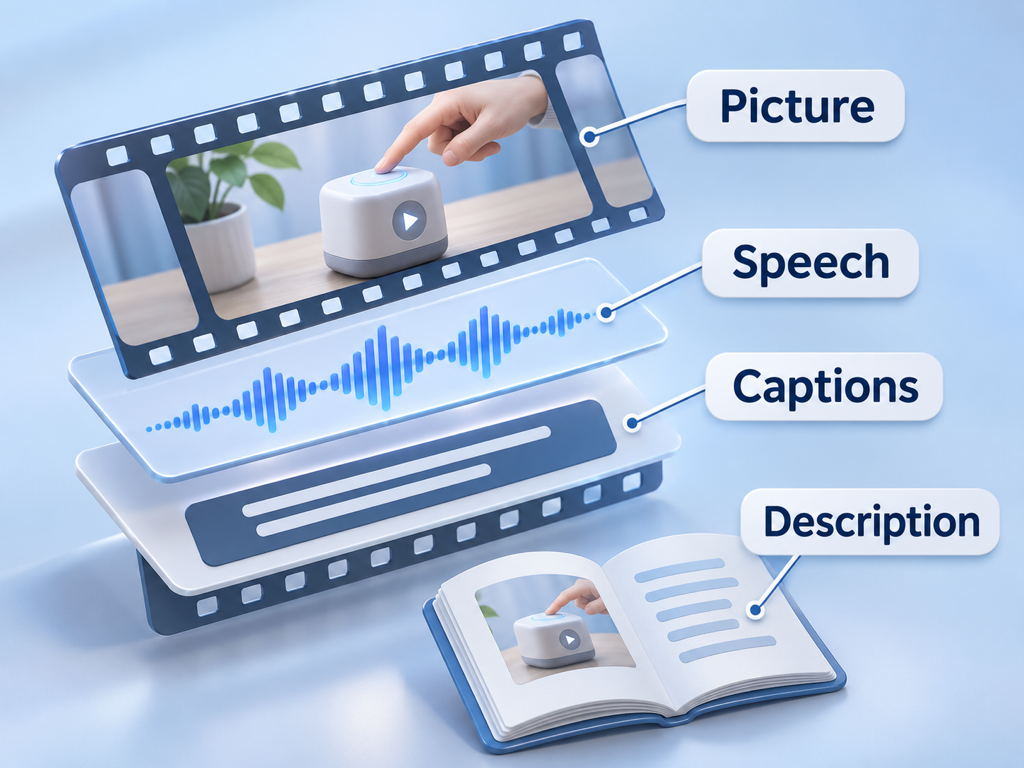
Keep the channels independent until you have checked their relationship. Speech may qualify a visual demonstration, captions may differ from the spoken wording, and a description may contain information absent from the video itself. A claim found in one channel should not be credited automatically to another.
This proposed evidence matrix uses synthetic examples. It describes an editorial review method, not errors measured in any particular AI product.
| Answer claim | Candidate channel | What to verify | Possible review outcome |
|---|---|---|---|
| A feature is available to all customers | Speech | Any preview or access qualification | Support limited to a named audience |
| A setting is enabled by default | Picture | Whether the screen shows a changed configuration | Demonstration does not establish the default |
| A workflow takes a stated duration | Captions and playback | What the duration includes or omits | Claim requires a narrower scope |
| An offer is currently valid | Description | Date and terms of the added text | Description supports a separate, dated claim |
Store a short paraphrase of the evidence with its channel and interval. Avoid copying an entire transcript when a concise record is enough to explain the judgment. The goal is reproducibility, not accumulation of unrelated media.
Resolve disagreements at the claim level. A later description may clarify a demonstration without making the original speech inaccurate. Conversely, a caption that omits a negation can change the apparent meaning. Record the conflicting evidence before choosing an interpretation.
Check Temporal Context Around the Highlight
Watch before and after the candidate segment. A demonstration can show a successful state immediately before the speaker explains a restriction. A clipped highlight may therefore support a different conclusion from the complete explanation.
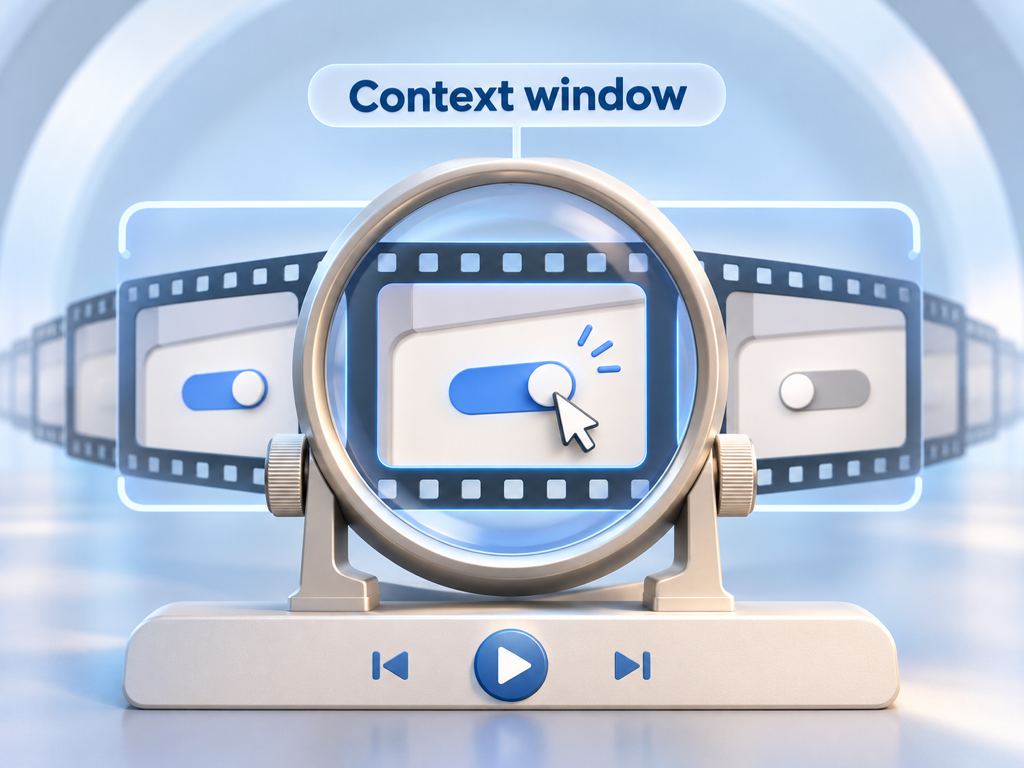
Consider a synthetic demo in which a toggle is enabled, followed by a statement that the feature is available only in a limited preview. The visible enabled state supports that the demonstrator used it in that environment. It does not establish general access, a default configuration, or availability in every region.
Record the condition that changes the decision. It might concern an account tier, device, integration, software version, or temporary test environment. Link the condition to the particular claim it qualifies so the review does not become an unsorted list of caveats.
Choose the review window from meaning rather than a fixed number of seconds. A short sentence may contain the complete condition, while another claim may depend on a much earlier setup explanation. State why the inspected interval was sufficient, or what additional context remains necessary.
A selected frame can be accurate and still support an overbroad conclusion.
Record Sampling Limits and Unverified Moments
Document the inspection method. Manual continuous playback, transcript search, selected-frame review, and an API-assisted summary offer different visibility into the video. A negative result under one method should not be presented as an exhaustive search of every channel.
The current Gemini guide distinguishes static and agentic video processing. Static processing uses sampled frames, while supported agentic processing can inspect selected material on demand. Those developer settings require their own records; they are not evidence that every consuming search interface follows the same procedure.
Use an unverified state when the method cannot resolve the claim. A brief on-screen footnote may require direct playback at the relevant moment. An unavailable description or inaccessible video should remain an access limitation, rather than becoming a finding that the supporting statement does not exist.
Prioritize human review by decision value. A claim affecting purchase eligibility, compatibility, or a time-sensitive offer deserves closer inspection than a minor descriptive detail. This is a proposed editorial priority rule, not a measured ranking of model errors.
Keep assistance and judgment separate. An automated locator can suggest a candidate interval, but the retained review should state what evidence was actually checked and who accepted the final interpretation. A polished summary is not a substitute for that record.
Prioritize Video Citations for Human Review
Topify can help identify source URLs worth inspecting within a brand’s observed answer set. Supply relevant questions and a defined brand, then use its AI citation analysis to review which domains and URLs appear in citations. Recurring video sources can become a practical review queue when they support material product or category claims.
Carry the cited URL and answer claim into an independent video evidence record. The monitoring output helps prioritize which source to inspect and whether the source recurs in the collected sample. It does not establish frame-level support, transcribe every channel, or prove the processing path behind a consumer answer. Record timestamps, channel distinctions, playback conditions, and human judgments separately unless an available feature has been explicitly verified to preserve them. That boundary keeps a useful source signal from becoming an unsupported forensic claim.
The difference between citations and brand mentions remains relevant. A named video creator or product in answer text is not equivalent to a visible source link that a reviewer can follow.
Close the review with an actionable result: supported as written, supported with a stated qualification, contradicted by the reviewed evidence, or unverified. Preserve the interval and explanation so the next editor can understand the outcome without repeating the entire search.
Conclusion
A video URL is the beginning of an evidence review. Identify the claim, locate the relevant interval, separate speech from picture, captions, and description, and inspect the surrounding conditions. Record the method and preserve an unverified state when access or sampling prevents a complete judgment. A timestamp should make the evidence inspectable without implying that the original answer supplied it.
Begin with one video citation that matters to a purchase or content decision. Create a channel-specific evidence record and state exactly what the reviewed segment supports. Use citation-source analysis to prioritize further video reviews, while retaining playback and human judgment independently. The result should be a narrower, reproducible conclusion about the claim rather than a simple count of linked videos.
FAQ
Does a video URL prove the answer watched the video?
No. A visible link alone does not expose the full processing path. Review the answer’s claim against the accessible source without inventing that internal history.
Are captions equivalent to on-screen evidence?
No. Captions, speech, and picture are different channels. Check which one supports the claim and whether another channel adds a qualification.
Should every claim have a timestamp?
A relevant interval is useful when the claim depends on video content. A claim supported only by the description should instead identify that separate source location and its review conditions.
Can a video API result stand in for a consumer search result?
No. They are different observations with different settings. A developer capability does not establish what a consumer search system did in a specific answer.