

Your brand shows up when someone asks ChatGPT about your category. That’s the good news. The bad news: you have no idea why it showed up, which content the AI pulled from, or whether the source it cited was yours or your competitor’s. Most marketing teams have gotten comfortable tracking whether AI mentions their brand. But mentions are just whispers. Citations, the actual source links AI engines attach to their answers, are the receipts. And if you’re not tracking those receipts, you’re optimizing blind.
The gap between “being mentioned” and “being cited” is where most brands lose ground without realizing it.
What LLM Citation Tracking Monitoring Actually Measures
LLM citation tracking monitoring is the practice of analyzing which domains, URLs, and content assets AI platforms reference when generating answers. It’s different from mention tracking in one fundamental way: mentions tell you if your brand appeared, while citations tell you what content the AI trusted enough to link to.
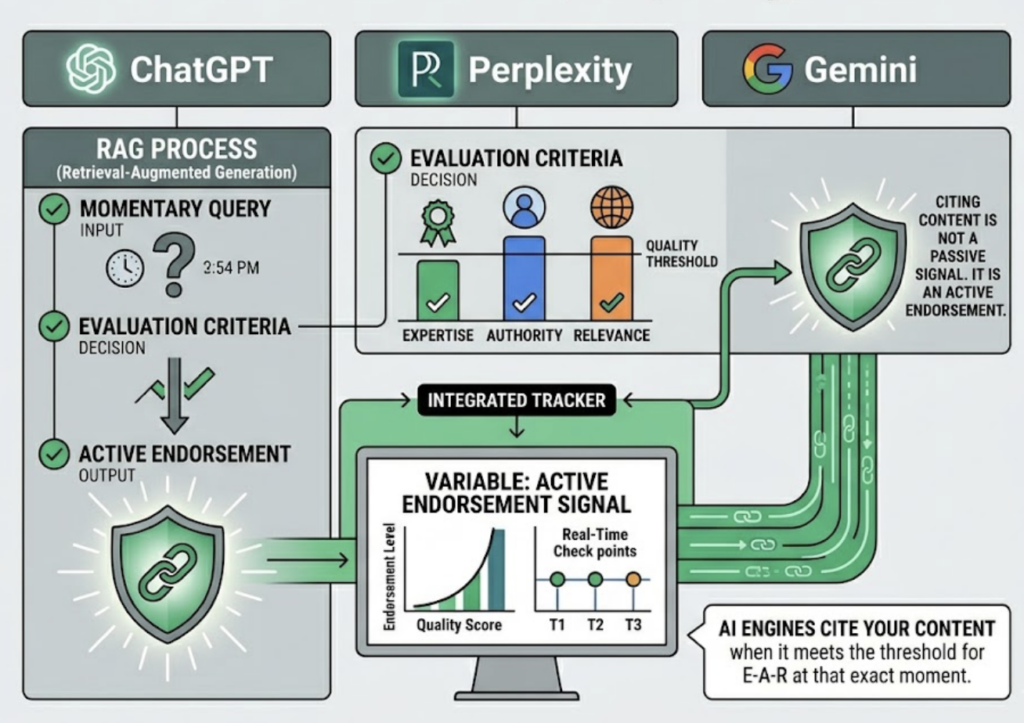
Here’s why that distinction matters. AI platforms like ChatGPT, Perplexity, and Gemini use retrieval-augmented generation (RAG) to pull real-time information into their responses. When an AI engine cites your content, it means your page met the model’s quality threshold for expertise, authority, and relevance at that exact moment. That’s not a passive signal. It’s an active endorsement.
| Metric | Brand Mentions | LLM Citations |
|---|---|---|
| Nature | Passive, historical | Active, real-time |
| Trust Signal | Weak, contextual | Strong, verifiable |
| Conversion Impact | Indirect awareness | High-intent, measurable traffic |
| Optimization Lever | Content breadth | Structured data, deep expertise |
The bottom line: if you’re only counting how many times AI says your brand name, you’re measuring the wrong thing. Citation tracking tells you which specific pages are earning trust, and which ones aren’t.
Why Most Teams Track Mentions but Miss Citations
The most common mistake in LLM citation tracking monitoring is stopping at the mention layer.
It makes sense why teams do this. Mention tracking is simpler. You search your brand name across AI platforms, see if it pops up, and report a number. But that number doesn’t explain why a competitor keeps showing up in “best X for Y” queries while your brand doesn’t. The answer almost always lives in the citation layer: the competitor’s content is being cited as a source, and yours isn’t.
This creates what researchers call the “citation gap.” Your competitor’s technical whitepaper, comparison page, or product documentation gets referenced by the AI, which gives them both the trust signal and the referral traffic. Your brand might get a passing mention in the same answer, but without a citation, there’s no click, no verification, and no conversion path.
There’s another problem most teams underestimate: volatility. Unlike traditional SERP rankings that can hold steady for months, AI citation sets fluctuate significantly week over week. A page that gets cited on Monday might not appear on Friday. Teams that run a single check and assume they’ve got a clear picture end up with what one analyst called “false confidence.” Tracking citation stability and recurrence over time is the only way to get an accurate read.
How to Measure LLM Citation Tracking Monitoring
Measuring LLM citation tracking monitoring requires a structured framework, not a one-off audit. Here are the four KPIs that matter most:
Citation Share measures your brand’s presence in AI-generated answers relative to key competitors. If ChatGPT cites three brands in a “best project management tool” answer and yours isn’t one of them, your citation share for that prompt is zero.
Citation Stability tracks how consistently your domain appears across a recurring set of high-intent prompts over time. A single citation in one session is noise. A citation that recurs across 70% of weekly checks is a signal.
Source Domain Coverage measures the breadth of your content that AI considers authoritative. Are only your homepage and one blog post getting cited, or are your landing pages, documentation, and comparison pages also in the mix? Narrow coverage means narrow authority.
Query Intent Alignment checks whether your brand is being cited in the right context. Getting cited in informational queries (“what is X”) is fine, but if you’re missing from transactional queries (“best X for Y”), you’re losing the high-intent traffic that actually converts.
The Operational Workflow
The practical process looks like this. First, define your baseline by selecting a cluster of 20 to 50 high-intent prompts in your category. Next, run those prompts across major AI platforms: ChatGPT, Perplexity, Gemini, and Google AI Overviews. Then, perform a gap analysis to identify where competitors are winning citations and examine what content type the AI is prioritizing for each prompt.
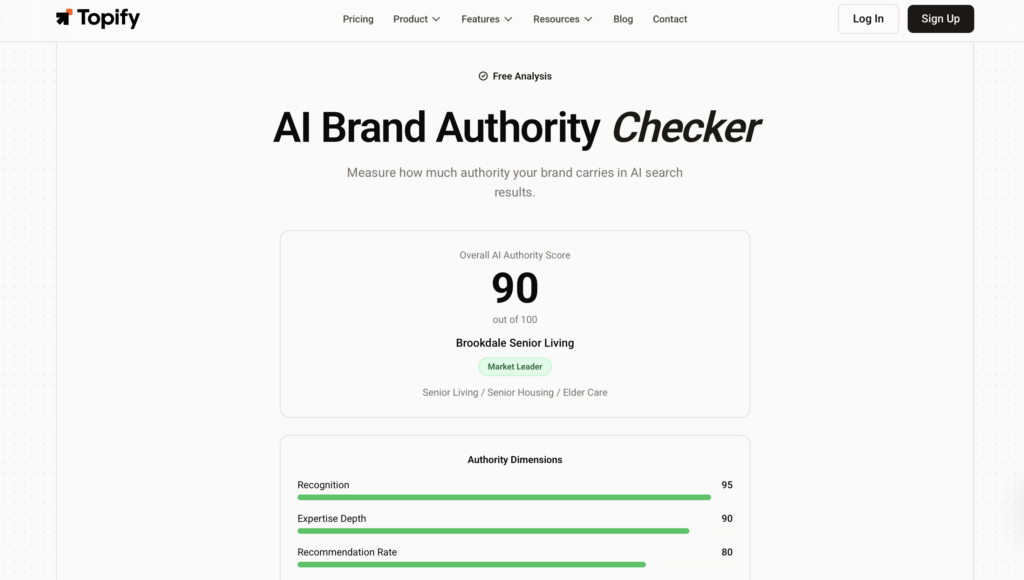
Topify streamlines this entire workflow through its Source Analysis feature, which reverse-engineers the exact domains and URLs that AI platforms cite. Instead of manually querying each platform and logging results in a spreadsheet, you get a cross-platform citation map that shows which content is earning trust and where gaps exist. Combined with Topify’s Position Tracking and Sentiment Analysis, you can see not just if you’re cited but how you rank relative to competitors and how the AI frames your brand.
A Checklist for LLM Citation Tracking Monitoring That Works
Getting from scattered data to a repeatable LLM citation tracking monitoring strategy comes down to three layers: baseline, ongoing monitoring, and optimization action.
Layer 1: The Baseline Audit
Start by mapping where you stand right now. Run your prompt cluster across all major AI platforms and record every citation: yours, your competitors’, and third-party sources. The goal is to answer one question: for the prompts that matter most to your revenue, whose content is the AI trusting?
Layer 2: Ongoing Monitoring
Citation patterns shift fast. Set up weekly or biweekly monitoring cycles to track changes. Watch for three things: new competitors entering your citation space, your own pages dropping out of citation sets, and shifts in which content types the AI prioritizes (blog posts vs. product pages vs. third-party reviews).
Topify’s dashboard automates this layer. Its High-Value Prompt Discovery feature continuously surfaces new prompts where your brand should be appearing, and its Dynamic Competitor Benchmarking flags when a new rival enters your citation space before you’d catch it manually.
Layer 3: Optimization Action
Every citation gap should trigger a specific content response. If a competitor’s product page is cited but yours isn’t, it’s often a positioning issue: your page may lack the structured data, clear headings, or direct-answer formatting that LLMs prefer. If a third-party review site is getting cited instead of your own content, you likely need more off-site validation through PR, partnerships, or guest content on high-authority domains.
A few tactical moves that tend to improve citation rates:
- Use question-based H2/H3 headings that match how users prompt AI engines.
- Add Schema markup to explicitly define product features, pricing, and entity relationships.
- Include updated timestamps and author bios. AI engines trust content that demonstrates E-E-A-T signals.
- Cite authoritative external sources within your own content. LLMs tend to trust pages that themselves reference high-quality sources.
Brandlight, Profound, and Topify for LLM Citation Tracking
If you’ve searched for tools in this space, you’ve likely come across Brandlight, Profound, and Topify. Here’s how they compare for LLM citation tracking monitoring.
| Dimension | Brandlight | Profound | Topify |
|---|---|---|---|
| AI Platform Coverage | Limited (primarily ChatGPT) | ChatGPT, Perplexity | ChatGPT, Gemini, Perplexity, DeepSeek, Doubao, Qwen, AI Overviews + more |
| Citation-Level Depth | Basic mention tracking | Mention + some citation data | Full citation reverse-engineering (Source Analysis) |
| Competitor Monitoring | Manual setup | Semi-automated | Auto-detection + real-time benchmarking |
| Execution Capability | Reporting only | Reporting only | One-click AI agent execution |
| Pricing | Varies | Varies | From $99/mo (Basic), $199/mo (Pro), $499/mo (Enterprise) |
Brandlight offers foundational AI visibility tracking but tends to focus on the mention layer rather than deep citation analysis. For teams just getting started with AI monitoring, it provides a basic view, though the platform coverage is narrower than what most multi-platform strategies require.
Profound goes a step further with citation-level data on ChatGPT and Perplexity. It’s a reasonable option for teams focused on those two platforms specifically, but it lacks the execution layer that turns insights into action.
Topify covers the widest range of AI platforms and goes deeper on the citation layer through its Source Analysis feature, which maps the exact domains and URLs each AI engine references. What separates it from Brandlight and Profound is the execution side: Topify’s AI agent lets you define optimization goals in plain English and deploy strategies with one click, closing the gap between “seeing the data” and “acting on it.” For teams that need a full cycle from monitoring to optimization, the pricing starts at $99/month with a 30-day trial.
Real Examples of LLM Citation Tracking in Action
SaaS Brand: The “Asset Mismatch” Fix. A mid-market SaaS company tracked its AI visibility for months and saw decent mention rates. When they dug into the citation layer, they discovered that ChatGPT was citing a competitor’s comparison page for “best [category] tools” prompts, while their own product page wasn’t cited at all. The issue wasn’t brand awareness. It was that the competitor had a structured comparison page with clear headings, pricing tables, and Schema markup. The SaaS team built a matching asset, optimized it for direct-answer formatting, and within four weeks saw their citation share jump from 0% to appearing in 3 of 5 monitored prompts.
Agency: Multi-Client Citation Reporting. A digital marketing agency managing 12 clients had no way to report on AI search performance during quarterly reviews. They implemented LLM citation tracking monitoring across all client accounts and discovered that 8 of 12 clients had zero citations in high-intent prompts, despite having strong traditional SEO profiles. The citation data gave the agency a concrete upsell path: “Here’s where your competitors are being cited. Here’s the content gap. Here’s the fix.”
Ecommerce Brand: The Third-Party Problem. An ecommerce brand found that Perplexity consistently cited a review site rather than the brand’s own product pages for purchase-intent queries. The fix wasn’t more on-site content. It was improving their presence on the review sites that AI engines already trusted, through updated product listings, responding to reviews, and earning editorial mentions. Citation tracking identified the problem. The solution was off-site, not on-site.
Conclusion
LLM citation tracking monitoring is the difference between knowing your brand exists in AI answers and understanding why it’s there, or why it isn’t. Mentions give you awareness. Citations give you the mechanism: which content is earning trust, which platforms are citing it, and where the gaps are.
Start with a focused set of 20 to 30 high-intent prompts. Run them across the AI platforms your audience actually uses. Map the citations. Then close the gaps, one content asset at a time. If you want to skip the manual spreadsheet phase, Topify’s Source Analysis can run that audit across every major AI engine in a single dashboard.
FAQ
Q: What is LLM citation tracking monitoring?
A: It’s the process of tracking which specific content URLs and domains AI platforms (like ChatGPT, Perplexity, Gemini) cite as sources when generating answers. Unlike mention tracking, which only checks if your brand name appears, citation tracking reveals which content the AI trusted enough to reference and link to.
Q: How does LLM citation tracking monitoring work?
A: Tools run a set of high-intent prompts across multiple AI platforms, then analyze the responses to identify which domains and URLs are cited as sources. This data is tracked over time to measure citation share, stability, and coverage relative to competitors.
Q: What’s the difference between citation tracking and mention tracking?
A: Mentions are passive, unattributed references to your brand. Citations are active, verifiable source links that the AI attaches to its answer. Citations carry a stronger trust signal, drive measurable referral traffic, and are directly optimizable through content and structured data improvements.
Q: How much does LLM citation tracking monitoring cost?
A: Pricing varies by platform and scope. Topify’s plans start at $99/month for 100 prompts across ChatGPT, Perplexity, and AI Overviews, with Pro at $199/month for 250 prompts and Enterprise from $499/month for custom configurations. Most competitors offer comparable entry tiers, though platform coverage and citation depth vary significantly.

