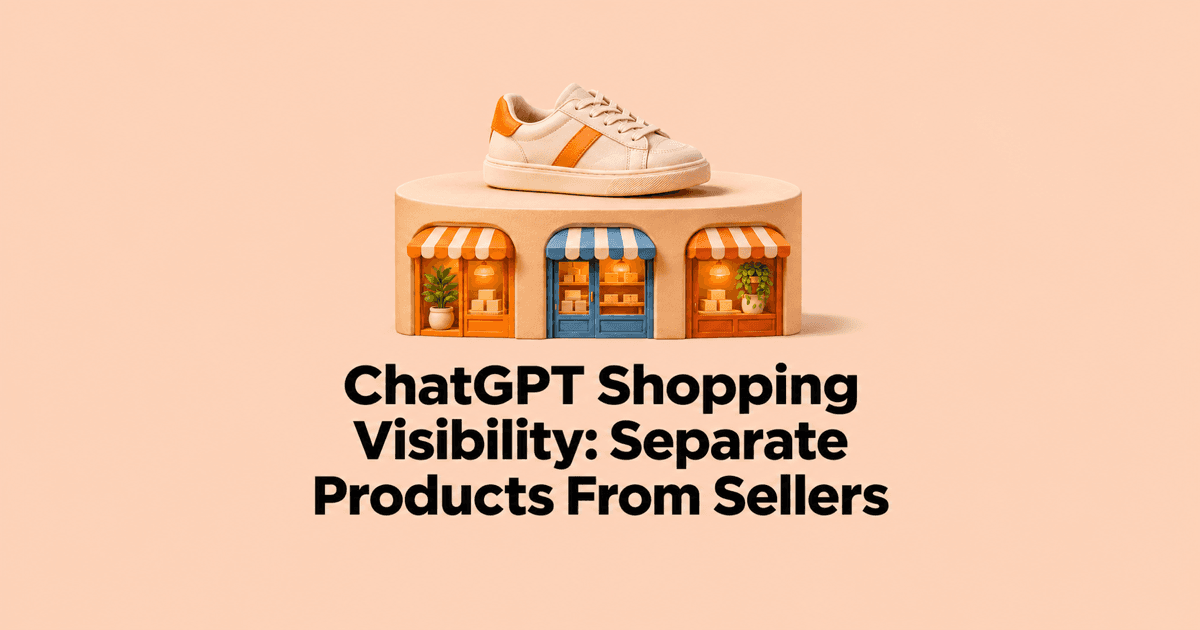
An ecommerce channel manager sees the brand’s product in a shopping recommendation and marks the result as a win. Opening the product reveals several sellers, but the brand’s own store isn’t among the visible options. The product earned attention; the preferred sales channel didn’t receive the same opportunity.
ChatGPT shopping visibility needs separate records for the item being considered and the merchant offering it. Brand appearance alone cannot explain which seller a shopper can visit, whether the offer is usable, or where a purchase might happen. The immediate decision is how to evaluate those layers independently and assign a channel problem without pretending to know the system’s hidden ranking weights.
ChatGPT Shopping Visibility Has Two Selection Layers
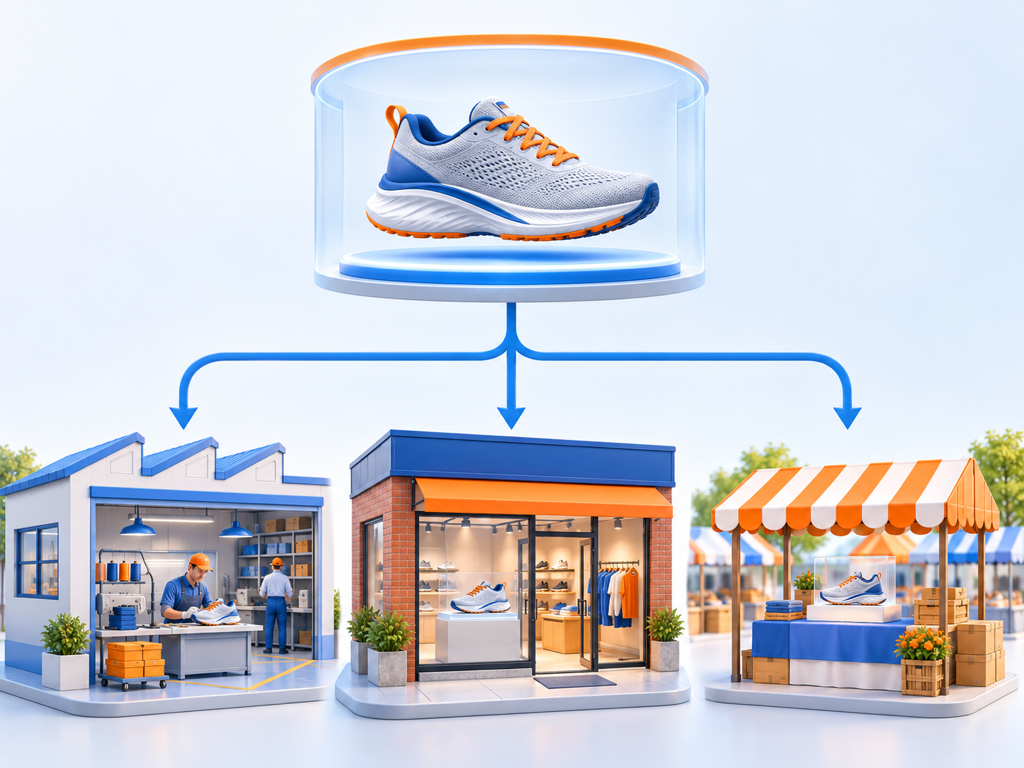
Product selection and merchant selection answer different questions. One concerns which item appears relevant to a shopper’s request; the other concerns where that item can be obtained. A manufacturer can be visible at the first layer while a retailer or marketplace occupies the second.
OpenAI’s current shopping guidance describes product results and a merchant list that may appear after a product is selected. It identifies merchant factors including availability, price, quality, and whether the merchant is the maker or primary seller. The documentation doesn’t publish a formula that guarantees a particular order.
Record the experience actually observed. A product card, a written recommendation, a source citation, and a seller destination are different objects. Treating them as interchangeable makes a report look complete while leaving the buying path unexplained.
Set the business objective before scoring success. A manufacturer may value legitimate reseller discovery, while a direct-to-consumer team may prioritize its own storefront. The same observation can support one objective and expose a gap in another without requiring a universal definition of “winning.”
Assign Product and Merchant Identities Independently
Give the product and the merchant separate identities in your review record. Product identity should retain the model or variant where visible. Merchant identity should retain the displayed seller and destination domain rather than inheriting the product’s brand name.
Maintain a relationship field for manufacturer, authorized retailer, marketplace, or unresolved seller. Confirm those relationships from suitable evidence where they matter to the decision. A seller displaying a familiar product isn’t, by that fact alone, the official brand store.
Watch for marketplace complexity. A destination domain may host several sellers, and a visible marketplace label may not reveal the seller of record. When that identity cannot be established from the available interface and destination, record the limit instead of assuming it.
Consider a fictional running shoe offered by its manufacturer and two retailers. All three may sell the same model, but their stock, sizes, shipping terms, and prices can differ. The product-level observation should remain one identified item while the merchant review preserves those distinct offers.
This separation makes channel decisions possible. It lets the team ask whether its own offer is absent, merely less prominent, or present but unusable for the selected variant and market. Each condition suggests a different investigation.
Audit the Merchant List Behind a Visible Product
Inspect the seller layer using a consistent observation procedure. Record the prompt, platform surface, account context where relevant, region, time, and selected product. Then inspect the visible merchants and their destinations without assuming that every user receives the same list.
Capture order only when the interface provides a meaningful ordering. Distinguish an observed first position from a claim that the merchant is universally ranked first. If the list expands or changes during interaction, retain which state the reviewer evaluated.
Check the merchant destination for the same item and variant. A link to a category page, unavailable size, or unrelated bundle may provide a weaker buying path than the product card suggests. Preserve the mismatch rather than scoring every clickable address as equally useful.
The product can be present while the preferred purchase path is missing.
Keep a screenshot or other permitted record of the visible state when the outcome matters. A later page visit may encounter different inventory or another seller, so the merchant observation and destination check should each retain their own time.
Compare Commercial Outcomes With the Right Denominators
Define a different measure for each decision layer. Product discovery asks whether an identified item appeared in eligible observations. Merchant availability asks whether a particular seller appeared when its product’s merchant layer could actually be inspected.
The following proposed measures are review definitions, not claims about native product metrics. Show counts beside rates and disclose the eligible population.
| Measure | Suggested numerator and denominator | Decision it supports |
|---|---|---|
| Product appearance | Eligible observations showing the item / eligible product observations | Whether the item enters consideration |
| Owned-store presence | Inspectable merchant lists containing the owned store / inspectable lists for that item | Whether the preferred channel is available |
| Usable destination | Audited links reaching the correct purchasable offer / audited merchant links | Whether the visible path works |
| Seller identity resolved | Merchant records with confirmed identity / inspected merchant records | Whether channel attribution is trustworthy |
| Observed order | Position within a recorded, ordered list | How the seller appeared in that state |
Don’t divide owned-store appearances by every monitoring attempt if many attempts never produced a product or inspectable merchant list. That denominator answers a broader funnel question and should have a different label. Report collection failures separately from genuine product or merchant absence.
None of these observations measures orders. A visible seller link may support a future transaction, but purchase attribution requires appropriate commerce or analytics evidence. Avoid assigning revenue to a monitored placement merely because the path looked usable.
Investigate Channel Gaps Without Guessing Ranking Weights
Route a gap according to the evidence available. A mismatched variant belongs with catalog or destination owners; a missing owned-store offer may require checking the merchant’s data availability and commercial conditions. A difference between repeated observations may justify more collection before a broad conclusion.
Compare the facts visible to the shopper. Current stock, displayed price, shipping conditions, and seller identity are useful review inputs. Their presence doesn’t reveal how much weight the system assigned to each factor or prove that changing one field will improve placement.
Keep legitimate channel strategy separate from measurement cleanup. A retailer’s appearance may be commercially desirable, even if an owned-store score looks weaker. The report should expose the distinction so channel owners can decide, rather than treating every third-party seller as a failure.
The existing cross-platform shopping comparison explains the broader discovery setting. Merchant-level auditing adds a focused operational question after the product has already appeared: which purchase paths are actually available in the observed experience?

Repeat the same review after a meaningful commercial change, such as an inventory update, while preserving the earlier conditions. The comparison can identify a useful investigation, but it still won’t isolate a ranking factor without a stronger design. State what changed and what remained outside your control.
Keep the channel objective attached to the report. A reseller-led distribution strategy and an owned-store strategy shouldn’t be judged against an unspoken common target. Explicit objectives help the team recognize a commercially acceptable result instead of trying to optimize every seller list toward the same outcome.
Channel intent belongs beside the metric, not in the reviewer’s memory.
Combine Topify Brand Signals With Manual Merchant Checks
Topify can support the brand-observation part of this workflow. Its AI search analytics describes monitoring brand visibility and citations. Start with relevant shopping questions and a defined brand, review the available answers, and identify cases where a product or recommendation deserves a closer channel check. The useful output is a prioritized observation set that helps an ecommerce team decide which items and questions need deeper review.
Maintain the merchant-list audit separately where necessary. A general brand-monitoring capability doesn’t establish native collection of every product carousel, seller list, offer variant, or final checkout destination. Confirm which surfaces your account supports and use authorized manual inspection for the rest. Connect the records by observation and product identity so the team can distinguish brand discovery from owned-store presence. This keeps the report useful without suggesting that a brand score measures merchant selection or actual sales.
Conclusion
A visible product and a visible seller are separate commercial outcomes. Preserve the item, the merchant identity, and the usable destination before deciding whether a shopping observation met the channel objective. Show the populations behind each rate so a missing seller doesn’t disappear inside an encouraging brand total.
Start with one priority item and a limited set of relevant shopping questions. Inspect the merchant layer where available, verify the destination, and assign discrepancies to the people who own the underlying facts. Use Topify’s brand and citation analytics to prioritize observations while maintaining a distinct channel audit. The goal is to explain where the buying path leads, with enough evidence to act and enough restraint to avoid claiming sales or hidden ranking knowledge.
FAQ
Does product visibility mean the brand’s own store is visible?
No. The product may appear with offers from other merchants. Record product selection and owned-store presence separately.
Why might several merchants appear for one product?
A single item can be offered by several sellers with different commercial conditions. Review the visible list and destination rather than assuming the product brand identifies the merchant.
Can merchant order be treated as a permanent ranking?
No. It describes the state observed under particular conditions. Preserve the context and repeat the observation before making broader claims.
Does a usable seller link prove a sale?
No. It establishes a visible purchase path at the time checked. Orders and revenue require separate transaction or attribution evidence.