


A practical framework for deciding where to focus your search strategy, budget, and content in 2026.
You’re probably still ranking. You’re just not getting the clicks.
That’s the defining paradox of search in 2026. A twelve-month analysis of Google AI Overviews (AIO) spanning February 2025 to February 2026 found that AIOs now trigger on approximately 48% of all tracked queries, representing a 58% year-over-year increase. The average AI Overview exceeds 1,200 pixels in height on desktop and occupies more than 75% of the initial screen on mobile. For informational queries, organic CTR has dropped 61%, falling from a pre-rollout average of 1.76% to 0.61%. Even the #1 organic position has seen its CTR cut by 58% when an AI summary is present.
Three strategies are competing for your attention and budget: traditional SEO, AI Overviews Optimization (AIOO), and Generative Engine Optimization (GEO). Each has a legitimate case. None of them is universally “right.”
This framework helps you decide which one to prioritize first, and when to layer in the others.
Three Strategies, Three Different Bets on AI Overviews Optimization
The real difference between SEO, AIOO, and GEO isn’t terminology. It’s what you’re actually optimizing for.
Traditional SEO is deterministic. You optimize content and authority signals so crawlers rank your page. In 2026, its role has shifted: SEO is no longer a primary growth driver. It’s the foundational layer that makes your site parseable by AI retrieval systems. Google’s RAG (Retrieval-Augmented Generation) infrastructure pulls from the same indexed web that traditional crawlers use. If your pages aren’t indexed, they don’t exist to AI either.
AI Overviews Optimization (AIOO) is probabilistic. The goal isn’t to rank. It’s to be the source the AI extracts when synthesizing an answer. Research shows 76.1% of URLs cited in AI Overviews rank in Google’s top 10 organically, so traditional authority still correlates with AI selection. But being cited in the AIO is increasingly the only way to retain SERP visibility at all.
GEO operates at the ecosystem level. It’s about getting cited across all generative engines: ChatGPT, Perplexity, Gemini, Claude, and others. GEO matters because 44% of AI-powered search users now consider AI their primary source of insight, bypassing traditional search entirely. These are users you’ll never reach through a blue link.
Three bets. Three different timelines. Three different resource requirements.
The 90% Overlap Nobody Talks About
Here’s the thing most comparison articles miss: SEO, AIOO, and GEO share an estimated 90-95% of their foundational principles.
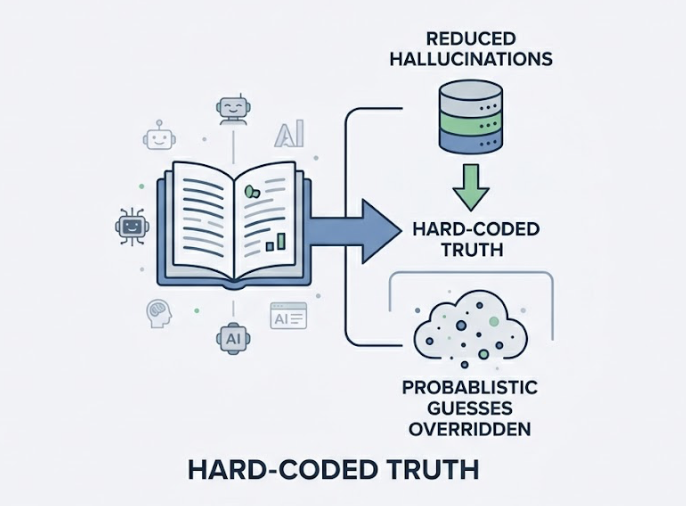
Structured content and Schema markup are mandatory for all three. Schema.org provides what researchers call “hard-coded truth” that overrides a model’s probabilistic guesses and reduces hallucinations. FAQPage and Product schema are high-signal formats that allow AI Overviews to extract data more accurately than unstructured text.
E-E-A-T functions as a filtering mechanism across all three disciplines. Both search algorithms and LLMs prioritize content from verified human experts. In 2026, every author bio should be wrapped in “Person” schema to validate credentials. AI models are risk-averse by design, and they use the backlink graph as a heuristic for “truth.”
Authoritative citations boost performance across the board. Incorporating specific data points and statistics from reliable third-party sources can increase the visibility of lower-ranked websites by up to 40%. That’s not a GEO tactic or an SEO tactic. It’s a content quality signal that works everywhere.
One action can serve all three lines. But only if you execute them in the right order.
Where Each Strategy Actually Delivers ROI
AI search visitors convert at 23x the rate of traditional organic search visitors. That changes the ROI math significantly.
It also changes what “success” looks like. Organic traffic volume is no longer the right primary metric. The question is whether your brand appears in the answer, not just in the index.
| Metric | Traditional SEO | AI Overviews Optimization | GEO |
|---|---|---|---|
| Primary Goal | Rankings and Clicks | Inclusion and Zero-Click Visibility | Citations and Authority |
| Core Metric | Organic Traffic / CTR | Citation Frequency / Impressions | Citation Rate / Sentiment |
| Best Query Type | Navigational, Transactional | Informational, Complex Research | Comparison, Consideration, Brand |
| Time to Results | 6-12 Months | 2 Weeks to 3 Months | 3-9 Months |
| Resource Threshold | Moderate | High (Structure + Fact Density) | High (Digital PR + Consensus) |
| Conversion Impact | Baseline CVR | High CVR (Pre-Qualified Users) | Highest CVR (Trusted Recommendation) |
Industry context matters here. The Education sector saw AI Overviews coverage jump from 18% to 83% of queries in a single year. For education brands, AIOO isn’t optional. It’s survival. Conversely, eCommerce sees AIO coverage as low as 4% for transactional “buy” keywords, meaning traditional SEO and paid search still dominate there.
In B2B Tech and Healthcare, where AIO trigger rates approach 90%, the stakes of inclusion are extreme. Brands cited in those summaries earn 35% more organic clicks and 91% more paid clicks than those that are left out.
Your industry determines which lever matters most.
4 Questions That Determine Your AI Overviews Optimization Priority
Before you allocate a dollar or an hour, answer these four questions. They’ll tell you where you actually stand.
Q1: Does your audience still click through?
If your traffic is driven by “how-to,” “what is,” or “best of” queries, you’re already in a zero-click environment where 8 out of 10 users never leave the SERP. Your visibility problem isn’t a ranking problem. It’s an inclusion problem.
If your core keywords are transactional (“buy,” “pricing,” “order”), Google has largely kept AIO out of those results to protect ad revenue. Traditional SEO still works there.
Q2: Is your brand showing up in AI answers today?
Most brands don’t know. Traditional rank trackers don’t measure AI inclusion. Tools like Topify run what’s called “statistical multi-model probing,” querying the same prompts multiple times across AI platforms to calculate a statistically valid visibility score. That baseline audit often reveals a “Visibility Gap”: competitors being cited for your core topics while you’re absent.
If that gap exists, it requires immediate AIOO intervention.
Q3: Is your content authoritative enough to get cited?
Sites with over 32,000 referring domains are 3.5x more likely to be cited by ChatGPT than lower-authority sites. That’s a significant threshold. If you’re below it, jumping straight to GEO tactics won’t work. LLMs will default to established incumbents.
Your focus should be on GEO tactics that build consensus: digital PR placements, mentions on Reddit and Quora, high-authority industry journals. These signals teach AI models that your brand is “safe” to cite.
Q4: Is your team set up to measure prompts or keywords?
Over 80% of AI prompts are phrased differently than traditional Google searches. If your team is still reporting on static keyword rankings, they’re working with a structural blind spot. AIOO and GEO require continuous, automated sampling across many sessions to produce reliable data on a probabilistic system.
This isn’t a minor workflow update. It’s a measurement infrastructure change.
Resource-Constrained? Here’s the Sequencing That Works
Most teams can’t run three parallel strategies at full intensity. Here’s the phased order that builds momentum without abandoning what’s already working.
Phase 1: Technical and Structural Baseline (The SEO Layer)
Ensure your site is crawlable and implement robust Schema markup. Think of this as “agent-ready” technical SEO. Without it, neither AIOO nor GEO can function. AI retrieval systems depend on the same indexed web that search crawlers use.
Phase 2: Content Engineering for AI Overviews Optimization (The AIOO Layer)
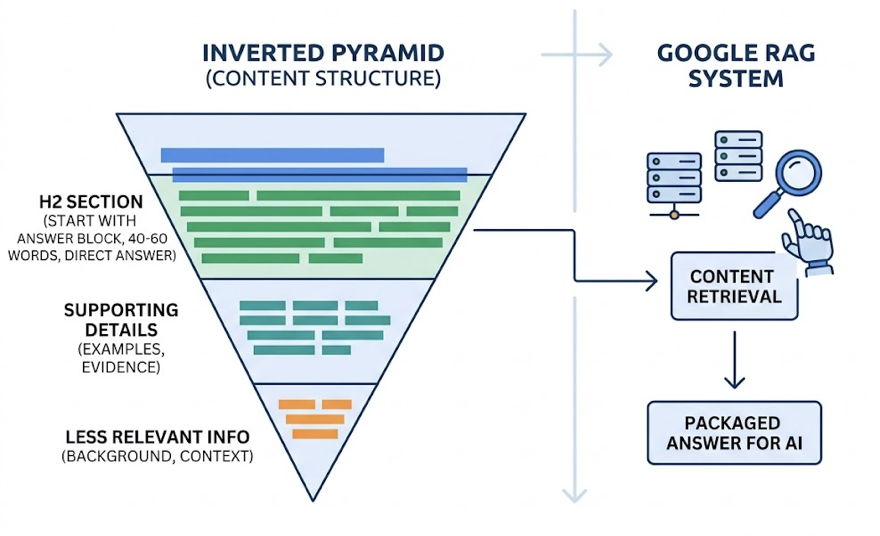
Restructure your most important content using an “Inverted Pyramid” format. Start every H2 section with a direct, 40-60 word “Answer Block.” This format aligns with how Google’s RAG system retrieves and extracts content. You’re essentially pre-packaging the answer the AI needs.
This is where platforms like Topify provide measurable leverage. Its Prompt Discovery feature surfaces the high-volume conversational queries where your brand is currently invisible. You’ll know exactly which pages to restructure first, rather than guessing.
Phase 3: Authority and Sentiment Management (The GEO Layer)
Shift your digital PR toward “Consensus Platforms”: Reddit, Quora, industry journals, and high-authority publications. The goal is to build a body of third-party evidence that AI models find when they “look” for proof of your brand’s expertise. It’s less about links and more about narrative consistency across the open web.
Topify’s Sentiment Analysis tracks how AI systems characterize your brand on a 0-100 score, giving you an early warning system if a negative narrative is gaining traction before it solidifies into how AI answers describe you.
What Changes if You’re Managing 10+ Clients
For agencies, the 2026 challenge isn’t strategic. It’s operational.
Managing AI visibility across dozens of brands requires a repeatable, templatized workflow. The probabilistic nature of LLM outputs means you can’t rely on static reports. You need live dashboards that aggregate visibility, sentiment, and CVR data per client, with automated alerts when a competitor moves ahead on specific prompts.
That’s what makes multi-project monitoring non-negotiable at agency scale. Topify’s platform aggregates this data across accounts and includes Competitor Share of Voice tracking, which flags “Visibility Drops” the moment a competitor gains ground on a prompt your client owns.
The strategic repositioning for agencies is clear. “Rank tracking” becomes “AI Search Visibility Management.” It’s a standalone revenue line with a defensible ROI story: connect Citation Frequency to Branded Search Lift and Assisted Conversions, and you can justify the budget even when traditional organic traffic is declining.
The top agencies in 2026 aren’t link builders. They’re entity architects.
Conclusion
The decision framework distills to one judgment call:
If your core queries are informational and already triggering AI Overviews, prioritize AI Overviews Optimization for immediate visibility, build your SEO technical layer for crawlability, and use GEO to manage brand representation across the wider LLM ecosystem.
The ranking era optimized for clicks. The inclusion era optimizes for trust. The brands that will win are the ones AI systems consider safe, authoritative, and easy to extract.
That transition is already underway. The question is just how far behind you want to start.
FAQ
Q: Is AI Overviews Optimization the same as GEO?
No. AI Overviews Optimization (AIOO) is a specialized tactic focused specifically on Google’s on-SERP AI summaries. GEO is a broader strategy that manages your brand’s presence across all generative engines, including ChatGPT, Perplexity, and Claude. AIOO is about “winning the summary” on Google. GEO is about becoming a cited source across the entire AI web.
Q: Should I stop doing traditional SEO in 2026?
No. Traditional SEO is the technical foundation that makes your content findable by AI retrieval systems. Over 50% of queries still don’t trigger AI results, making SEO necessary for half of all searches. It’s no longer the primary growth lever, but skipping it means your AI optimization efforts won’t work either.
Q: How do I know if my brand appears in AI Overviews?
Traditional rank trackers don’t capture this. You need specialized AI visibility tools that perform statistical multi-model probing, running the same prompts multiple times to calculate a reliable visibility score. Topify provides this baseline audit as a starting point before you build your optimization strategy.
Q: Can one tool handle all three strategies?
Legacy tools like Ahrefs and Semrush are adding AI tracking modules, but they weren’t built for this. Pure-play platforms like Topify provide deeper cross-platform visibility, sentiment tracking, prompt discovery, and one-click GEO execution in a single workflow. The architecture difference matters more as your strategy matures.

