A platform operations lead restores the robots file after an outage and confirms that it opens in a browser. Marketing expects crawler behavior to recover immediately, but the following requests still look inconsistent. The team has evidence that its own fetch succeeded; it hasn’t established which rules a particular crawler had available or when that crawler fetched them again.
A GEO checker investigation needs to distinguish a blocked path from a failed policy fetch and an older cached policy. Those states can lead to different next steps even when the visible symptom is reduced access. The useful decision is which evidence resolves the incident, which timeline remains uncertain, and when a later visibility review becomes meaningful.
Define a Robots Fetch Incident in a GEO Checker
A robots fetch incident concerns obtaining the policy file itself. A path-level restriction concerns the rules inside a file that was successfully obtained. Keep those questions separate before deciding that the file’s current text explains the observed behavior.
Record the exact robots URL, observation time, response status, and collection point. Add the intended host and protocol scope, because a check on one endpoint may not establish the policy for another. Preserve the response body when your approved process permits it.
Use a synthetic incident to illustrate the distinction. An analyst can fetch a file that allows a public product path, while an earlier crawler request encountered a server error. The current allow rule alone doesn’t tell you how the crawler handled the earlier failure.
A restored endpoint is an observation about now, not a reconstruction of the past.
Start the incident record with a question the team can answer. For example, determine whether the crawler could obtain a parseable policy during a particular interval. That narrower question is more useful than immediately asking why all AI visibility changed.
Classify Successful Unavailable and Unreachable Fetches
RFC 9309 distinguishes successful access, unavailable resources, and unreachable resources. Its examples place unavailable HTTP responses in the 4xx range and server failures in the 5xx range, with different protocol consequences. Preserve the status and reference rather than compressing both into robots missing.
Provider behavior also needs its own documentation. Google’s current interpretation treats 4xx responses other than 429 differently from server failures. That exception is one reason a generic status-family label cannot replace a provider-specific investigation.
The table is a review framework, not a universal implementation promise. Use it to decide which evidence to gather before asserting what a crawler did.
| Observation | What the team knows | Evidence still needed |
|---|---|---|
| Successful policy fetch | This collector received a policy response | Effective body and relevant crawler fetch |
| Unavailable response | Endpoint returned the recorded client error | Provider handling, including exceptions |
| Server or network failure | The attempted fetch did not obtain a usable response | Retry behavior and cached-policy availability |
| Older policy available | A previous version exists in your record | Whether the crawler possessed or reused it |
| Current endpoint restored | A later check succeeds | Timing of the crawler’s next successful fetch |
Don’t infer a status from a screenshot of the policy text. A CDN, origin, or different request path can produce another response. Keep the infrastructure owner’s explanation of the serving path beside the observed result.
Record the Cached Policy and Its Age
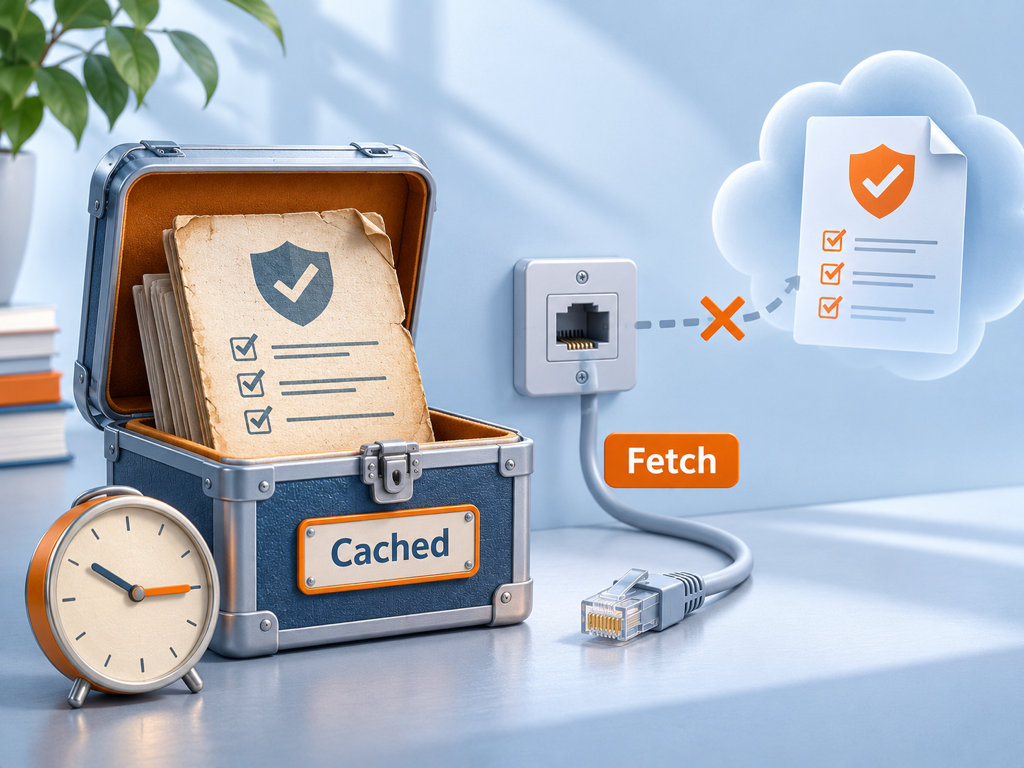
Caching introduces another clock into the investigation. Record the last successful policy body your team can establish, its observation time, and any relevant cache metadata. Don’t assume your local browser cache and a provider’s stored policy are the same thing.
The REP caching section allows cached contents and generally advises against reuse beyond 24 hours unless the file is unreachable. That is a protocol boundary to interpret carefully, not a guarantee that every provider will refresh your file on an exact schedule.
A saved policy in your archive proves what you retained. It doesn’t prove the crawler fetched that version or used it for a later request. Where the provider’s cache state isn’t observable, label it unknown and explain which current behavior is consistent with more than one possibility.
Keep version and age separate. Two files with identical text can have different fetch histories, while two versions fetched close together can produce different path decisions. The incident record should identify the content and its timing rather than relying only on a filename.
Avoid treating cache controls as a complete explanation without checking the serving path. Your infrastructure may cache a response before a crawler receives it. Record what was observed at each relevant layer, and keep unverified layers out of a definitive timeline.
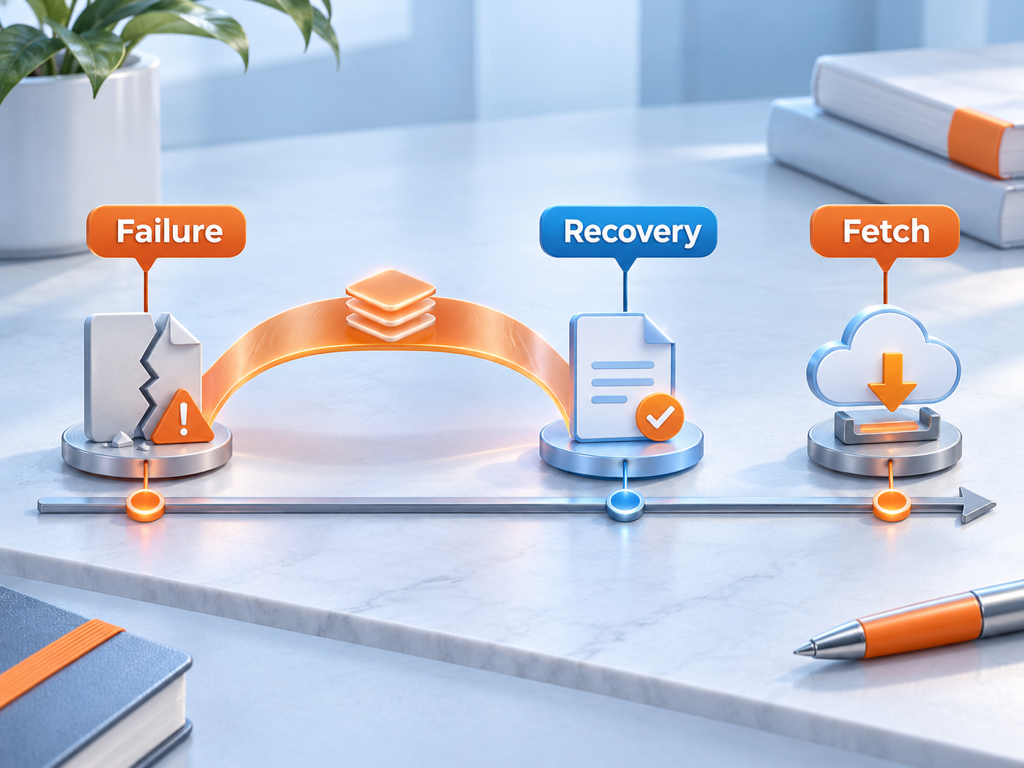
Build a Failure-and-Recovery Timeline
Create separate timestamps for first observed failure, last known successful response, endpoint restoration, and next verified successful crawler fetch. Use one timezone or display offsets consistently. An incident narrative becomes difficult to audit when a deployment log and a crawl log silently use different clocks.
Use explicit evidence labels for each marker. A successful manual request and a provider-verified crawler request are different observations. Put them on separate rows rather than making one stand in for the other.
Google documents a provider-specific sequence for persistent server errors, including an initial pause and later use of a last good version under stated conditions. Review that documented handling when investigating Google traffic, but don’t generalize its timings to every AI crawler.
In a synthetic timeline, the site might recover at noon and the next verified policy fetch appear later. The interval between them is not automatically a crawler fault. First determine whether your logs can observe the relevant request and whether another cache layer was involved.
Mark gaps instead of connecting every event with a causal arrow. A line drawn from recovery to a later citation can look persuasive while skipping policy retrieval, content access, and answer observation. The timeline should show which links are established and which remain hypotheses.
Choose Evidence That Resolves the Incident
Choose the next check according to the unresolved question. If the file can’t be obtained, investigate the response path. If the file is accessible but a rule result is unclear, inspect the effective body and matching inputs. If the crawler’s state is unknown, seek relevant request evidence rather than editing the file repeatedly.
Keep a compact case ledger with the question, current observation, missing evidence, owner, and next step. This prevents several teams from running similar checks while assuming they are investigating the same layer. Close each question only when the evidence supports its stated scope.
Recovery should be verified at the layer that failed.
Use the crawler-policy guide when distinguishing the purpose of affected bots. A policy incident involving search discovery isn’t automatically evidence about model-training access or user-requested retrieval. The bot’s role and the fetch incident belong in separate fields.
Don’t make a production policy more permissive merely to remove an ambiguous test result. Resolve whether the problem concerns availability, parsing, matching, or intended policy first. Any proposed change should include the exact path behavior it is meant to alter and the neighboring behavior it should preserve.
Retain a brief closure note. State what was restored, what was verified afterward, and which provider-specific or historical conditions remain unknown. That note is more useful to a later review than a ticket closed with a screenshot of the current file.
Connect Fetch Recovery With Later Visibility Checks
Topify describes reviewing access and other page-readiness signals through its GEO score checker. Use the affected public URL as an input and inspect the current findings. Keep that page-level result alongside the incident timeline rather than using it to rewrite the earlier failure state.
The analyst’s action is to compare current access findings with verified recovery evidence, then decide whether the remaining issue belongs to infrastructure, policy interpretation, or later answer monitoring. The output is a scoped follow-up plan, not a claim that a repaired endpoint guarantees citations. The public tool description doesn’t establish that it exposes a crawler’s private cache, reconstructs historical fetches, or implements every provider’s retry behavior. Keep those limits visible and retain the manual incident ledger. Before expanding the review, confirm which fields your actual workflow supplies and choose a stable question set for any later visibility comparison.
Separate technical closure from marketing impact. The first can establish that the endpoint and relevant requests recovered within the observed scope. The second needs a later measurement window and a cautious interpretation of other changes occurring at the same time.
Conclusion
A robots incident can involve the file’s availability, a cached policy, or a path decision, and those states require different evidence. Preserve statuses, policy versions, timestamps, and collection points before explaining the behavior. A successful manual fetch after recovery doesn’t establish what a crawler had available earlier.
Start with the affected page in your GEO access review and build a short failure-and-recovery timeline around it. Identify the next missing observation and assign its owner instead of changing several rules at once. Close the technical incident when its specific failure is verified as resolved, then evaluate later visibility separately. That gives both operations and marketing a record they can use without turning timing alone into proof of causation.
FAQ
Is a missing robots file the same as an unreachable file?
No. The protocol distinguishes unavailable responses from server or network failures, and providers may document additional exceptions and handling rules.
Can crawlers reuse an older robots policy?
Yes, caching is part of the protocol. The relevant age and failure conditions need documentation; your own saved file doesn’t prove a provider reused it.
Does a successful fetch prove the new rules were used?
It proves that the observed collector obtained that response. A particular crawler’s subsequent policy use requires appropriate request and timing evidence.
When can a visibility change be attributed to recovery?
Timing alone is insufficient. Verify technical recovery, preserve a comparable observation window, and consider other changes before making a causal claim.