
Introduction: The "Zero-Click" Paradigm Shift
For twenty-five years, the fundamental contract of the internet remained unchanged: a user types a query, a search engine provides a list of blue links, and the user clicks one.
In 2026, that contract has been shredded.
The rise of Large Language Models (LLMs) and "Answer Engines" has fundamentally altered user behavior. Users are no longer "searching"; they are "prompting." They do not want a list of ten websites to navigate; they want a single, synthesized, verifiable answer that solves their problem immediately.
aThis shift has triggered an existential crisis for traditional Search Engine Optimization (SEO). When Google's AI Overview or ChatGPT answers a user's question directly without sending a click, traditional traffic metrics collapse. However, for the prepared marketer, this is not a crisis—it is the greatest opportunity since the launch of Google Ads.
Enter Generative Engine Optimization (GEO).
GEO is the science of optimizing your digital footprint so that AI models not only read your content but trust it enough to cite it as the primary source of truth. It is not about tricking an algorithm with backlinks; it is about engineering your brand into the probabilistic "brain" of the internet.
In this comprehensive guide, we will dismantle the mechanics of AI search, evaluating the how GEO is reshaping digital marketing, and provide you with a battle-tested framework to dominate the generative landscape.
Ready to start? Audit your current AI visibility instantly with Topify.

Part 1: Defining Generative Engine Optimization (GEO)
Generative Engine Optimization (GEO) is the strategic process of creating, structuring, and distributing content to maximize visibility, citation, and sentiment within generative AI outputs.
Unlike SEO, where the goal is to rank a URL on a page, the goal of GEO is to influence the text generation of an AI model. It requires a fundamental understanding of what a generative engine infrastructure looks like—moving from an index-based retrieval system to a vector-based inference system.
The 3 Pillars of GEO Success
Entity Inclusion: Ensuring the AI knows your brand exists and understands what you offer. If you aren't in the training data or vector database, you don't exist.
Citation Prominence: Getting the AI to link to your content as the source of its answer. This is the new "Click-Through Rate."
Sentiment Control: Ensuring the AI describes your brand in a positive, accurate context.
Why "Keywords" Are Obsolete
In traditional SEO, you targeted the keyword "Best CRM." In GEO, you target the Concept of "Best CRM."
LLMs don't match strings of text; they match semantic meaning. They understand that "Customer Relationship Management tool" and "software to track sales leads" are the same thing. To succeed, marketers must move generative search optimization beyond traditional keyword strategy and focus on "Topic Authority" and "Information Gain."
The "Black Box" Challenge
Unlike Google, which provides Search Console data, AI models are opaque. You cannot see the algorithm. This necessitates a new approach to measurement, requiring brands to quantify their AI share of voice using advanced proxy simulations rather than simple rank tracking.
Part 2: GEO vs. SEO – Navigating the Critical Shift
To master GEO, you must unlearn legacy SEO habits. The rules of engagement have changed.
Feature | SEO (Search Engine Optimization) | GEO (Generative Engine Optimization) |
Goal | Rank #1 on a list of links. | Be the "Featured Answer" or Citation. |
Target | The Crawler (Googlebot). | The Model (LLM / RAG). |
Metric | Rankings, Click-Through Rate (CTR). | Share of Model, Citation Velocity. |
Content | Long-form, comprehensive guides. | Structured, fact-dense, direct answers. |
Keywords | Exact match / Volume-based. | Natural Language / Prompt-based. |
Authority | Backlinks from other sites. | Information Gain & Entity Salience. |
Competition | 10 blue links per page. | 1-3 citations per answer (Winner Take All). |
For a deeper dive into this transition, read our analysis on GEO vs SEO: Navigating the Most Critical Shift in Search History.
The Economic Impact
The shift from SEO to GEO isn't just technical; it's financial. The ROI of generative engine optimization services for e-commerce is proving to be higher than traditional SEO because AI-qualified traffic converts at a much higher rate (often 2x-3x). While traffic volume drops, "Visitor Value" skyrockets.
Part 3: How Generative Engines Work (The RAG Framework)

You cannot optimize for a system you don't understand. Generative engines like Perplexity and Google Gemini do not "memorize" the internet; they "retrieve" it.
The architecture is called RAG (Retrieval-Augmented Generation). Understanding this is one of the fundamentals of GEO optimization.
Step 1: Retrieval (The Search)
When a user prompts: "Compare Topify and Semrush," the AI first acts like a traditional search engine. It searches its vector database for relevant chunks of text.
Optimization Goal: Ensure your content contains the specific "Vector Embeddings" (keywords + context) that match the prompt.
Step 2: Augmentation (The Context)
The AI selects the top 3-5 most authoritative chunks. It prioritizes:
Freshness: Data published recently.
Structure: Data in tables or lists.
Authority: Data from trusted domains (Wikipedia, G2, Official Docs).
Step 3: Generation (The Answer)
The LLM reads the selected chunks and writes a new, original answer. It adds footnotes (citations) to the sources it used.
Optimization Goal: Citation Worthiness. If your content was used to generate the answer, you get a link. If it was too vague, you get ignored.
Part 4: Optimizing for Specific Generative Platforms

One size does not fit all. Each "Answer Engine" has a unique personality and retrieval algorithm. A generic strategy will fail; you need a platform-specific approach.
Google AI Overviews (AIO / SGE)
Google's AI is helpful, safe, and factual. It prioritizes content that mimics a "Featured Snippet" but with more depth.
The Strategy: Focus on "How-To" schema and "Information Gain." Google wants to summarize the web.
The Tactic: You must structure your content specifically to trigger the snapshot. We detail this in our guide on how to rank in AI Overviews: content strategies.
The Goal: Securing the "Carousel Position" is the new Rank #1. Learn how to secure the featured answer in AI Overviews.
ChatGPT (OpenAI)
ChatGPT is conversational, direct, and reasoning-heavy. It relies heavily on its internal training data augmented by Bing browsing.
The Strategy: Focus on Brand Entity definition. You need to ensure ChatGPT understands who you are.
The Tooling: You cannot track this manually. You need a dedicated rank tracking tool for ChatGPT to monitor your Share of Voice.
Perplexity AI
Perplexity is the "Academic" engine. It is source-obsessed and real-time.
The Strategy: Focus on "Citation Velocity." Perplexity loves breaking news, recent stats, and footnotes.
The Tactic: Optimizing for Perplexity requires a focus on "Source Authority." Read our guide on mastering Perplexity SEO to understand how to win the footnote war.
Claude (Anthropic)
Claude is nuanced, safe, and verbose. It reads long documents (PDFs) better than others and has strict safety guardrails.
The Strategy: Focus on "Safety" and "Depth." Claude prefers comprehensive whitepapers over clickbait blogs.
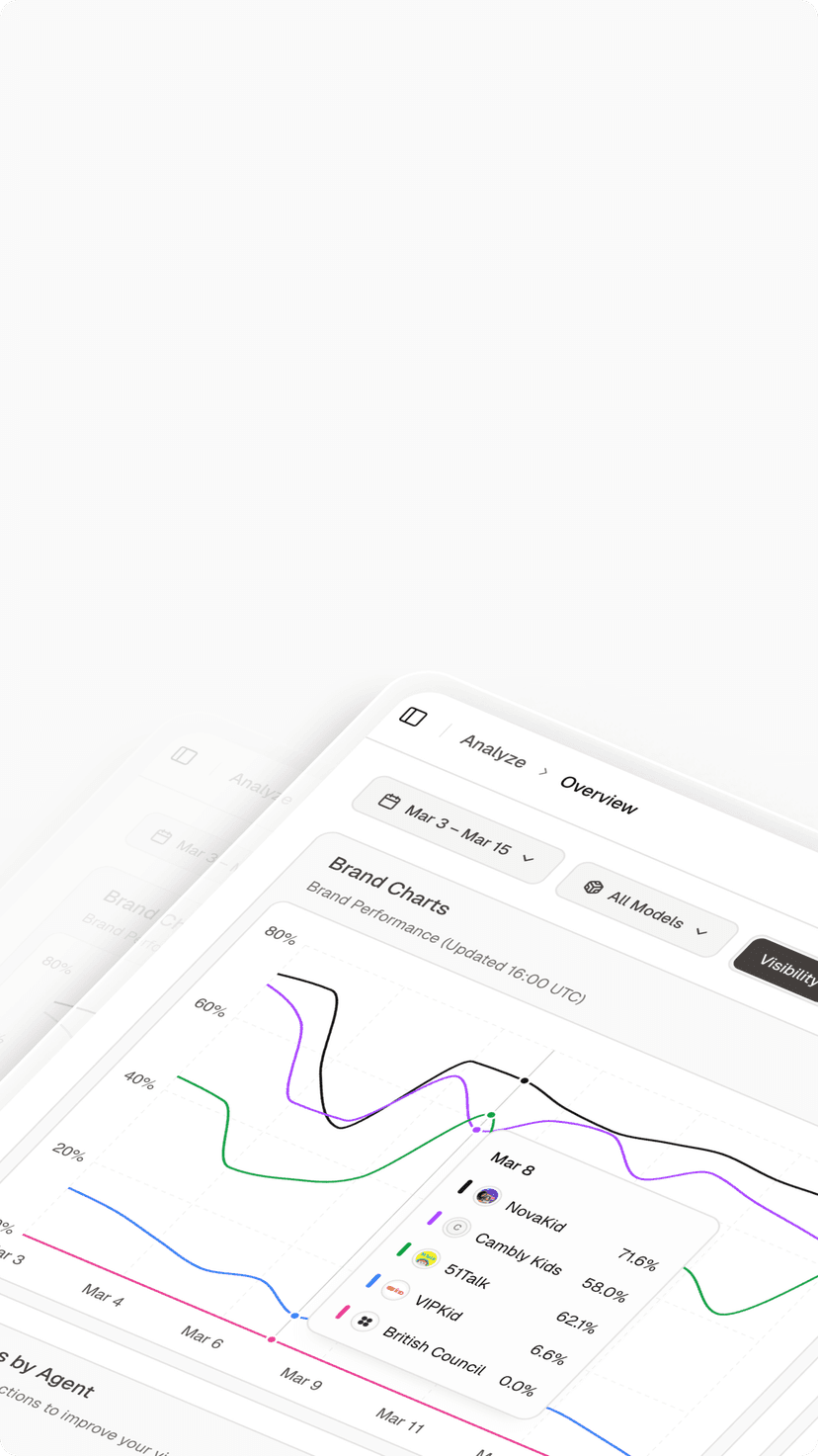
The Tooling: Using a specialized rank tracking tool for Claude is essential to ensure your content isn't being filtered out by its "Constitutional AI" protocols.
Pro-Tip: Don't try to check these individually. Use a rank tracking tool for LLMs to monitor multiple models simultaneously.
Part 5: The 2026 GEO Strategy Framework
How do you execute this? We have developed a comprehensive generative engine optimization strategy for 2026 that follows a 4-step cycle.
Phase 1: The AI Audit
Before you optimize, you must measure. You need to know:
Entity Salience: Does ChatGPT know who you are?
Sentiment: Is Claude describing you positively?
Gap Analysis: Why is Perplexity citing your competitor?
You need a rigorous framework for how to audit brand visibility on LLMs. Without an audit, you are flying blind.
Phase 2: Content Engineering
This is the tactical execution. You must rewrite your content to be "Machine Readable."
The Inverted Pyramid: Answer the question in the first sentence.
Data Density: Use tables, statistics, and direct quotes.
Schema Markup: Tag everything.
Use AI content optimization tools to scan your content and ensure it meets the structural requirements of RAG systems.
Phase 3: Authority Seeding & Digital PR
You cannot just publish on your own blog. You must "seed" the information into the sources the AI trusts.
Digital PR: Get mentioned in Forbes, TechCrunch, or niche industry journals.
Review Ecosystem: Drive reviews on Trustpilot and G2.
Social Signals: LLMs ingest Reddit and Twitter data for real-time sentiment.
Phase 4: Measurement & Iteration
Use analytics to track your AI Overviews rankings and citation growth. If growth stalls, refresh your data. Freshness is the #1 ranking factor for Perplexity.
Part 6: The Essential GEO Tool Stack
You cannot do this manually. The probabilistic nature of AI means you need software that simulates prompts at scale.
The "Must-Have" Tracking Tools
To monitor your performance across ChatGPT, Gemini, and Claude, you need a multi-model tracker.
Topify: The industry leader for sentiment and multi-model tracking.
Comparison: See how the top platforms stack up in our review of the best AI search visibility tracking tools.
SaaS Cloud Solutions
For enterprises, desktop tools won't cut it. You need evaluating AI search visibility tools SaaS that can handle thousands of concurrent queries.
Competitor Analysis
Are your competitors winning the AI war? Use a tool like Topify to run a comparison of best tools for tracking brand visibility.
The Startup Stack
If you are lean, you don't need enterprise bloat. We have curated a list of the generative engine optimization tool stack for startups to get you started quickly.
Deep Dive: Confused about the difference between old and new tools? Read our comparison of AI search ranking tracking tool vs. legacy SEO.
Part 7: Managing Brand Visibility & Reputation
In GEO, visibility and reputation are the same thing. If you are visible but the sentiment is negative, you are losing money.
The "Hallucination" Risk
AI models lie. They might say your product is discontinued. They might confuse you with a competitor. You must detect these hallucinations early using AI brand visibility tracking software.
The "Sentiment" Ranking Factor
We have found that sentiment is a ranking factor. If recent Reddit threads about you are negative, the AI will stop recommending you. You must learn how to monitor brand visibility in AI to protect your brand voice.
Enterprise Governance
For global brands operating in multiple languages, governance is key. You need AI search visibility management tools for enterprise to ensure your brand integrity is maintained across borders.
Resource: Understand the broader context of search marketing visibility in the era of generative answers.
Part 8: Do You Need a GEO Agency?
This is complex work. Should you build an in-house team or hire an agency?
The In-House Case
Pros: Deep product knowledge, faster reaction to PR issues.
Cons: Hard to find talent (GEO is a new field), expensive tool costs.
Guide: If you go in-house, learn how to use an AI search visibility checking tool effectively.
The Agency Case
Pros: Access to enterprise tools (like Topify Enterprise), cross-industry insights, scalable content production.
Cons: High retainer costs.
If you decide to outsource, it is crucial to know why your brand needs a specialized AI SEO agency. Not all agencies are equipped for this shift.
We have compiled resources to help you:
The 2026 list of top AI marketing companies for generative SEO
Generative AI search engine optimization agency service catalog
Part 9: Measuring Success and ROI
The biggest challenge with GEO is proving value. "Impressions" are gone. "Rankings" are fluid.
The New KPIs
Citation Growth: Are you gaining more footnotes over time? Learn how to track AI Overviews rankings over time.
Sentiment Velocity: Is the AI becoming more positive about your brand?
Share of Model: What percentage of answers in your category mention you?
Use our checklist for analyzing your website for AI search visibility to set your baselines.
For startups, benchmarking is critical. See our review of AI search optimization startups with top visibility metrics to see what "good" looks like.
Part 10: Future Trends (2027 and Beyond)
Where is this going?
Agentic Commerce
Users won't just ask for answers; they will ask agents to do things. "Book me a hotel." The AI will choose the hotel based on data API availability. The evolution of the AI digital agency will move from driving clicks to managing these agent transactions.
Personalization at Scale
AI answers will become 100% unique to the user. My answer for "Best CRM" will differ from yours. Tracking this will require advanced best tools for tracking brand visibility in AI search results that can simulate user personas.
Multimodal SEO
GEO will expand to video and audio. AI models will "watch" your YouTube videos to answer questions.
To stay ahead, read our vision for the future of AI search optimization.
Conclusion
The shift to Generative Engine Optimization is not a temporary trend; it is the evolution of the internet.
We are currently in the "Gold Rush" phase. Most brands are still asleep at the wheel, obsessing over keyword rankings while their competitors are securing citations in the AI knowledge graph.
The brands that act now—auditing their footprint, structuring their data, and adopting tools like Topify—will build a moat of authority that will be nearly impossible to cross in 2027.
Don't wait for the traffic to drop. Look at the case studies of successful generative AI search engine optimization and start building your strategy today.
Frequently Asked Questions (FAQ)
Is GEO different from AEO (Answer Engine Optimization)?
They are often used interchangeably. AEO typically refers specifically to optimizing for "Featured Snippets" and voice search (Alexa/Siri), while GEO is broader, encompassing the complex synthesis of Large Language Models like GPT-4.
Does GEO replace traditional SEO?
No, it layers on top of it. You still need a fast website and good technical SEO for the AI crawlers to index you. Think of SEO as the "Infrastructure" and GEO as the "Communication Layer."
How long does it take to see results from GEO?
It depends on the engine. Perplexity can index new content in hours. ChatGPT (Knowledge Graph) can take weeks or months to update its training weights, though its browsing feature is real-time. Expect a 14-30 day lag for most results.
Can I buy my way into AI answers?
Not organically. While "Sponsored" citations are coming (Ads in AI), organic visibility requires "E-E-A-T" (Experience, Expertise, Authoritativeness, Trust). You cannot bribe the model; you must convince it.
What is the most important ranking factor in GEO?
Information Gain. If your content simply repeats what is already on Wikipedia, the AI has no reason to cite you. You must provide unique data, a unique viewpoint, or a unique structure to earn the citation.
How much does a GEO tool like Topify cost?
Topify offers tiered pricing. There is a starter tier for small businesses focusing on basic visibility, and an enterprise tier for global brands needing multi-language sentiment analysis. Check the pricing page for current details.
Is Schema Markup mandatory for GEO?
Yes. While humans can understand unstructured text, machines crave structure. Schema (JSON-LD) is the native language of the AI. Without it, you are asking the AI to guess what your content means. Don't let it guess.
How do I start if I have no budget?
Start with Content Engineering. Take your top 10 traffic pages and rewrite the introductions to be "Answer-First." Add a "Key Takeaways" bullet list to the top of each. This costs nothing but time and is the highest-ROI action you can take.